
What Weakens a Personal Injury Case: Key Factors

Filing a personal injury claim after an accident can feel overwhelming. You may worry about medical bills, lost wages, and the long road to recovery. While many people focus on what strengthens a case, understanding what weakens a personal injury case is just as important. Small missteps can reduce your settlement or even get your case dismissed. Knowing these pitfalls before you start can save you from costly mistakes.
Insurance adjusters and defense attorneys are trained to find weaknesses in your claim. They look for gaps in medical treatment, delays in reporting, or inconsistent statements. The stronger your case appears, the more leverage you have during negotiations. This article walks through the most common factors that can hurt a personal injury claim and explains how to avoid them. By recognizing these issues early, you can protect your right to fair compensation.
Delayed Medical Treatment Hurts Credibility
One of the fastest ways to weaken a personal injury case is waiting too long to see a doctor. Insurance companies view gaps in treatment as a sign that your injuries are not serious. If you wait days or weeks after an accident to seek medical care, the defense will argue that your pain is exaggerated or unrelated to the crash.
Medical records serve as the backbone of any injury claim. They document the cause, severity, and progression of your injuries. When you visit a doctor promptly after an accident, you create a clear link between the incident and your condition. Delaying treatment breaks that chain of evidence. For example, if you slip and fall at a store but do not visit urgent care until three weeks later, the store’s insurer will claim that something else caused your injury.
Follow your doctor’s treatment plan without skipping appointments. Missing physical therapy or ignoring follow-up visits signals that your injuries are not as bad as you claim. Insurance adjusters monitor compliance with medical advice. If you stop treatment too soon, they may reduce your settlement offer significantly. In our guide on what personal injury and accident lawyers do for your case, we explain how attorneys use medical records to build a strong claim.
Social Media Activity Can Undermine Your Claim
Posting on social media after an accident is one of the most dangerous things you can do. Defense lawyers and insurance adjusters routinely search for public posts, photos, and comments to find evidence that contradicts your injury claims. A single photo of you smiling at a party or grocery shopping can be used to argue that you are not really hurt.
Even private accounts are not completely safe. Friends or followers may share your content, or an insurer might subpoena your records during litigation. Adjusters look for posts that show physical activity, travel, or social events that seem inconsistent with your reported limitations. For instance, if you claim a back injury prevents you from working but post a picture of yourself lifting a heavy box, your credibility collapses.
The safest approach is to stop using social media entirely while your case is active. If you must post, keep your accounts private and avoid discussing your accident, injuries, or legal case. Do not accept friend requests from people you do not know personally. Adjusters sometimes create fake profiles to gain access. Even comments like “I’m feeling better today” can be twisted to suggest you have fully recovered.
Failure to Preserve Evidence
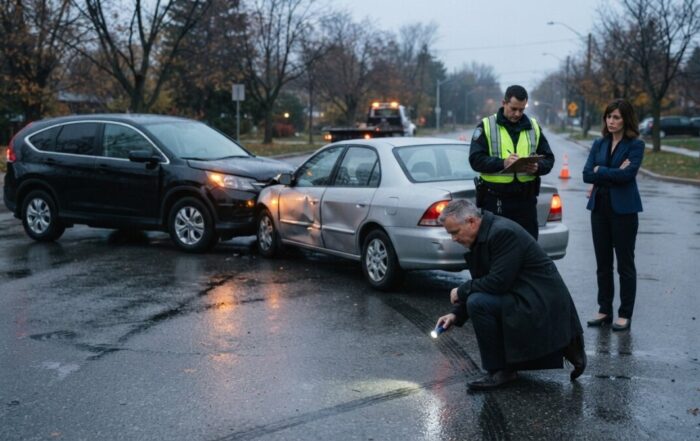
Evidence disappears quickly after an accident. Skid marks fade, surveillance footage gets overwritten, and witnesses forget details. If you fail to preserve critical evidence, you weaken your ability to prove fault and damages. The burden of proof rests on you, the plaintiff. Without solid evidence, the insurance company has little reason to offer a fair settlement.
Key pieces of evidence include:
- Photographs of the accident scene, vehicle damage, and visible injuries taken immediately after the incident.
- Contact information for all witnesses who saw the accident happen.
- Police reports filed at the scene or within 24 hours of the crash.
- Medical records, bills, and receipts related to your treatment.
- Correspondence with insurance companies, including emails and letters.
Take photos from multiple angles before vehicles are moved. Get the names and phone numbers of bystanders. Ask the police officer for the report number and a copy of the incident report. Store all documents in a single folder, both physical and digital. The more organized your evidence, the harder it is for the defense to dispute your version of events. A car accident personal injury lawyer can help you identify what evidence matters most and how to secure it.
Gaps in Medical Treatment or Noncompliance
Consistent medical care is essential to proving the extent of your injuries. Gaps in treatment, even for a few weeks, raise red flags for insurance adjusters. They assume that if you were truly in pain, you would continue seeing your doctor. Noncompliance includes missing appointments, refusing recommended procedures, or stopping physical therapy early.
Insurance companies use these gaps to argue that your condition has resolved or that you are not taking your recovery seriously. For example, if your doctor prescribes six weeks of physical therapy but you only attend three sessions, the adjuster will claim that your injury was not severe enough to require full treatment. This argument can reduce your settlement by thousands of dollars.
Life happens, and sometimes you must miss an appointment. If that occurs, reschedule immediately and get documentation from your doctor explaining the delay. Do not let a single missed visit turn into a pattern. Keep a journal of your symptoms, pain levels, and how the injury affects your daily activities. This personal record supplements your medical records and shows that your condition is ongoing.
Giving Recorded Statements Without Legal Advice
Insurance adjusters often call accident victims shortly after a crash to request a recorded statement. They sound friendly and sympathetic, but their goal is to collect statements that can be used against you. A recorded statement locks you into a specific version of events. If any detail changes later, the adjuster will accuse you of lying.
You are not legally required to give a recorded statement to the other driver’s insurance company. In fact, you should politely decline until you have consulted an attorney. Even seemingly harmless phrases like “I think I’m okay” or “I didn’t see the car coming” can be twisted to minimize your claim. The adjuster may ask leading questions designed to make you admit partial fault or downplay your injuries.
If you have already given a statement, do not panic. An experienced lawyer can review the transcript and mitigate the damage. In many cases, the statement is not as damaging as it seems, but it does limit your flexibility during negotiations. For guidance on handling these conversations, see our article on why you need a personal injury lawyer after a car accident.
Pre-Existing Conditions and Failure to Disclose
Many people have pre-existing medical conditions such as back pain, arthritis, or prior injuries. If you fail to disclose these conditions, the defense will discover them during discovery and use them to attack your credibility. They will argue that your current symptoms are not from the accident but from an old injury. This is called the “eggshell plaintiff” rule, but it cuts both ways.
Honesty is the best strategy. Disclose all prior injuries and medical conditions to your lawyer and your doctor. Your attorney can work with medical experts to differentiate between your pre-existing condition and the new injury caused by the accident. For example, if you had mild back arthritis before a car crash, a doctor can explain how the collision aggravated that condition and caused new pain.
Do not hide past claims, lawsuits, or settlements. Insurance databases track prior injury claims. If you deny having a prior injury and the adjuster finds evidence of a previous claim, your entire case becomes suspect. Full transparency allows your legal team to prepare a strong argument that accounts for your medical history.
Admitting Fault or Apologizing at the Scene
In the immediate aftermath of an accident, emotions run high. You may feel the urge to apologize or say “I’m sorry” even if the crash was not your fault. These words can be used as an admission of liability. Insurance companies and courts interpret apologies as evidence that you believe you caused the accident.
Even saying “I didn’t see you” can be construed as an admission of negligence. The safest response at the scene is to exchange information, check for injuries, and call the police. Do not discuss fault with the other driver or their passengers. Let the police officer and the insurance companies determine who is at fault based on evidence, not emotions.
If you have already apologized, do not assume your case is lost. An attorney can argue that the statement was made under stress and without full understanding of the situation. However, it is always better to avoid making any statements about fault. Stick to the facts: your name, contact information, and insurance details. Leave fault determination to the professionals.
Failing to Hire an Attorney Early
Many accident victims try to handle their claim alone, believing they can save money on legal fees. This is often a costly mistake. Insurance companies have teams of adjusters and lawyers whose job is to minimize payouts. Without legal representation, you are at a significant disadvantage. You may accept a low settlement offer without realizing that your claim is worth much more.
An attorney handles every aspect of your case, from gathering evidence to negotiating with adjusters. They know what weakens a personal injury case and how to avoid those traps. They also understand the tactics insurers use to devalue claims. For example, an adjuster might offer a quick settlement before you fully understand the extent of your injuries. Once you accept, you cannot ask for more money later.
Hiring a lawyer early also ensures that deadlines are met. Every state has a statute of limitations for personal injury claims. Missing this deadline can permanently bar you from recovering any compensation. A personal injury car accident lawyer will file your claim on time and handle all procedural requirements.
Frequently Asked Questions
Can I still get compensation if I was partially at fault?
Yes, in most states you can still recover damages even if you were partially at fault. The amount you receive is reduced by your percentage of fault. For example, if you are found 20 percent at fault and your damages are $100,000, you would receive $80,000. Some states bar recovery if you are more than 50 percent at fault. An attorney can explain the rules in your state.
How long do I have to file a personal injury lawsuit?
The time limit, called the statute of limitations, varies by state. Most states allow one to three years from the date of the accident. Some exceptions exist for minors or cases involving government entities. Missing the deadline almost always results in dismissal. Contact a lawyer as soon as possible to ensure you do not lose your right to sue.
Will my case go to trial?
Most personal injury cases settle out of court. Only a small percentage go to trial. However, you must be prepared to go to trial if the insurance company refuses to offer a fair settlement. Having an attorney signals that you are serious about pursuing full compensation, which often encourages higher settlement offers.
What should I do if the insurance company denies my claim?
A denial is not the end of the road. You can appeal the decision, provide additional evidence, or file a lawsuit. An attorney can review the denial letter and identify the reasons for rejection. Sometimes a simple mistake in paperwork caused the denial. In other cases, the adjuster may have overlooked important evidence. Do not give up after a denial.
How much does it cost to hire a personal injury lawyer?
Most personal injury lawyers work on a contingency fee basis. This means you pay nothing upfront. The lawyer takes a percentage of your settlement or court award, typically between 33 and 40 percent. If you do not recover money, you owe nothing. This arrangement makes legal representation accessible to everyone, regardless of financial situation.
Understanding what weakens a personal injury case is the first step toward protecting your claim. From delaying medical treatment to posting on social media, small actions can have big consequences. By working with an experienced attorney and following the advice in this article, you can avoid common pitfalls and maximize your chance of a fair outcome. If you have been injured in an accident, do not wait. Take action today to preserve your evidence, seek medical care, and consult a lawyer who can guide you through the process.

About Calista Moreno
Recent Posts

How Legal Ethics Affect Accident Litigation Outcomes
Discover how legal ethics shape accident litigation and protect your claim. Call LawyerOffer at (833) 227-7919 for help finding ethical counsel.
How Private Investigators Are Used in Accident Cases
Discover how private investigators are used in accident cases to strengthen your claim and maximize your settlement. Call (833) 227-7919 for a free attorney referral.

How Insurance Investigators Gather Evidence: A Complete Guide
Learn how insurance investigators gather evidence and what it means for your claim. Call (833) 227-7919 for a free consultation.