
How Drug Impairment Is Proven in Accident Cases

After a car accident, the question of fault often comes down to whether a driver was impaired. While alcohol impairment is commonly understood through breathalyzer tests and field sobriety checks, proving drug impairment presents a more complex challenge. Drugs, both illegal and prescription, can affect the body in ways that are harder to detect and quantify. For victims seeking compensation, understanding how drug impairment is proven in accident cases is crucial, as it can significantly impact liability and the value of a claim. This knowledge empowers you to work effectively with investigators and your legal team, ensuring that all responsible parties are held accountable.
The Legal Standard: What Counts as Drug Impairment
Drug impairment in the context of a car accident is not simply about the presence of a substance in a person’s system. Legally, it means that the driver’s ability to operate a vehicle safely was diminished by the effects of a drug. This can include illegal substances like marijuana, cocaine, or methamphetamine, as well as legal medications, including opioids, benzodiazepines, and even some over-the-counter antihistamines. The critical question is whether the drug caused a measurable decline in reaction time, judgment, motor coordination, or attention.
Each state has its own legal framework for defining impairment. Some states use a per se law, which makes it illegal to drive with a certain concentration of a drug in the blood, similar to the 0.08% blood alcohol concentration (BAC) limit. Other states rely on an effects-based approach, where prosecutors or plaintiffs must demonstrate that the drug actually impaired the driver’s ability to drive. In civil accident cases, the burden of proof is typically based on a preponderance of the evidence, meaning it is more likely than not that drug impairment was a contributing factor. This is a lower standard than the beyond a reasonable doubt standard used in criminal cases, but it still requires compelling evidence.
Key Evidence Used to Prove Drug Impairment
Proving drug impairment requires a combination of direct and circumstantial evidence. In many cases, no single piece of evidence is enough on its own. Instead, attorneys and investigators build a case by layering different types of proof to create a clear picture of the driver’s condition. Here are the most common forms of evidence used:
- Chemical Tests: Blood, urine, and hair samples are analyzed to detect the presence and concentration of drugs. Blood tests are considered the most reliable for recent use, while urine tests can show metabolites for days or weeks after use.
- Field Sobriety Tests (FSTs): If an officer suspects impairment, they may administer standardized tests like the walk-and-turn or one-leg stand. While often used in criminal cases, the results can be introduced in civil proceedings as evidence of impairment.
- Observations of the Driver: Testimony from the responding police officer, eyewitnesses, and even passengers can describe the driver’s appearance, speech, and behavior immediately after the accident. Signs like bloodshot eyes, slurred speech, or an unsteady gait are noted in police reports.
- Expert Testimony: Forensic toxicologists can interpret chemical test results and explain how a particular drug affects driving ability. They can also estimate the level of impairment at the time of the crash, even if the test was performed hours later.
- Prescription Records: For legal medications, obtaining the driver’s pharmacy records can show whether they had been prescribed a drug with known impairing effects and whether they took it as directed.
Each piece of evidence serves a specific purpose. Chemical tests provide objective data, while observations and field tests offer a snapshot of the driver’s behavior. Expert testimony helps the jury understand the scientific significance of the results. Together, these elements can establish a strong case for impairment.
The Role of the Police Report
The police report is often the starting point for any accident investigation. It contains the officer’s observations, statements from involved parties and witnesses, and any notes about suspected drug use. The report may also include the results of any on-site tests or the officer’s decision to request a blood or urine test. For your attorney, this document is invaluable because it provides a contemporaneous record of the accident scene and the driver’s condition. If the report notes an odor of marijuana or the presence of drug paraphernalia, it becomes a critical piece of evidence. However, police reports are not always complete, and your legal team may need to conduct its own investigation to supplement the findings.
Challenges in Proving Drug Impairment
Unlike alcohol, where a clear legal limit exists, drug impairment is far more difficult to prove. One major challenge is the lack of standardized limits for most drugs. Even when a drug is detected, it does not necessarily mean the driver was impaired at the time of the accident. For example, THC, the active ingredient in marijuana, can remain in the bloodstream for days or weeks after use, especially for chronic users. A positive test result may only indicate past use, not current impairment.
Another challenge is the issue of mixed substances. Many drivers have multiple drugs in their system, each with varying effects. Sorting out which drug caused the impairment, or whether the combination was the problem, requires expert analysis. Additionally, some drugs, such as certain antidepressants, can cause impairment at the start of treatment but have little effect once the patient builds a tolerance. In these cases, a simple drug test is insufficient; you need a toxicologist to assess the specific circumstances.
Finally, there is the legal issue of admissibility. Evidence obtained without a warrant or proper procedure may be excluded from court. Defense attorneys often challenge the reliability of drug tests, arguing that contamination, improper storage, or chain-of-custody errors compromised the results. This is why it is essential to have an experienced attorney who can navigate these evidentiary rules and present the evidence in the most persuasive way.
How a Lawyer Builds a Drug Impairment Case
When you hire an attorney after an accident, they will immediately begin gathering and preserving evidence. They will obtain the police report, request medical records, and interview witnesses. They will also issue subpoenas for the at-fault driver’s chemical test results, if any were performed. In cases where no tests were done, your lawyer may argue that the driver’s failure to submit to testing creates an inference of impairment, depending on state law.
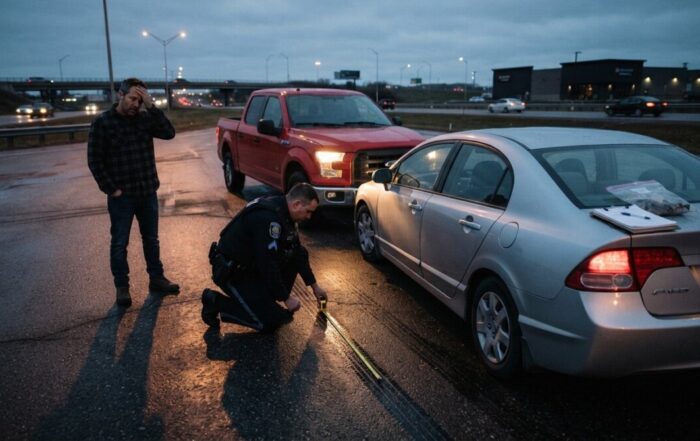
Your attorney will also consult with experts, such as toxicologists and accident reconstructionists, to strengthen the case. A toxicologist can explain the effects of the specific drug found in the driver’s system and how those effects correlate with the accident’s circumstances. For instance, if the driver rear-ended another vehicle at a stoplight, the expert can testify that the drug’s sedative effects likely caused a delayed reaction. An accident reconstructionist can use physical evidence, like skid marks and vehicle damage, to estimate the speed and timing of the collision, which supports the impairment theory.
Moreover, your lawyer can help you understand the interaction between drug impairment and other factors, such as distracted driving or speeding. In our guide on how texting evidence is used in accident cases, we explain how digital evidence can complement impairment claims. Similarly, if the at-fault driver was also speeding, the combination of behaviors can strengthen your case for substantial damages.
Proving Impairment in the Absence of a Drug Test
There are situations where no chemical test was administered, either because the driver refused or the police did not have probable cause to request one. In these instances, proving drug impairment becomes more reliant on circumstantial evidence. Witness testimony describing the driver’s erratic driving, such as weaving across lanes or driving at inconsistent speeds, can be powerful. Eyewitnesses may also describe seeing the driver use drugs at a rest stop or party shortly before the accident.
Cell phone data can also be used to establish impairment, particularly if the driver was texting or using apps while driving. As noted in our article on how texting evidence is used in accident cases, digital records can pinpoint exactly when the driver was using their phone, which may coincide with the moments before the crash. This evidence, combined with testimony about the driver’s behavior, can create a compelling narrative of impairment even without a drug test.
The Impact of Drug Impairment on Your Claim
Proving drug impairment is not just about establishing fault; it can also directly affect the compensation you receive. In many states, if the at-fault driver was impaired, you may be entitled to punitive damages. These are designed to punish the driver and deter others from similar conduct. Additionally, drug impairment can be used to counter the defense’s argument that you were partially at fault. If you can show that the other driver was heavily impaired, it may reduce your percentage of fault and increase your recovery.
Insurance companies also take drug impairment seriously. When an insurer learns that their policyholder was under the influence, they may be more willing to settle quickly to avoid the negative publicity and potential for high jury verdicts. However, they will still fight hard to minimize their payout, so you need a strong case to negotiate from a position of power. Understanding how drug impairment is proven in accident cases allows you to work with your attorney to present the most damning evidence to the insurance company.
Defense Tactics to Anticipate
Defense lawyers are skilled at creating doubt in impairment cases. They may argue that the drug test was inaccurate, that the driver had a valid prescription, or that the observed symptoms were caused by a medical condition, not drugs. They might also try to shift blame onto you, claiming that your own actions contributed to the accident. Being aware of these tactics can help you prepare. In our article on defense lawyer tactics in accident cases exposed, we outline common strategies used to undermine claims, so you can work with your attorney to counter them effectively.
One common defense is the “prescription defense,” where the driver claims they were taking medication as directed by their doctor and were not aware of its impairing effects. However, the law generally holds that drivers have a responsibility to understand the side effects of their medications. If the prescription label includes a warning about drowsiness, the driver cannot simply plead ignorance. Another tactic is to attack the reliability of the field sobriety tests, arguing that the driver was nervous or had a physical condition that affected their performance. Your attorney will need to anticipate these arguments and have expert witnesses ready to explain why the tests were valid and why the evidence points to impairment.
The Importance of Timely Evidence Collection
Evidence in drug impairment cases is time-sensitive. Chemical tests must be conducted within a few hours of the accident to be meaningful, and physical evidence like vehicle black boxes can be overwritten if not downloaded quickly. This is why it is critical to contact an attorney as soon as possible after an accident. A prompt investigation ensures that evidence is preserved, witnesses are interviewed while their memories are fresh, and any necessary subpoenas are issued without delay.
Your attorney will also coordinate with law enforcement to obtain any dashcam footage or traffic camera recordings. These can be vital in showing the moments before the crash and corroborating testimony about the driver’s behavior. In cases where impairment is suspected, every piece of evidence matters, and a comprehensive approach can make the difference between a successful claim and a denial.
Frequently Asked Questions
What drugs are most commonly involved in impaired driving accidents?
Marijuana, opioids, benzodiazepines, and stimulants like cocaine and methamphetamine are the most common. However, even legal drugs like antihistamines and sleep aids can cause impairment. The key is whether the drug affected the driver’s ability to operate the vehicle safely.
Can I sue a driver for drug impairment even if they were not convicted of a DUI?
Yes. Civil cases have a lower burden of proof than criminal cases. Even if the driver was acquitted of criminal charges, you can still prove drug impairment in a civil lawsuit using the preponderance of the evidence standard.
How long do drugs stay in your system for a test?
It depends on the drug and the test. Marijuana can be detected in urine for up to 30 days in chronic users, while blood tests usually show recent use. Opioids may be detected for 1-3 days, and some benzodiazepines for up to a week. Hair tests can show drug use for up to 90 days.
What if the at-fault driver refuses to take a drug test?
In a civil case, the driver’s refusal can be used against them. The court or jury may infer that the refusal indicates the driver was impaired. Your attorney can argue that the driver’s unwillingness to submit to testing suggests they had something to hide.
How can I prove drug impairment if the police didn’t test the driver?
Your attorney can subpoena medical records, pharmacy records, and cell phone data. Witness testimony and your own account of the driver’s behavior can also be powerful. In some cases, your lawyer can hire an expert to reanalyze stored blood or urine samples if they were taken for medical purposes.
Seeking Legal Help After a Drug-Impaired Accident
If you or a loved one has been injured in an accident caused by a drug-impaired driver, you need an attorney who understands the complexities of these cases. The evidence can be technical, and the defense will spare no effort to discredit your claim. A skilled lawyer can gather the necessary proof, work with experts, and negotiate with insurance companies on your behalf. They can also help you understand your rights and the full scope of damages you may be entitled to, including medical expenses, lost wages, and pain and suffering.
At LawyerOffer, we connect you with experienced attorneys who specialize in drug impairment and accident cases. We provide free case evaluations and can help you find a lawyer who will fight for your rights. Remember, time is of the essence, so do not delay in seeking legal advice. Contact us today at (833) 227-7919 to discuss your case with a qualified professional.

About Micah Snowdon
Recent Posts

How No Fault Insurance Systems Work: Key Facts
Learn how no fault insurance systems work and get help with your claim. Call (833) 227-7919 for a free case review.
How Comparative Negligence Laws Differ by State
Understand how comparative negligence laws differ by state and protect your settlement. Call (833) 227-7919 for a free case review.

Why State Laws Differ in Accident Cases and What That Means for You
Understand how state laws differ in accident cases and protect your claim. Call (833) 227-7919 for a free attorney referral.