
How Intersection Accidents Are Reconstructed: Key Steps
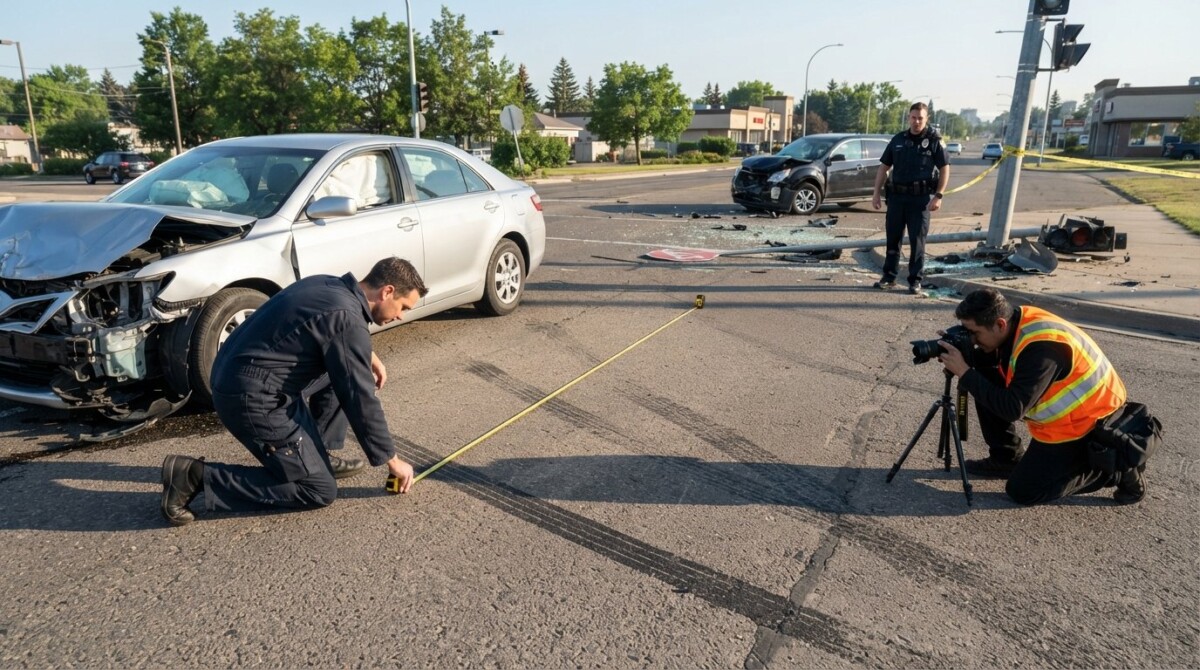
Intersection accidents are among the most complex and frequently disputed car crashes. Determining who had the green light, who failed to yield, or who was speeding often comes down to more than just witness statements. That is where accident reconstruction comes in. This scientific process uses physics, evidence analysis, and sometimes digital simulations to piece together exactly what happened before, during, and after the collision. For anyone involved in an intersection crash, understanding how this process works can make a significant difference in protecting your rights and securing fair compensation.
Accident reconstruction is not about guessing or relying on gut feelings. It is a methodical investigation that relies on physical evidence, vehicle data, and mathematical formulas. When done correctly, it can provide a clear, objective picture of the crash sequence, which is crucial for insurance claims and legal proceedings. If you have been in an intersection accident, knowing what investigators look for can help you preserve evidence and work more effectively with your attorney.
Why Intersection Accidents Demand Specialized Investigation
Intersections are high-risk zones where multiple traffic streams, signals, and pedestrian movements converge. They account for roughly 40% of all reported crashes in the United States. The complexity arises because there are often multiple vehicles approaching from different directions, each with its own trajectory, speed, and driver actions. A simple rear-end collision on a straight road is relatively straightforward to reconstruct, but an intersection crash can involve left turns, red-light running, and obscured sight lines.
This complexity is why accident reconstruction experts are often called in when liability is disputed. For example, both drivers may claim they had a green light. Without a clear witness or traffic camera, the physical evidence must tell the story. Skid marks can indicate braking behavior and speed. The point of impact can reveal which vehicle entered the intersection first. Damage patterns can show the angle of collision. These details, when analyzed together, can establish fault with a high degree of certainty.
Moreover, intersection accidents often result in serious injuries because of the side-impact nature of many collisions. T-bone crashes, for instance, can cause severe trauma to the occupants of the struck vehicle. This high stakes environment makes accurate reconstruction even more critical. Insurance companies and courts rely on this analysis to determine liability, which directly impacts the compensation you may receive for medical bills, lost wages, and pain and suffering.
Key Evidence Used in Intersection Accident Reconstruction
Reconstruction experts gather and analyze a variety of evidence types to build a reliable picture of the crash. The process is meticulous and often takes weeks or months, depending on the complexity of the case. Here are the primary forms of evidence that are typically examined:
- Physical evidence: Skid marks, tire scrub, debris patterns, and the final resting positions of vehicles.
- Vehicle damage analysis: The extent and location of damage help determine impact speed and angle.
- Electronic data: Event data recorders (EDRs) in vehicles, often called “black boxes,” can provide speed, braking, and steering inputs before the crash.
- Traffic signals: Signal timing data from traffic light controllers can establish which light was red or green at the moment of impact.
- Surveillance and dashcam footage: Video evidence from nearby cameras or vehicles can provide a real-time view of the accident.
- Witness statements: While subjective, witness accounts can corroborate or contradict physical evidence.
Each piece of evidence is like a piece of a puzzle. The expert’s job is to fit them together in a way that is consistent with the laws of physics and the known facts. For example, if a vehicle leaves a long skid mark, it indicates the driver was braking hard, which can be used to calculate the vehicle’s speed. If the damage on one car is focused on the front while the other has side damage, it suggests a T-bone pattern, which is common in red-light violations.
The Role of Physics in Reconstructing Intersection Crashes
Physics is the foundation of accident reconstruction. The principles of momentum, energy, and friction are used to calculate speeds, distances, and times. For instance, the coefficient of friction between tires and the road surface is a key variable. If the road was wet or covered in gravel, the stopping distance would be longer, which affects the calculation of the vehicle’s speed.
One common method is the conservation of momentum. In a collision, the total momentum of the system (all vehicles involved) is conserved, meaning the momentum before the impact equals the momentum after the impact. By measuring the post-impact paths and speeds of the vehicles, the expert can work backward to determine their pre-impact velocities. This is particularly useful in intersection crashes where one vehicle may have run a red light at high speed.
Another important calculation is the time-distance analysis. This involves determining how long it took each vehicle to travel from its last known point to the point of impact. If the distance and speed are known, the time can be calculated. This can help establish whether a driver had time to stop when the light turned yellow or whether they entered the intersection on a red light. For example, if a car was 100 feet from the intersection and traveling at 30 miles per hour, it would take about 2.3 seconds to reach the intersection. If the light had been red for 1 second before they entered, the driver clearly ran the red.
Accident reconstruction experts also use computer simulation software, such as PC-Crash or EDR tools, to create 3D models of the crash. These programs allow them to input the physical evidence and run simulations to test different scenarios. This is especially helpful when there are conflicting accounts of the crash. The simulation can show which scenario is physically possible and which is not.
Steps in the Reconstruction Process
While each reconstruction is unique, the process generally follows a structured sequence. Understanding these steps can help you know what to expect if your case involves a reconstruction expert.
- Data collection: The expert visits the scene, photographs the area, measures skid marks and vehicle positions, and collects any available electronic data.
- Vehicle inspection: The vehicles are examined for damage, and the EDR data is downloaded if available. This step often happens at a salvage yard or repair shop.
- Analysis: The expert applies physics formulas to calculate speeds, distances, and times. This is often done using computer software.
- Simulation: The expert creates a computer model of the crash to test various hypotheses and visualize the sequence of events.
- Report and testimony: The findings are compiled into a detailed report, and the expert may testify in court or in an insurance deposition.
This process is not just about determining fault. It also helps in quantifying damages. For example, the severity of the impact directly correlates with the injuries sustained. A reconstruction that shows the collision occurred at a high speed can support a claim for more substantial compensation for serious injuries. Conversely, if the reconstruction shows a low-speed impact, the insurance company may argue that the injuries are not as severe as claimed.
Challenges and Limitations in Intersection Reconstruction
Despite its scientific basis, accident reconstruction is not infallible. There are several challenges that can make the process more difficult or even lead to inconclusive results. One major challenge is the lack of physical evidence. If the vehicles were moved before the police arrived, or if the road has been repaved, critical evidence may be lost. Similarly, if the vehicles are not equipped with EDRs, or the data is not retrievable, the expert must rely solely on physical evidence and witness statements.
Another challenge is the reliability of witness testimony. People often have different perspectives and can be mistaken about the details of a fast-moving event. This is why reconstruction experts place more weight on physical evidence than on human memory. However, when physical evidence is limited, witness statements become more important, and the expert must assess their credibility.
Traffic signal timing is another area of potential complexity. The timing of yellow lights and all-red intervals is regulated by local traffic engineering standards. An expert may need to obtain the signal timing data from the city or county to determine if the signal was functioning correctly. If the signal was faulty, that could introduce a third-party liability, such as a government entity or a maintenance contractor.
Finally, reconstruction is not an exact science. There is always some margin of error in the calculations, and different experts may come to different conclusions. This is why having an experienced attorney who can challenge the opposing side’s reconstruction is vital. An attorney can hire their own expert to review the data and provide a second opinion, which can be crucial in negotiations or at trial.
How Reconstruction Affects Your Intersection Accident Claim
The outcome of a reconstruction can make or break your claim. If the reconstruction clearly shows that the other driver ran a red light or failed to yield, it strengthens your position significantly. The insurance company is more likely to offer a fair settlement if they know they cannot successfully dispute liability. On the other hand, if the reconstruction is inconclusive or suggests you may be partially at fault, it could reduce your compensation or even result in a denial of your claim.
It is also important to note that reconstruction is not always necessary. In many intersection accidents, liability is clear-cut, and the insurance companies can resolve the claim without a full reconstruction. However, if there are disputes over the facts, or if the accident involves serious injuries or significant property damage, a reconstruction can be the deciding factor.
If you find yourself in this situation, it is in your best interest to consult with an attorney who has experience with accident cases. An attorney can evaluate whether a reconstruction is needed, recommend a qualified expert, and ensure that the evidence is properly preserved and analyzed. They can also help you understand the legal process and advocate for your rights.
Frequently Asked Questions
What is the most common cause of intersection accidents?
Running red lights and stop signs is the leading cause of intersection accidents, followed by improper left turns and distracted driving. Reconstruction often focuses on these behaviors to establish fault.
How long does an accident reconstruction take?
The timeline varies widely depending on the complexity of the case. A straightforward reconstruction may take a few weeks, while a complex multi-vehicle crash could take several months. The expert needs time to gather evidence, run simulations, and write a detailed report.
Can I get a copy of the accident reconstruction report?
Yes, if a reconstruction is performed as part of an insurance claim or lawsuit, you and your attorney have the right to obtain a copy of the report. Your attorney will review it and explain the findings to you.
What if I cannot afford to hire an accident reconstruction expert?
Many personal injury attorneys have access to expert witnesses and may advance the costs of hiring them. This cost is typically recovered as part of your settlement or judgment. If you are working with a referral service like LawyerOffer, you can be connected with attorneys who offer this kind of support.
Does the police report always include an accident reconstruction?
No. Police officers may perform a basic investigation, but a full reconstruction is usually only done for serious or fatal accidents, or when there is a dispute over liability. In many cases, you may need to hire a private expert.
Protect Your Rights After an Intersection Accident
If you have been injured in an intersection accident, you do not have to navigate the legal process alone. Understanding how intersection accidents are reconstructed is a valuable first step, but it is just one part of the journey to recovery. You need to focus on your health, gather evidence, and protect your legal rights. An experienced attorney can handle the complex aspects of your case, including working with reconstruction experts and negotiating with insurance companies.
At LawyerOffer, we connect you with qualified attorneys in your area who specialize in car accident cases. Our service is free and can help you find the legal representation you need to secure the compensation you deserve. Do not wait until it is too late to take action. Reach out today to discuss your case and learn about your options. Your attorney can guide you through the process and fight for the best possible outcome.

About Barrett Quince
Recent Posts
Why State Laws Differ in Accident Cases and What That Means for You
Understand how state laws differ in accident cases and protect your claim. Call (833) 227-7919 for a free attorney referral.
How Jurisdiction Affects Accident Claim Outcomes
Understand how jurisdiction affects accident claim outcomes and maximize your recovery. Call (833) 227-7919 for a free attorney referral.

Why Legal Deadlines Can Make or Break Your Accident Case
Missing a filing deadline can end your accident case instantly. Get legal help today at (833) 227-7919.