
AFFF Firefighter Foam Lawsuit: Who Can File a Claim?
Exposure, diagnosis, and timing decide who can file an AFFF firefighter foam lawsuit claim. See if you qualify before deadlines close.

By Thorne Bradley
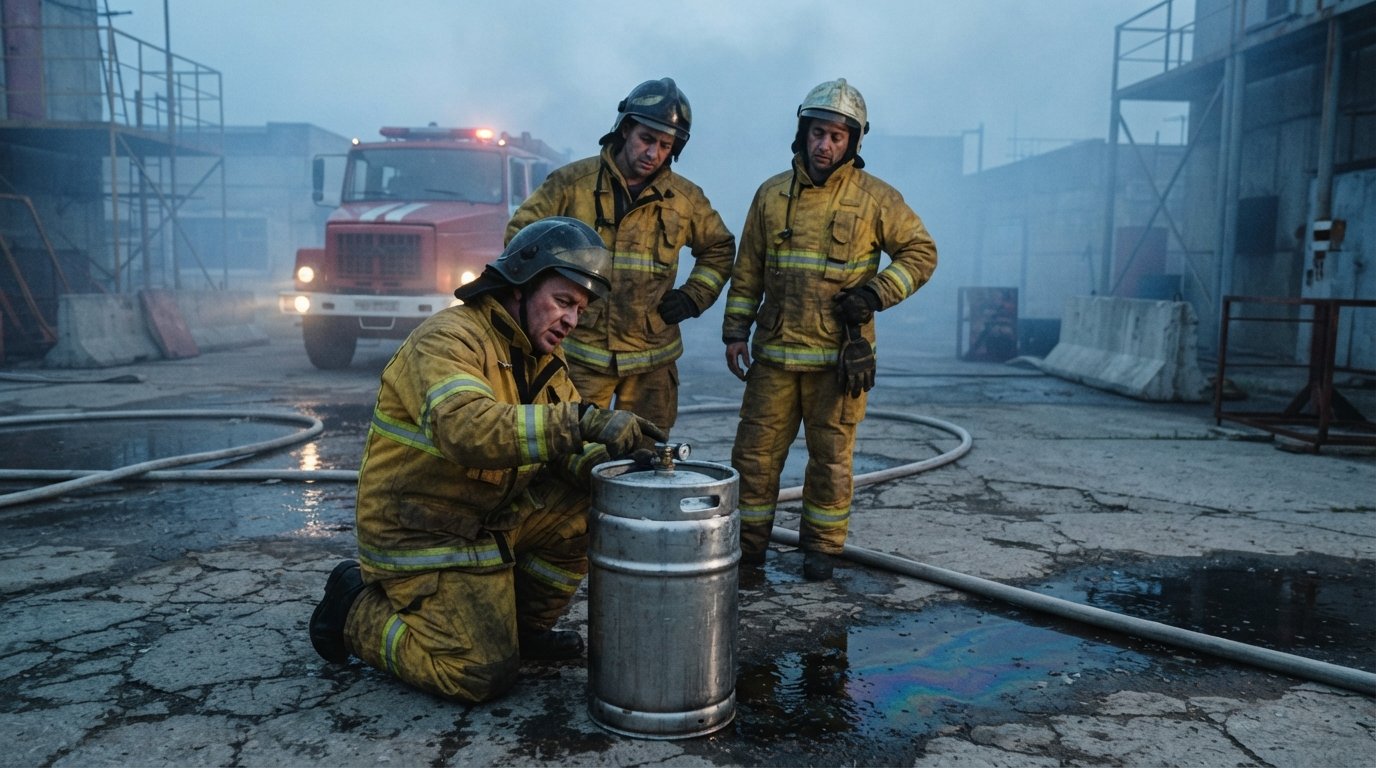
The firefighting profession has always carried risk, but few hazards have proved as quietly devastating as the aqueous film-forming foam (AFFF) that crews have relied on for decades to smother petroleum fires. Designed to spread rapidly across fuel spills and knock down flames that water alone cannot touch, this foam became standard equipment at military bases, airports, chemical plants, and municipal fire departments across the United States. What many firefighters did not know was that the same chemical properties that made AFFF so effective also made it persistent in the human body, and that persistence has been linked to cancer and other serious illnesses. Today, thousands of current and former firefighters, military personnel, and civilians are asking a single urgent question: do I qualify to file a claim?
This guide walks through the AFFF firefighter foam lawsuit, who can file a claim, and what evidence and timelines matter most. It is written for people who suspect their exposure may be connected to a diagnosis, and for family members acting on behalf of someone who has already passed. The information here is educational only and is not legal advice. If you believe you have a claim, the smartest next step is a free, confidential case review with a qualified attorney who handles mass tort litigation. You can learn why injury law specialization matters before you choose representation, because the difference between a generalist and a dedicated mass tort lawyer can shape the entire outcome of your case.
What Is the AFFF Firefighter Foam Lawsuit About?
The AFFF firefighter foam lawsuit is a growing body of mass tort litigation brought by people who were exposed to aqueous film-forming foam and later developed certain cancers or other diseases. The central allegation is that manufacturers of the foam and of the underlying chemicals knew or should have known about the health risks associated with per- and polyfluoroalkyl substances, commonly called PFAS, and failed to warn the people who used their products. PFAS are often described as "forever chemicals" because they do not break down easily in the environment or in the human body, and they can accumulate over years of repeated exposure.
AFFF has been used since the 1960s, particularly at military installations, commercial airports, oil refineries, and training facilities where live fire exercises were routine. Firefighters who trained with the foam, slept in gear saturated with it, or worked near runoff from foam testing have some of the highest documented exposure levels. Testing has repeatedly found PFAS contamination in groundwater near bases and airports where AFFF was used, which broadened the pool of potentially affected people far beyond the fire service itself. Residents living near those sites, workers at industrial facilities, and even some agricultural communities have been drawn into the litigation.
The litigation has grown into one of the largest mass torts in recent American history, with thousands of cases consolidated in federal court for coordinated pretrial proceedings. That structure matters for claimants because it means individual cases are handled within an organized framework rather than as isolated lawsuits, and it has already produced significant settlements with major manufacturers. Understanding who qualifies is the first step toward deciding whether to pursue a claim.
Who Can File an AFFF Firefighter Foam Lawsuit Claim?
Not everyone who was exposed to AFFF will have a viable claim, and not everyone with a serious diagnosis will qualify. Mass tort eligibility generally depends on three factors working together: a qualifying exposure, a qualifying diagnosis, and a qualifying timeframe. The AFFF firefighter foam lawsuit who can file a claim question is answered most accurately by examining all three at once, because a strong exposure history paired with a non-qualifying illness will not move forward, and a qualifying illness without documented exposure is equally difficult to support.
The following groups are the most common categories of potential claimants in this litigation. Each category carries its own evidentiary challenges, so an experienced attorney will evaluate your specific history rather than applying a one-size-fits-all rule.
- Professional and volunteer firefighters who used AFFF during training exercises, emergency responses, or daily station operations, including those exposed through contaminated turnout gear.
- Military personnel, especially those stationed at bases where AFFF was routinely deployed for aircraft fire suppression and live fire training, including Navy, Air Force, and Marine Corps veterans.
- Airport and industrial workers, such as aircraft rescue and firefighting crews, refinery employees, and chemical plant workers who handled or were surrounded by the foam.
- Residents living near contaminated sites, including people whose drinking water was drawn from wells or municipal supplies affected by PFAS runoff from military bases, airports, or manufacturing facilities.
- Family members of deceased individuals who developed a qualifying illness after AFFF exposure, since wrongful death and survival claims may be filed on behalf of an estate in many jurisdictions.
It is important to recognize that simply having worked at a contaminated location is not enough on its own. Claimants generally must show a documented diagnosis of a condition that scientists and courts have tied to PFAS exposure. The most frequently cited conditions include kidney cancer, testicular cancer, liver cancer, pancreatic cancer, bladder cancer, prostate cancer, and thyroid disease, along with ulcerative colitis and certain pregnancy-related complications. If your diagnosis is not on the current list of accepted conditions, an attorney can still review your case, but the path forward may be more difficult.
Timing also plays a critical role. Every state has a statute of limitations that limits how long a person has to file a lawsuit after discovering an injury, and those deadlines vary widely. Some states also follow a discovery rule, which starts the clock when a person knew or reasonably should have known about the connection between the illness and the exposure. Because the science around PFAS has only become widely publicized in recent years, many claimants have strong arguments that their deadlines began recently, but waiting too long can permanently eliminate an otherwise valid claim.
Qualifying Diagnoses and Medical Evidence
Building a successful AFFF claim depends heavily on medical documentation. Unlike some mass torts where exposure alone can support a claim, PFAS litigation generally requires proof that you have been diagnosed with a specific condition. That means medical records, pathology reports, imaging results, and treating physician statements all become central evidence. The stronger and more complete your medical file, the easier it is for an attorney to evaluate and pursue your case.
A common misunderstanding is that a diagnosis must be terminal or immediately life-threatening to qualify. In reality, many claims involve people who are in treatment, in remission, or managing a chronic condition. What matters most is that the diagnosis is accurate, well documented, and falls within the categories that litigation has recognized. If you are unsure whether your condition qualifies, gathering your records before speaking with an attorney can save significant time.
Exposure documentation is the other half of the equation. Attorneys typically look for employment records, military service records, training logs, station assignments, and any evidence that AFFF was present at your workplace or residence. Personal accounts from coworkers, photographs of foam use, and even news coverage of contamination at a specific site can help corroborate a claim. In many cases, attorneys have access to databases and expert testimony that map AFFF use to particular locations, which can fill gaps in a claimant's memory.
How the Claims Process Works From Start to Finish
Understanding the process reduces anxiety and helps you avoid mistakes that could weaken your case. Most AFFF claims follow a similar arc, though timelines vary based on where your case is filed and how the broader litigation progresses. The steps below outline what a typical claimant can expect.
- Free case evaluation. You speak with an attorney or intake team who reviews your exposure history and diagnosis at no cost and with no obligation to hire anyone.
- Records collection. If your case appears viable, the firm gathers medical records, employment or military records, and any documentation tying you to an AFFF site.
- Filing and coordination. Your case is filed in the appropriate court and, if applicable, coordinated with the broader federal mass tort proceedings for pretrial work.
- Discovery and expert review. Both sides exchange evidence, and medical and scientific experts evaluate the link between your exposure and your illness.
- Resolution. Cases may resolve through a global settlement, an individual settlement, or, in some situations, trial.
One of the most important features of mass tort litigation is that most attorneys handle these cases on a contingency fee basis, which means you pay nothing upfront and owe nothing unless there is a recovery. That structure exists because these cases are expensive to build and because claimants should not be priced out of pursuing justice. If a firm asks for large upfront payments before reviewing your AFFF claim, that is a red flag worth investigating.
It is also worth understanding that settlements in mass torts are often structured in tiers, with payout amounts tied to the severity of the diagnosis, the strength of the exposure evidence, and the number of claimants participating. This is why two people with the same illness can receive very different offers. A lawyer who specializes in this area can explain how tiering works and advocate for placement in the appropriate category. For a broader look at how legal resources can support your search for representation, platforms such as FormsByLawyers connect individuals with third-party legal professionals who advertise their services, which can be a useful starting point when you are comparing options.
Deadlines, Statutes of Limitations, and Why Timing Matters
The single most common reason people lose the right to file a claim is missed deadlines. Statutes of limitations for personal injury and wrongful death claims generally range from one to three years depending on the state, and the trigger point can be either the date of diagnosis or the date you reasonably should have connected your illness to AFFF exposure. Because PFAS contamination has only recently entered public awareness, some claimants have argued successfully that their clock started later than the manufacturer would prefer.
Courts have also been active in shaping how these timelines apply. In some jurisdictions, judges have allowed claims to proceed even when exposure occurred decades ago, reasoning that the claimant could not have known about the connection at the time. In others, stricter interpretations have narrowed the window. Because these rulings evolve, a claimant who assumes they are too late may be wrong, and a claimant who assumes they have years left may be surprised. Only a lawyer familiar with the current state of the litigation can give you a reliable answer for your situation.
There is also a practical dimension to timing. Evidence degrades. Coworkers retire or pass away. Employment records are purged. Military service files can take months to retrieve. The sooner you begin the process, the more likely it is that the people and documents needed to support your claim are still available. Waiting also means potentially missing settlement participation deadlines that courts and manufacturers set during global resolutions, which can leave late claimants with fewer options.
Common Mistakes That Weaken AFFF Claims
Even people with strong cases sometimes undermine them through avoidable errors. One frequent mistake is assuming that any cancer diagnosis qualifies. Because the litigation focuses on specific conditions, a diagnosis outside the recognized list may not be accepted, and pursuing it without legal guidance can waste time and create false expectations. Another mistake is relying on memory alone without gathering records, which makes it harder for an attorney to verify exposure and diagnosis.
Signing with the first firm that advertises aggressively is another pitfall. Mass torts require specialized knowledge, and not every firm that markets AFFF cases has the infrastructure to manage them well. Some firms simply gather claims and sell them to other lawyers, which can reduce the attention your case receives. Asking direct questions about experience, case volume, and how your claim will be handled is not rude; it is prudent. Reviewing guidance on specialization versus general practice can help you ask better questions before you commit.
Finally, some claimants delay because they fear the process will be costly or intrusive. In reality, the evaluation is free, the fee is contingent, and the burden of building the case falls largely on the attorneys and their experts. The most intrusive part is often the paperwork, and even that can be streamlined with help. The greater risk lies in doing nothing.
Steps to Take If You Think You Qualify
If you were exposed to AFFF and have received a qualifying diagnosis, the path forward is more straightforward than many people expect. Start by organizing what you already have: medical records, discharge papers, employment history, and any documentation showing where you worked or lived. Write down what you remember about foam use at those locations, including approximate dates and the names of anyone who might corroborate your account. These details give an attorney a running start.
Next, request a free case evaluation from a firm that actively handles AFFF litigation. During that conversation, be honest about your diagnosis, your exposure, and any gaps in your records. Attorneys expect gaps; what they need is accuracy. Ask about fees, timelines, and what happens if the case does not succeed. A reputable firm will answer clearly and without pressure.
Finally, keep your own copy of everything you submit. Mass torts can take years, and memories fade. A simple folder, digital or physical, containing your records and correspondence will serve you well throughout the process. If you decide not to move forward, you lose nothing but a bit of time. If you decide to proceed, you have taken the most important step toward accountability.
The AFFF firefighter foam lawsuit exists because thousands of people who spent their careers protecting others were exposed to chemicals that manufacturers understood were dangerous. Who can file a claim comes down to exposure, diagnosis, and timing, and no one should have to sort through those questions alone. A confidential case review costs nothing and carries no obligation, and it is the clearest way to learn whether you have a path to compensation. If you or a loved one used AFFF and later received a serious diagnosis, the time to ask is now, not after a deadline has quietly passed.