
How Law Firms Evaluate Accident Cases: Key Steps

After a car crash, a slip and fall, or any other type of accident, victims often wonder whether they have a viable claim and what their case might be worth. Insurance companies might offer a quick settlement, but that figure is rarely fair. Understanding how law firms evaluate accident cases can help you see what is happening behind the scenes and why legal representation matters. This evaluation process is not a single moment. It is a structured investigation that combines evidence, law, medicine, and economics to determine liability and damages. When you know these steps, you can gather the right documents and avoid common mistakes that weaken claims.
Law firms do not take every case that walks through the door. They screen each one carefully to decide if it is worth their time and resources. This article breaks down the exact criteria attorneys use, the evidence they look for, and the way they calculate a case value. It also explains what you can do to strengthen your position before you even contact a lawyer. If you are in this situation, keep reading to understand what matters most and how to protect your rights.
Initial Case Review: Liability and Fault
The first thing a lawyer asks is whether someone else is legally at fault for your injuries. This is called liability. In most personal injury cases, the person who caused the accident through negligence is responsible. Negligence means they failed to act with reasonable care, and that failure directly led to your harm.
To prove negligence, attorneys look for four elements. First, the defendant had a duty of care toward you. For example, a driver has a duty to obey traffic laws and drive safely. Second, that duty was breached. The driver ran a red light or was texting. Third, the breach caused the accident. Fourth, the accident resulted in actual damages, such as medical bills or lost wages. If any of these elements is missing, the case may fail.
Lawyers also consider comparative fault, which is common in many states. If you were partially at fault, your recovery could be reduced by your percentage of fault. For instance, if you were speeding when another driver hit you, and the jury finds you 20 percent at fault, your settlement drops by 20 percent. Some states bar recovery entirely if you are more than 50 percent at fault. Understanding how law firms evaluate accident cases includes examining your own conduct to predict these reductions.
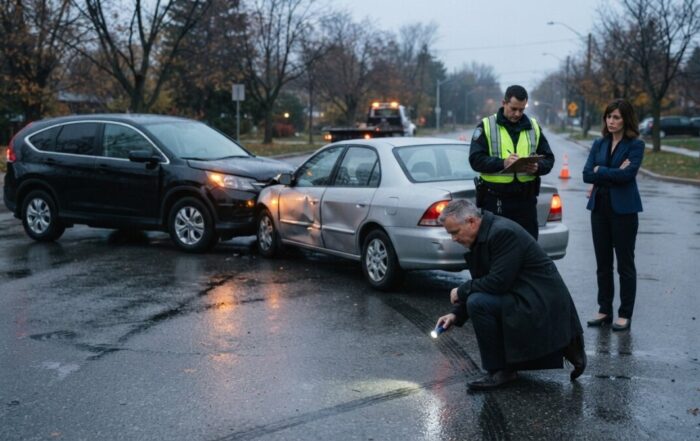
Attorneys start by listening to your story, but they do not stop there. They review the police report, witness statements, and any available video footage. They may even visit the scene to document hazards like poor lighting or missing signage. The goal is to build a clear picture of what happened and who is responsible. In our guide on why state laws differ in accident cases, we explain how these rules vary by jurisdiction and why local expertise matters.
Severity of Injuries and Medical Documentation
Liability is only half of the equation. The other half is damages, which refers to your losses. The most significant damages in most accident cases are medical expenses and pain and suffering. To evaluate these, lawyers need thorough medical documentation.
They look at the type of injury, the treatment required, and the prognosis. A soft tissue injury like whiplash might resolve in a few weeks with physical therapy. A spinal cord injury or traumatic brain injury, on the other hand, can require lifelong care. The more severe and permanent the injury, the higher the case value. Lawyers also consider whether the injury required surgery, hospitalization, or extensive rehabilitation.
Medical records are the backbone of any injury claim. They show the diagnosis, the treatment plan, and the link between the accident and your condition. If you delayed seeking treatment, defense attorneys will argue that your injuries were not serious or that they were caused by something else. That is why it is critical to see a doctor right after an accident, even if you feel fine, because some injuries do not show symptoms until days later.
Follow-up care is equally important. Missing appointments or stopping treatment early can hurt your claim. Insurance companies may argue that you were not truly injured. As we discuss in our article on how follow up care strengthens accident cases, consistent treatment creates a clear record of your recovery and validates your pain.
How Law Firms Evaluate Accident Cases in Terms of Damages
Once liability and medical proof are established, lawyers begin to calculate the value of your case. This is not an exact science, but there is a general framework. They start with your economic damages, which are concrete and verifiable. These include medical bills, future medical costs, lost wages, and loss of earning capacity. They then factor in non-economic damages like pain and suffering, emotional distress, and loss of enjoyment of life.
A common method for valuing a case is the multiplier approach. The attorney adds up all economic damages and multiplies that total by a number between 1.5 and 5, depending on the severity of the injuries and the clarity of liability. A minor injury with clear fault might get a 1.5 multiplier. A catastrophic injury with disputed liability might get a 5 multiplier. The result is a rough settlement range.
Another method is the per diem approach, where the lawyer assigns a daily rate to your pain and suffering and multiplies it by the number of days you have been affected. This is less common, but it can be effective in cases with a clear recovery timeline.
There is no standard formula, and every firm has its own approach. That said, the following factors often increase a case value:
- Permanent disability or disfigurement: Injuries that leave lasting effects command higher settlements.
- Clear liability: When the other party is obviously at fault, insurers are more willing to pay.
- High insurance policy limits: The at-fault party’s coverage caps what you can recover.
- Strong evidence: Photos, videos, and witnesses make your case harder to dispute.
After considering these elements, the lawyer compares your case to similar verdicts and settlements in your state. This helps them set a realistic target. It also helps them negotiate with the insurance company, which will try to minimize the payout.
Insurance Coverage and Available Funds
Even a perfect case cannot yield a recovery if there is no money to pay it. Lawyers must investigate all potential sources of compensation. The most common source is the at-fault party’s auto insurance or homeowners insurance. They also look at your own policies, including uninsured or underinsured motorist coverage, medical payments coverage, and health insurance subrogation rights.
In some cases, there may be multiple defendants. For example, in a commercial truck accident, the driver, the trucking company, and the maintenance contractor could all share liability. Each party’s insurance policy adds to the pool of available funds. In a premises liability case, the property owner and a management company might both be responsible.
Lawyers also check whether the at-fault party has personal assets that could be pursued if the insurance limits are insufficient. This is rare, but it matters when the defendant is wealthy. If the case involves a government entity, like a car accident caused by a pothole, there are special rules and short deadlines for filing a claim. Missing those deadlines can bar your case entirely.
Your own insurance coverage can also be a lifeline. If the at-fault driver has no insurance or too little coverage, your uninsured motorist coverage can step in. An experienced attorney will know how to tap into these policies to maximize your recovery. Without this analysis, you might accept a low offer when additional coverage was available.
Statute of Limitations and Deadlines
Time is not on your side when it comes to legal claims. Every state has a statute of limitations, which is a deadline for filing a lawsuit. If you miss that deadline, you lose your right to recover, no matter how strong your case is. For personal injury claims, the limit is typically two to three years, but it can be as short as one year in some states.
There are also notice requirements for claims against government entities, which can be as short as 90 days. Wrongful death claims have their own deadlines, and they may differ from personal injury timelines. Discovery rules can also affect the deadline. In some cases, the clock does not start running until you discover the injury or its cause. This is called the discovery rule.
Lawyers evaluate cases with these deadlines in mind. They need enough time to investigate, gather evidence, and negotiate before filing a lawsuit. If you wait too long to contact a lawyer, they may not have time to build a proper case. This is why it is essential to act quickly after an accident. To understand the full scope of time limits, read our article on how attorneys prepare accident cases for trial, which also explains why deadlines influence litigation strategy.
The Role of Evidence and Investigation
Strong evidence is the currency of personal injury law. Without it, your case is just a story. Lawyers use a variety of tools to gather proof, including subpoenas, depositions, and expert witnesses. They also rely on the evidence you collect at the scene.
If you are able, take photos of the accident scene, your injuries, and any property damage. Get contact information from witnesses. Save any dashcam footage or surveillance video. Keep all medical records and bills. These items give your lawyer a head start, but they will also conduct their own investigation.
Attorneys may hire accident reconstruction experts to analyze how the crash happened. They may consult medical experts to testify about your injuries and future needs. They might work with economists to calculate lost earning capacity. Each expert adds credibility to your claim.
The investigation phase is where many cases are won or lost. A lawyer who knows how to preserve evidence and interview witnesses can build a compelling narrative. That narrative pressures the insurance company to offer a fair settlement. If they do not, the evidence supports a strong case at trial.
In some accidents, the emotional impact is just as important as the physical injuries. Conditions like PTSD can arise after a serious crash, and they deserve recognition in your claim. Our guide on how PTSD claims are evaluated in accident cases explains how to document psychological harm and why it matters for compensation.
Negotiation and Settlement Strategy
Most personal injury cases settle out of court, and the negotiation process starts with a demand letter. Your lawyer sends the insurance company a detailed document outlining the facts, the injuries, and the value of your claim. The insurer responds with an offer, and the back-and-forth begins.
Lawyers are skilled negotiators. They know the tactics insurers use to lowball claims, such as delaying responses, disputing medical necessity, or blaming you for the accident. An attorney can counter each argument with evidence and legal authority. They also know when to hold firm and when to accept a reasonable offer.
A good settlement covers your current and future expenses. It also includes compensation for pain and suffering. If the insurer refuses to offer a fair amount, your lawyer may recommend filing a lawsuit. The threat of trial often motivates insurers to raise their offer, because they want to avoid the cost and uncertainty of a jury verdict.
However, not every case should go to trial. Lawyers evaluate the risks, the costs, and the likelihood of success. They also consider your personal preferences. Some clients want closure and accept a settlement. Others want their day in court. Your attorney should explain the pros and cons of each path, so you can make an informed decision.
Frequently Asked Questions
How long does it take to evaluate an accident case?
The evaluation process can take anywhere from a few days to several weeks, depending on the complexity of the case and the availability of evidence. Simple cases with clear liability and minor injuries are quicker to assess. Cases involving multiple parties, severe injuries, or disputed fault take longer.
What if I cannot afford a lawyer?
Most personal injury lawyers work on a contingency fee basis. This means they only get paid if you win. Their fee is a percentage of the settlement or verdict, usually between 33 and 40 percent. If you do not recover, you pay no attorney fees. This arrangement makes legal representation accessible to everyone, regardless of income.
Do I need a lawyer for a minor accident?
Even minor accidents can lead to hidden injuries or disputes over fault. If you are unsure, it is wise to consult with a lawyer. Many firms offer free initial consultations. During that meeting, they can tell you whether your case has merit and what it might be worth.
What if the insurance company offers a settlement right away?
Be cautious. Early offers are often far below the true value of your case. Insurers know that many people are desperate for money after an accident, and they exploit that vulnerability. Before accepting anything, have a lawyer review the offer. They can tell you if it is fair or if you should hold out for more.
Take the Next Step with LawyerOffer
Understanding how law firms evaluate accident cases gives you a powerful advantage. You know what evidence matters, how liability is determined, and how damages are calculated. You also understand the importance of acting quickly and seeking medical care. But knowledge alone does not recover compensation. You need a skilled advocate on your side, one who can negotiate with insurers and fight for your rights in court if necessary.
At LawyerOffer, we connect accident victims with experienced attorneys who handle cases like yours every day. Our referral service is free, and there is no obligation to hire anyone. If you have been injured in an accident, do not wait. The clock is ticking on your claim. Contact us today to get matched with a lawyer who can evaluate your case and help you pursue the compensation you deserve.

About Soraya Whitcombe
Recent Posts

Documenting Settlement Negotiations: A Legal Guide
Discover how settlement negotiations are documented to protect your claim. Get expert legal help by calling (833) 227-7919 today.

How Legal Ethics Affect Accident Litigation Outcomes
Discover how legal ethics shape accident litigation and protect your claim. Call LawyerOffer at (833) 227-7919 for help finding ethical counsel.
How Private Investigators Are Used in Accident Cases
Discover how private investigators are used in accident cases to strengthen your claim and maximize your settlement. Call (833) 227-7919 for a free attorney referral.