
How Multiple Insurance Policies Interact After Accident
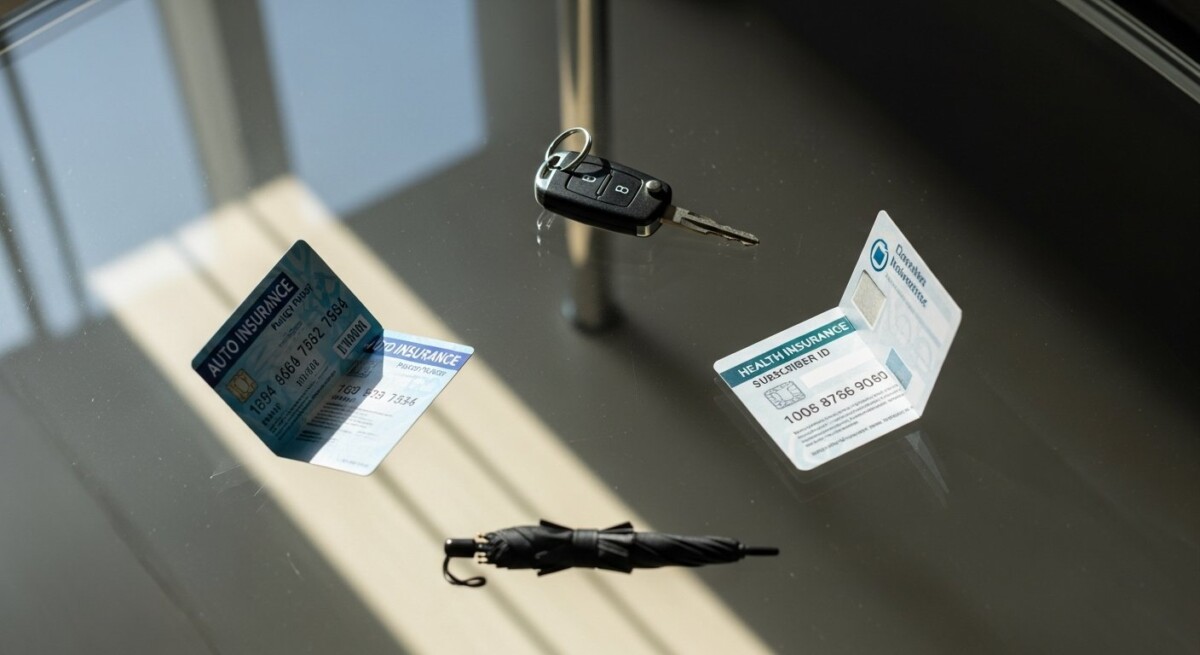
You have just been in a car accident. Your vehicle is damaged. You may have injuries. As you exchange information with the other driver, you start thinking about insurance. You have your own auto policy. The other driver has one too. You might also have health insurance and perhaps an umbrella policy. Suddenly, the question arises: how do all these policies work together? Understanding how multiple insurance policies interact after an accident is critical for maximizing your recovery and avoiding surprise out-of-pocket costs. This guide breaks down the complex rules that govern these interactions, helping you navigate the claims process with confidence.
The Foundation: Primary and Secondary Coverage
Insurance policies are designed with a hierarchy. When you file a claim after an accident, each policy has a designated role. The primary policy pays first, up to its limits. Once that policy is exhausted, the secondary or excess policy kicks in to cover remaining costs. This hierarchy prevents you from collecting more than the actual value of your loss, a principle known as indemnity.
For example, imagine you have $10,000 in medical bills from an accident. Your auto insurance includes medical payments coverage (MedPay) with a $5,000 limit. Your health insurance has a $7,500 deductible. In most states, the auto MedPay is primary, meaning it pays the first $5,000. Your health insurance then becomes secondary, covering the remaining $5,000 (minus any copays or coinsurance). Without this coordination, you might face a large deductible or gaps in coverage.
The Role of Fault in Policy Interaction
Fault determines which insurance policies are triggered first. In fault-based states, the at-fault driver’s liability insurance is the primary source of compensation for the other party’s damages. If you are injured in an accident caused by another driver, you file a claim against their liability policy. That policy pays for your medical expenses, lost wages, and property damage up to its limits.
However, what happens when the at-fault driver has minimal coverage? This is where your own policies become critical. If the other driver’s limits are too low to cover your full damages, your underinsured motorist (UIM) coverage acts as a secondary policy. Your UIM coverage fills the gap between what the at-fault driver’s insurance pays and your actual losses, up to your UIM policy limit. This interaction is often the most important one to understand after a serious accident.
Comparative Negligence and Its Effect
In states that use comparative negligence rules, your own degree of fault affects how policies interact. If you are 20% at fault for the accident, your recoverable damages are reduced by 20%. This reduction applies to all applicable policies. For instance, if your total medical bills are $50,000 and you are 20% at fault, you can only recover $40,000. The primary and secondary policies still apply in their normal order, but the total amount available is capped at the reduced figure.
Key Policy Types and How They Stack
Several different insurance policies might come into play after a single accident. Knowing how they stack can prevent you from leaving money on the table.
Liability Insurance (The Other Driver’s Policy)
This is the first line of defense when someone else causes the accident. It covers your damages up to the policy limits. If the other driver has a $25,000 limit and your medical bills are $30,000, their policy pays $25,000. The remaining $5,000 must be covered by other policies, such as your UIM coverage or health insurance.
Medical Payments Coverage (MedPay) and Personal Injury Protection (PIP)
These are no-fault coverages on your own policy. They pay for medical expenses regardless of who caused the accident. MedPay typically has lower limits (e.g., $5,000 to $10,000) and pays immediately. PIP is more comprehensive and may cover lost wages and other expenses. Both are often primary for your medical bills, meaning they pay before your health insurance. After MedPay or PIP is exhausted, health insurance becomes secondary.
Uninsured and Underinsured Motorist Coverage (UM/UIM)
As mentioned, UIM coverage steps in when the at-fault driver’s liability limits are insufficient. Uninsured motorist (UM) coverage applies when the other driver has no insurance at all. These coverages are secondary to the at-fault driver’s liability policy but primary to your health insurance for medical costs. In our guide on how umbrella insurance affects accident claims, we explain how these layers work together to protect you.
Health Insurance
Your health insurance is typically the last payer for accident-related medical expenses, after auto-related coverages like MedPay, PIP, and UIM are exhausted. However, many health insurance policies include subrogation clauses. This means that if you later receive a settlement from an at-fault driver, your health insurer can demand repayment for the medical bills they covered. This interaction can significantly reduce your net recovery if not managed carefully.
Umbrella Insurance
An umbrella policy provides an additional layer of liability coverage above your auto and homeowners policies. It is excess over all underlying policies. If you cause an accident and your auto liability limit is $300,000 but the damages are $500,000, your umbrella policy (if you have one) covers the $200,000 difference. Umbrella policies typically require you to maintain certain minimum limits on your underlying auto policy.
Coordination of Benefits: The Rules That Govern Stacking
Insurance companies use specific rules to determine which policy pays first, second, or third. These rules are known as coordination of benefits (COB). The most common COB rules include:
- Primary/Secondary Order: The policy that covers the specific loss most directly is primary. For example, auto insurance is primary for car accident injuries, while health insurance is secondary.
- Pro Rata Share: When two policies are on the same level (e.g., two auto policies covering the same vehicle), they share the loss proportionally based on their limits.
- Excess Clauses: Many policies contain an “other insurance” clause stating they are excess over other applicable insurance. This can create disputes between insurers.
- Anti-Stacking Provisions: Some states prohibit stacking multiple UM/UIM policies on the same vehicle. Other states allow stacking, meaning you can add the limits of multiple policies together for a larger total recovery.
Understanding these rules is essential. For instance, if you have two vehicles insured under separate policies and are injured while driving a third vehicle, your insurers might argue over which policy is primary. A knowledgeable attorney can help resolve these disputes and ensure you receive the full compensation you are entitled to.
Real-World Scenarios of Policy Interaction
Let us examine three common scenarios to illustrate how multiple insurance policies interact after an accident.
Scenario 1: You Are Injured by an Underinsured Driver
You have $50,000 in medical bills. The at-fault driver has a $25,000 liability limit. Your own policy includes $50,000 in UIM coverage. The at-fault driver’s insurance pays $25,000 first. You then file a UIM claim with your insurer for the remaining $25,000. Your UIM coverage pays this, leaving you with no out-of-pocket medical costs (assuming no deductibles). Your health insurance never gets involved. This is the ideal outcome.
Scenario 2: You Cause an Accident with Limited Personal Coverage
You cause an accident and have $100,000 in liability coverage. The other driver’s medical bills total $150,000. Your liability policy pays the first $100,000. The other driver then files a claim under their own UIM coverage for the remaining $50,000. Their UIM insurer pays that amount. In this case, your policy interacts with their UIM coverage as the primary payer. You do not face additional costs because your policy limits were exhausted.
Scenario 3: Accident Involving a Rideshare Vehicle
Rideshare accidents create complex policy interactions. The driver may have personal auto insurance, rideshare gap coverage, and the rideshare company’s commercial policy. Typically, the rideshare company’s policy (e.g., Uber’s or Lyft’s $1 million liability coverage) is primary when the driver is en route to pick up a passenger or during the trip. The driver’s personal policy may be primary when the app is off or when the driver is waiting for a ride request. If you are injured as a passenger, the rideshare company’s policy usually pays first. If that is insufficient, the driver’s personal policy may provide additional coverage, depending on state laws.
Maximizing Your Recovery: Practical Steps
To ensure you benefit from all available insurance layers, follow these steps after an accident:
- Exchange Complete Insurance Information: Get the other driver’s policy number, limits, and insurer contact. Also note their insurance company’s claims phone number.
- Report the Accident Promptly: Notify your own auto insurer immediately, even if you think the other driver is at fault. Your policy may require prompt notification to preserve coverage.
- Review Your Policy Declarations Page: Understand your own coverage limits for MedPay, PIP, UM, UIM, and liability. Know your deductibles.
- Keep Detailed Records: Save all medical bills, repair estimates, lost wage documentation, and correspondence with insurers.
- Consult an Attorney Before Settling: Insurance companies often offer quick settlements that do not account for all available policies. An attorney can identify all applicable coverages and negotiate for maximum recovery.
Taking these steps can mean the difference between a settlement that covers your full losses and one that leaves you with significant debt. The complexity of policy interaction means that going it alone is risky.
Frequently Asked Questions
Can I collect from both my insurance and the other driver’s insurance?
Yes, but not for the same loss twice. You can collect from the other driver’s liability policy for your damages. If that policy is insufficient, your own UIM or MedPay coverage can provide additional compensation. You cannot receive double payment for the same medical bill or repair cost, but you can use multiple policies to cover different portions of your total loss.
Does my health insurance have to pay for accident injuries?
Your health insurance will typically cover accident-related medical expenses, but it is usually secondary to auto insurance coverages like MedPay, PIP, and UIM. After those auto policies are exhausted, your health insurance pays. However, your health insurer may later seek reimbursement from any settlement you receive (subrogation).
What happens if the at-fault driver has no insurance?
If the at-fault driver has no insurance, your uninsured motorist (UM) coverage becomes the primary source of compensation for your injuries. Your UM coverage pays up to its limit. After that, your health insurance may cover remaining medical costs. Some states also require insurers to offer UM property damage coverage for vehicle repairs.
Do I need an attorney to handle multiple insurance claims?
While not legally required, an attorney is highly recommended when multiple policies are involved. Insurance companies have teams of adjusters and lawyers who work to minimize payouts. An experienced personal injury attorney can identify all applicable policies, calculate the full value of your claim, and negotiate effectively. If you need help finding representation, LawyerOffer can connect you with qualified attorneys in your area.
How does an umbrella policy interact with auto insurance?
An umbrella policy provides excess liability coverage above your auto insurance limits. If you cause an accident and your auto liability limit is $300,000, but the damages are $1 million, your umbrella policy covers the additional $700,000 (up to its limit). The umbrella policy only pays after the underlying auto policy is exhausted. For more details, see our article on how umbrella insurance affects accident claims.
Understanding how multiple insurance policies interact after an accident can feel overwhelming, but it is one of the most important steps in protecting your financial well-being. The key is to identify all potentially applicable policies, understand their order of payment, and never accept a settlement until you know the full extent of your coverage. Insurance companies are not on your side; they are businesses focused on their bottom line. By being informed and seeking professional guidance, you can ensure that your recovery is as complete as possible. If you have been in an accident and are unsure about your coverage, do not hesitate to reach out for help. The right legal partner can make all the difference in navigating this complex landscape.

About Elira Vaughn
Recent Posts

Documenting Settlement Negotiations: A Legal Guide
Discover how settlement negotiations are documented to protect your claim. Get expert legal help by calling (833) 227-7919 today.

How Legal Ethics Affect Accident Litigation Outcomes
Discover how legal ethics shape accident litigation and protect your claim. Call LawyerOffer at (833) 227-7919 for help finding ethical counsel.
How Private Investigators Are Used in Accident Cases
Discover how private investigators are used in accident cases to strengthen your claim and maximize your settlement. Call (833) 227-7919 for a free attorney referral.