
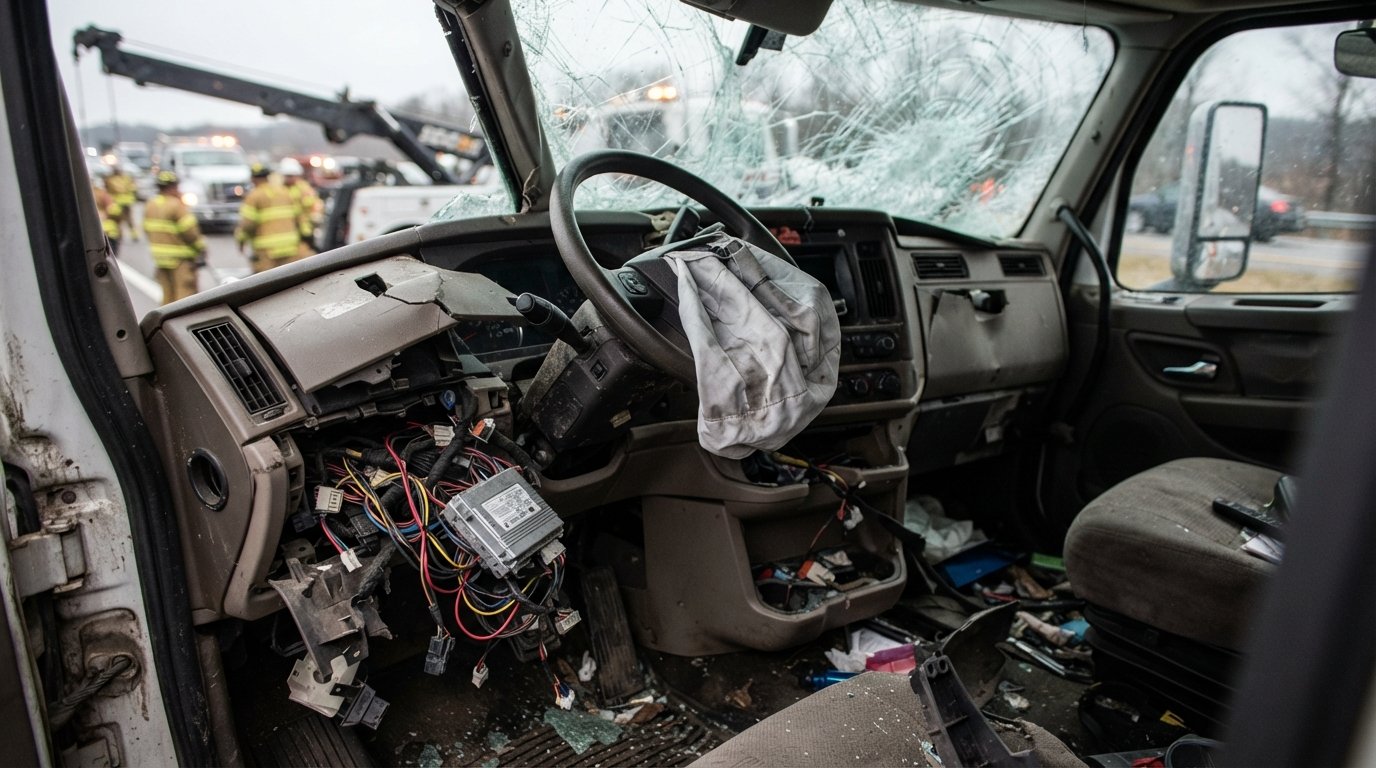
Truck Accident Black Box Data and Federal Liability Rules
Truck accident black box data and federal liability rules can make or break your claim. Call (833)-632-1198 for a free case review and protect critical evidence.

By Viona Hartwell
When a commercial truck crashes, the physical wreckage tells only part of the story. Hidden inside the cab, a network of electronic sensors, event recorders, and telematics systems captures a split-second-by-split-second account of what happened: speed, braking, steering, engine performance, and even driver attention. This truck accident black box data often becomes the most objective evidence in a claim, and federal liability rules determine who must preserve it, who can access it, and how it shapes the legal fight ahead. If you or a loved one were hurt in a crash with an 18-wheeler, understanding these two forces, the data and the rules, can mean the difference between a fair settlement and a denied claim.
Trucking companies know the value of this evidence, and some move quickly to lock it down, sometimes within hours of a crash. Injured victims and their attorneys must act just as fast. This article breaks down what black box data includes, how federal regulations govern its preservation and use, and how liability can extend far beyond the driver. Along the way, we will share practical steps and insights that help you protect your rights and build a stronger case.
What Is Truck Accident Black Box Data and Why It Matters
The term "black box" is a catch-all for several electronic systems in a commercial truck. The most well-known is the Event Data Recorder (EDR), which captures a few seconds of pre-crash data such as vehicle speed, brake application, throttle position, and seat belt status. But modern trucks also carry an Electronic Control Module (ECM) that monitors engine performance, and increasingly, advanced telematics systems that transmit real-time location, speed, and driver behavior to fleet managers. Together, these systems paint a detailed picture that can confirm or contradict witness statements and driver accounts.
For example, if a truck driver claims they were traveling at the speed limit when a car suddenly cut them off, ECM data can show whether the truck was actually speeding or whether the brakes were applied in time. Telematics may reveal that the driver had been on the road longer than allowed, a red flag for fatigue. In many cases, this data becomes the centerpiece of a truck accident claim, helping establish fault and rebutting defenses raised by the trucking company or its insurer.
The challenge is that this data is not automatically preserved. Many systems overwrite old data after a set period or after a certain number of engine cycles. Without a formal preservation demand, critical evidence can disappear within days or weeks. That is why experienced truck accident attorneys send spoliation letters and file emergency motions to secure the data before it is lost. If you are working with a legal team, ask early whether they have requested the ECM download and telematics records.
Electronic Logging Devices and Hours-of-Service Compliance
Since 2017, most commercial trucks operating in interstate commerce have been required to use Electronic Logging Devices (ELDs) to record hours of service. These devices automatically track driving time, engine hours, and duty status, replacing paper logs that were easy to falsify. The data from an ELD can show whether a driver exceeded the 11-hour driving limit, failed to take required rest breaks, or falsified their records to squeeze in more miles.
Hours-of-service violations are a common factor in truck crashes. A tired driver has slower reaction times, poorer judgment, and a higher risk of falling asleep at the wheel. When ELD data reveals a violation, it can establish negligence per se, meaning the driver and carrier violated a safety statute and may be automatically liable for resulting harm. Even without a violation, ELD records can corroborate or undermine a driver's version of events.
Federal rules require carriers to retain ELD data for at least six months, but that does not mean it will be available to you without a fight. Some carriers are slow to produce records, and by the time a lawsuit is filed, the data may be overwritten or deleted. Prompt legal action is essential to ensure the data is preserved and produced in discovery. An attorney can send a litigation hold letter and, if necessary, seek a court order to prevent destruction.
Preserving ECM and Telematics Data Before Carriers Erase It
Preservation is a race against time. Trucking companies often have policies to download ECM data after a crash, but they may not share it voluntarily, especially if it is unfavorable. Some systems automatically purge data after a certain number of days or engine starts. Telematics providers may retain data for a limited period before it is archived or deleted. Without swift action, the most persuasive evidence can vanish.
To protect your claim, you or your attorney should take the following steps as soon as possible after a crash:
- Send a spoliation letter. This formal notice demands that the trucking company, driver, and telematics provider preserve all electronic data, including ECM, EDR, ELD, GPS, and onboard camera footage.
- File a preservation motion. If the carrier does not cooperate, a court can order preservation and impose sanctions for destruction.
- Hire an expert quickly. A forensic expert can download data from the truck's systems before it is overwritten or altered.
- Request telematics records. These may show real-time speed, location, and driver behavior leading up to the crash.
Even with these steps, some data may be lost. That is why it is crucial to act within days, not weeks. If you are unsure where to start, a free case review with an attorney can help you understand your options and get the preservation process moving. For a broader look at how truck claims differ from car accident cases, see our guide on why truck accident claims differ.
FMCSA Carrier Safety Ratings and Maintenance Obligations
The Federal Motor Carrier Safety Administration (FMCSA) sets safety standards for commercial trucks and monitors carrier performance through inspections, crash reports, and compliance reviews. A carrier's safety rating can be a powerful piece of evidence in a truck accident case. If a company has a history of violations, poor maintenance, or failed inspections, that pattern can support a claim for negligent entrustment or hiring.
Federal rules require carriers to maintain their vehicles in safe operating condition and to perform regular inspections and repairs. Brake failures, tire blowouts, and steering defects are common causes of truck crashes, and maintenance records can show whether the carrier knew or should have known about a problem. In discovery, attorneys can obtain these records, along with driver qualification files, to build a case that the crash was preventable.
FMCSA data is publicly available through the agency's website, but interpreting it requires care. A carrier may have a "satisfactory" rating yet still have a high crash rate or numerous violations. Attorneys often use this data to argue that the carrier prioritized profits over safety. If you have been injured, an investigation into the carrier's safety history should be part of your legal strategy.
Vicarious Liability for Brokers, Shippers, and Leasing Companies
Liability in a truck accident often extends beyond the driver and the carrier. Under the legal doctrine of vicarious liability, an employer can be held responsible for the negligent acts of its employee if the employee was acting within the scope of employment. But the web of responsibility can be wider. Brokers who arrange shipments, shippers who load cargo, and leasing companies that provide trucks may also share fault.
For example, a broker may be liable if it negligently hired a carrier with a poor safety record. A shipper may be liable if it overloaded a truck or failed to secure cargo properly, leading to a crash. A leasing company may be liable if it leased a truck with known mechanical defects. Federal regulations and common law principles vary, but an experienced attorney can identify all potentially liable parties and pursue claims against each.
These cases are complex and require detailed investigation. Evidence such as contracts, bills of lading, and maintenance records can establish the relationships and responsibilities among the parties. Black box data can corroborate how the truck was being operated at the time, regardless of who owned it. If you are facing a battle with multiple defendants, it helps to have a lawyer who understands the interplay of federal rules and state law.
Why Federal Investigators and Attorneys Act Quickly After a Crash
After a serious truck crash, several agencies may respond. The FMCSA may conduct a compliance review, and the National Transportation Safety Board (NTSB) may investigate if the crash involves hazardous materials or multiple fatalities. These investigations can generate valuable evidence, but they also put carriers on notice to preserve data. Attorneys often coordinate with investigators to obtain reports and data downloads.
Time is of the essence because evidence can be lost, memories fade, and witnesses become hard to find. Trucking companies have teams of lawyers and investigators who arrive at the scene quickly to protect their interests. Injured victims need someone on their side doing the same. A prompt investigation can secure skid marks, road conditions, and witness statements before they disappear.
If you have been injured in a truck accident, do not wait to seek legal help. A free, confidential case review can connect you with attorneys who handle these complex claims. You can request a free case evaluation to learn about your rights and options. There is no obligation, and the consultation is confidential.
In the end, truck accident black box data and federal liability rules are powerful tools for uncovering the truth and holding responsible parties accountable. By acting quickly and understanding the rules, you can level the playing field against deep-pocketed carriers and their insurers. Whether you are negotiating a settlement or preparing for trial, the evidence from the black box and the framework of federal regulations will shape your path to recovery.