
Truck Accident Lawyer: Federal Rules and Liability
Facing a truck accident claim? A truck accident lawyer federal regulations commercial vehicle liability expert can help. Call 8336321198 for a free review.

By Audra Bellrose
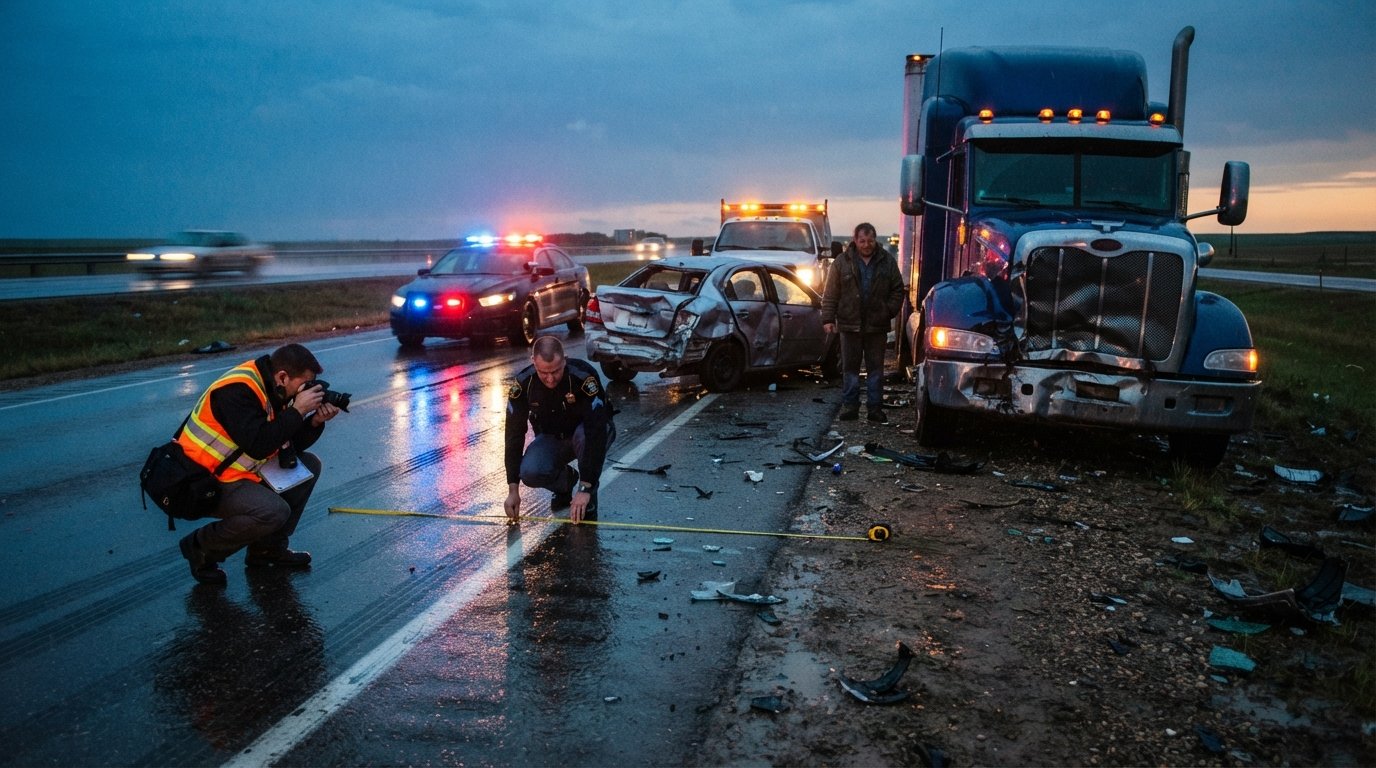
When a commercial truck collides with a passenger vehicle, the aftermath is rarely a simple fender bender. The sheer weight and size of an 80,000-pound tractor-trailer can turn a routine commute into a catastrophic event, leaving victims with life-altering injuries and a maze of legal complexities. Unlike a standard car accident, a crash involving a commercial vehicle immediately triggers a web of federal regulations, corporate insurance policies, and multi-party liability questions. If you or a loved one are facing this situation, understanding the intersection of federal law and commercial vehicle liability is the first step toward protecting your rights. You do not have to navigate this alone; seeking a commercial driver liability determination early can make a significant difference in how your case unfolds.
The stakes in these cases are extraordinarily high. Trucking companies employ teams of lawyers and safety experts whose sole job is to minimize the company's exposure immediately after a crash. They arrive at the scene quickly, sometimes before the police have finished their report, to gather evidence and build a defense. To level the playing field, you need a clear understanding of the federal rules that govern these massive vehicles and the legal theories that hold their operators accountable. This article breaks down the essential federal regulations, the concept of commercial vehicle liability, and how a specialized truck accident lawyer can use this framework to secure the compensation you deserve.
The Federal Motor Carrier Safety Regulations: A Framework for Accountability
The primary tool for holding truck drivers and their employers accountable is a set of rules known as the Federal Motor Carrier Safety Regulations (FMCSRs). These regulations are enforced by the Federal Motor Carrier Safety Administration (FMCSA), a division of the Department of Transportation. The FMCSRs cover everything from how long a driver can stay behind the wheel to how often a truck must be inspected and repaired. When a truck accident occurs, a violation of any of these rules is often a key piece of evidence that can establish negligence per se, meaning the truck driver or company is presumed to have been negligent because they broke a safety law.
One of the most critical areas of the FMCSRs is the Hours of Service (HOS) rules. These regulations strictly limit the number of consecutive hours a commercial driver can operate a vehicle and mandate specific rest periods. Fatigue is a leading cause of truck accidents, and companies sometimes pressure drivers to violate these rules to meet tight delivery schedules. If a driver was on the road for 15 hours straight without the required 10-hour break, that violation is powerful evidence of liability. A truck accident lawyer will immediately request the driver's logbooks, electronic logging device (ELD) data, and dispatch records to check for HOS violations.
Beyond hours of service, the FMCSRs also dictate strict maintenance and inspection standards. Commercial trucks are subject to rigorous periodic inspection requirements, and drivers must perform pre-trip and post-trip inspections daily. Brake failures, tire blowouts, and steering defects are common causes of catastrophic accidents. If a company skipped a required inspection or ignored a known defect, they can be held liable for the resulting harm. An attorney will examine maintenance records to determine if the truck was roadworthy at the time of the crash. To understand how these federal rules interact with state laws and driver actions, it helps to review resources like FormsByLawyers, which can provide context on legal forms and documentation that may be relevant to building a claim.
Another crucial component of the FMCSRs involves driver qualification and drug and alcohol testing. Trucking companies are required to maintain detailed files on each driver, including their driving record, medical certifications, and history of violations. They must also conduct random drug and alcohol testing. If a company failed to screen a driver properly or allowed someone with a history of substance abuse to get behind the wheel, they may be liable for negligent hiring or retention. These federal standards provide a roadmap for plaintiffs' attorneys to uncover systemic failures within a trucking company.
Understanding Commercial Vehicle Liability: Who Is Responsible?
Determining liability in a truck accident is rarely as straightforward as pointing to the driver who ran the red light. Commercial vehicle liability can extend to multiple parties, including the driver, the motor carrier, the shipper, the maintenance contractor, and even the manufacturer of a defective part. The legal doctrine of vicarious liability often holds an employer responsible for the actions of its employee if the employee was acting within the scope of their employment at the time of the accident. This means that if a truck driver causes a crash while making a delivery, the trucking company can be sued directly.
However, the employment relationship can be complex. Many trucking companies use independent contractors to avoid liability. They may claim the driver was not their employee but a separate business entity. In response, courts often look at the level of control the company exercised over the driver. If the company dictated the routes, schedules, and vehicle maintenance, the driver may be considered an employee regardless of the contract's label. An experienced truck accident lawyer will investigate the true nature of the relationship to ensure the responsible parties are named in the lawsuit.
Beyond the driver and carrier, other parties can share liability. If the accident was caused by improperly loaded cargo, the shipper or loader may be at fault. If a faulty brake system caused the crash, the parts manufacturer or the maintenance shop that serviced the truck could be liable. This multi-party scenario is why truck accident cases are so complex and require extensive investigation. The following list outlines the potential defendants in a commercial truck accident case:
- The Truck Driver: For negligent driving, fatigue, distraction, or impairment.
- The Motor Carrier: For negligent hiring, training, supervision, or vehicle maintenance.
- The Shipper or Loader: For improperly loading or securing cargo, leading to imbalance or spillage.
- The Maintenance Provider: For negligent repairs or failure to perform required inspections.
- The Manufacturer: For defective vehicle components, such as brakes or tires.
Identifying all liable parties is critical because it maximizes the available insurance coverage. A single truck driver may have minimal personal assets, but the trucking company likely carries a multi-million-dollar insurance policy. By casting a wide net, your attorney can pursue the compensation necessary to cover medical bills, lost wages, and pain and suffering.
The Role of a Truck Accident Lawyer in Navigating Federal Regulations
Hiring a lawyer who specializes in truck accidents is not just about having someone to talk to the insurance company. It is about having an advocate who understands the intricate web of federal regulations and can use them to your advantage. A specialized attorney will know exactly what evidence to preserve and how to request it before it disappears. For instance, many trucks are equipped with electronic control modules (ECMs) that record speed, braking, and engine performance in the seconds before a crash. This data can be overwritten if not downloaded promptly.
Furthermore, a truck accident lawyer will understand the nuances of the FMCSRs and how to prove a violation. They may hire accident reconstruction experts and trucking industry safety consultants to analyze the evidence and testify in court. These experts can explain how a driver's fatigue or a company's failure to maintain the vehicle directly caused the accident. The lawyer will also handle the complex negotiations with multiple insurance companies, each trying to shift blame to the other.
Perhaps most importantly, a truck accident lawyer can help you avoid the common pitfalls that follow a serious crash. Insurance adjusters for the trucking company may contact you quickly, offering a quick settlement that is far less than your case is worth. They may ask for a recorded statement that they later use against you. Your lawyer acts as a buffer, handling all communication and ensuring your rights are protected. They will also work with medical experts to document the full extent of your injuries, including future medical needs and rehabilitation costs.
Steps to Take After a Commercial Truck Accident
The actions you take immediately after a truck accident can significantly impact the outcome of your case. While the scene of a major accident is chaotic, there are steps you can take to protect yourself and your claim. First and foremost, prioritize your safety and the safety of others. Call 911 immediately to report the accident and request medical assistance. Even if you feel fine, adrenaline can mask serious injuries like internal bleeding or traumatic brain injuries. Accept medical treatment at the scene and follow up with your doctor as recommended.
Once you are safe, if you are able, gather as much information as possible. Take photos of the vehicles, the damage, the road conditions, and any visible injuries. Exchange information with the truck driver, but do not discuss fault or apologize. Get the names and contact information of any witnesses. The truck driver's employer and insurance information should be on the side of the truck. However, do not rely on the driver to provide accurate details; note the truck's DOT number and license plate.
It is crucial to avoid giving a recorded statement to the trucking company's insurance adjuster without consulting a lawyer first. These adjusters are trained to ask leading questions that can harm your case. Instead, direct all communication to your attorney. Finally, contact a qualified truck accident lawyer as soon as possible. They can begin the investigation while the evidence is still fresh and ensure that all responsible parties are held accountable. Remember that the statute of limitations for truck accidents varies by state, so acting quickly is essential.
The Impact of Federal Regulations on Your Claim
Federal regulations do more than just establish safety standards; they create a legal framework that can be used to prove negligence. In many jurisdictions, a violation of a federal safety regulation is considered negligence per se. This means that if you can prove the truck driver or company violated a specific FMCSR, you do not have to prove that they were careless in a general sense. The violation itself establishes the breach of duty. This can simplify your case and strengthen your negotiating position.
For example, if a truck driver was speeding, a violation of the basic speed law, and caused an accident, that is a clear case of negligence. But if the same driver had been on duty for 20 hours without rest, that is a violation of the HOS rules. Proving that violation not only shows the driver was negligent but also that the trucking company was negligent for allowing it to happen. This can open the door to punitive damages in some cases, which are designed to punish the company for egregious conduct.
Moreover, federal regulations set the standard for what is reasonable in the trucking industry. If a company argues that it followed all industry customs, but those customs fall short of federal requirements, the regulations trump. Your lawyer will use the FMCSRs to establish the standard of care and demonstrate how the defendant failed to meet it. This is a powerful tool in securing a fair settlement or a favorable jury verdict.
How a Lawyer Can Help You Recover Damages
The ultimate goal of a truck accident claim is to recover damages that compensate you for your losses. These damages can be economic, such as medical bills, lost wages, and property damage, or non-economic, such as pain and suffering, emotional distress, and loss of enjoyment of life. In cases involving gross negligence, punitive damages may also be available. A truck accident lawyer will work to calculate the full value of your claim, including future costs.
Because trucking companies have significant resources, they can afford to drag out litigation. They may try to wear you down financially and emotionally, hoping you will accept a low settlement. Your lawyer will fight to ensure you receive the maximum compensation possible. They will gather evidence, depose witnesses, and present a compelling case to the insurance company or a jury. If a fair settlement cannot be reached, they will take the case to trial.
In summary, the combination of federal regulations and complex liability rules makes truck accident cases distinct from ordinary car accident claims. Having a knowledgeable lawyer on your side is not a luxury; it is a necessity. They will navigate the federal regulations, identify all liable parties, and advocate fiercely for your rights. If you have been injured in a commercial truck accident, do not wait to seek legal help. The sooner you act, the better your chances of a successful recovery.