
How Alcohol Involvement Is Proven Legally in Court
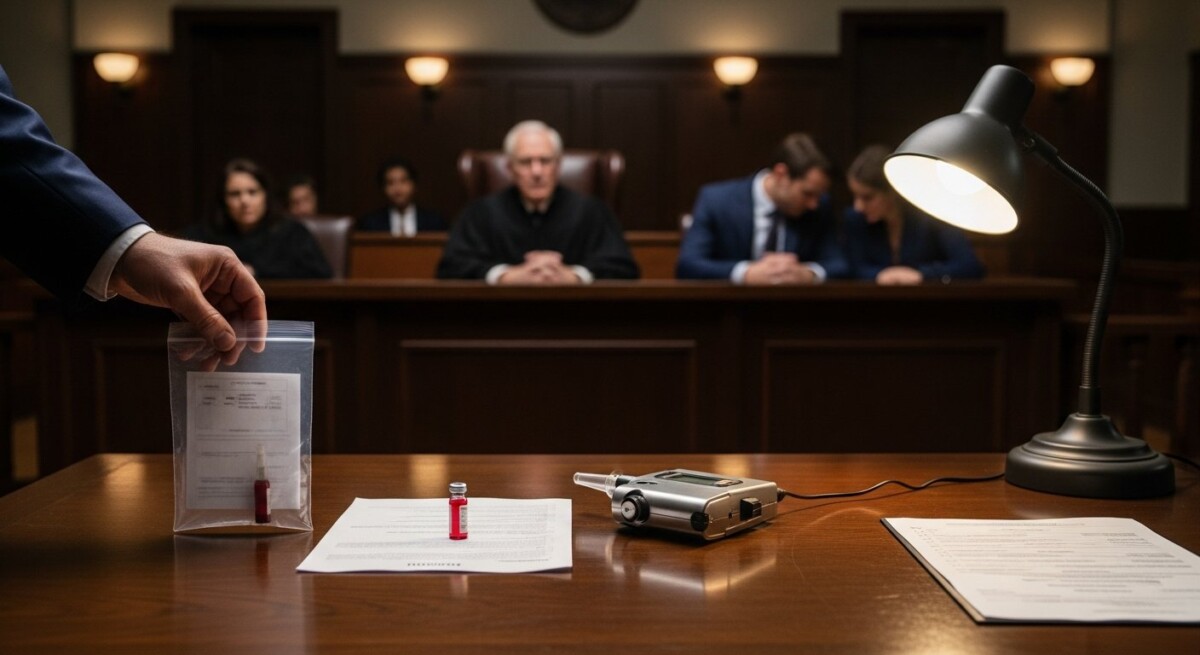
When a crash happens, one of the first questions that surfaces is whether alcohol played a role. Proving alcohol involvement is not just about what someone says at the scene. It is a legal process built on evidence, procedure, and statutory thresholds. Courts do not assume intoxication simply because someone was drinking earlier. They require proof that meets specific legal standards. For anyone facing a personal injury claim or a DUI defense, understanding how alcohol involvement is proven legally can make the difference between a strong case and a weak one.
This article breaks down the methods law enforcement and attorneys use to establish alcohol involvement, from field tests to blood analysis, and explains how courts weigh each piece of evidence. Whether you are a victim seeking compensation or a defendant building a defense, knowing these mechanisms helps you navigate the system with confidence.
The Legal Standard for Proving Alcohol Involvement
In civil cases, such as car accident lawsuits, alcohol involvement must be proven by a preponderance of the evidence. That means the plaintiff must show it is more likely than not that alcohol contributed to the crash. In criminal cases, the standard is higher: beyond a reasonable doubt. This distinction matters because the type of case dictates how much evidence is necessary and how aggressively the other side will challenge it.
Alcohol involvement is not automatically established by a high blood alcohol concentration (BAC) reading alone. The court also needs to connect the intoxication to the incident. For example, a driver with a BAC of 0.15% who rear-ends another car at a red light faces a strong presumption of impairment. But if the same driver was parked legally and hit by a distracted driver, the alcohol may be irrelevant to liability. The evidence must show that alcohol affected the person’s ability to act safely.
Primary Evidence Used to Prove Alcohol Involvement
Attorneys and law enforcement rely on a combination of observations, chemical tests, and documentation. Each piece serves a different purpose in building the full picture. The following are the most common forms of evidence used to prove alcohol involvement legally:
- Field Sobriety Tests (FSTs): Standardized tests like the walk-and-turn, one-leg stand, and horizontal gaze nystagmus. These assess balance, coordination, and eye movement, all of which alcohol impairs.
- Preliminary Alcohol Screening (PAS): A portable breath test administered at the scene. It gives a quick estimate of BAC but is not always admissible as a precise measurement.
- Chemical Tests: Blood, breath, or urine tests conducted after arrest. These are the most reliable and typically produce the legal BAC number used in court.
- Officer Observations: Testimony about slurred speech, odor of alcohol, bloodshot eyes, and erratic driving. Officers are trained to document these signs in their reports.
- Dashcam and Body Camera Footage: Video evidence can capture the driver’s behavior, the traffic violation, and the administration of field tests. It provides an objective record for the jury.
Each type of evidence has strengths and weaknesses. Field sobriety tests are subjective and can be challenged based on medical conditions or poor instructions. Chemical tests are more objective but can be attacked on grounds of improper calibration or chain of custody issues. A skilled attorney will scrutinize every step to find weaknesses.
Chemical Tests: The Gold Standard
Blood tests are widely considered the most accurate method for measuring BAC. They are typically drawn within two hours of the incident, and the sample is sent to a lab for analysis. Breath tests, such as the Intoxilyzer, are common in DUI stops but can produce false positives due to mouth alcohol or device malfunction. Urine tests are less common and generally less reliable because they measure alcohol that has been metabolized, not current impairment.
For a chemical test to be admitted, the prosecution or plaintiff must show the equipment was properly maintained and the person administering the test was certified. Defense attorneys often challenge these technicalities. If the test was not done correctly, the results may be excluded. In civil cases, the same standards apply, but the burden of proof is lower, so a well-documented test can be very persuasive.
Presumptions Based on Blood Alcohol Concentration
Many states have legal presumptions tied to BAC levels. If a driver has a BAC of 0.08% or higher, the law presumes they were under the influence. This is a rebuttable presumption, meaning the defense can try to show the test was flawed or the driver was not actually impaired. For commercial drivers, the threshold is 0.04%, and for drivers under 21, zero tolerance laws apply in many states.
These presumptions simplify the legal process because they shift the burden to the defense. In a personal injury case, a BAC of 0.08% or higher strongly supports a claim of negligence per se, meaning the driver violated a statute and is automatically considered negligent. This can significantly strengthen the plaintiff’s case and increase the likelihood of a favorable settlement or verdict.
How Field Sobriety Tests Are Used in Court
Field sobriety tests are not perfect, but they are commonly admitted as evidence. Officers use three standardized tests recommended by the National Highway Traffic Safety Administration (NHTSA). The horizontal gaze nystagmus test checks for involuntary eye movement, which is a reliable indicator of alcohol impairment. The walk-and-turn and one-leg stand tests assess balance and coordination.
These tests are considered divided attention tasks because they require the subject to listen, remember, and perform simultaneously. Alcohol impairs these cognitive and motor functions. However, the results can be challenged if the officer did not follow proper procedures, if the road was uneven, or if the subject has a medical condition that affects balance. In a legal proceeding, the officer’s training and adherence to protocol are scrutinized.
If a person refuses a chemical test, many states have implied consent laws that allow the court to use the refusal as evidence against them. The refusal itself can be presented to the jury as an indication of guilt, although defense attorneys may argue it was based on fear or advice from counsel.
Circumstantial Evidence and Witness Testimony
Not all evidence is scientific. Witness testimony can be just as powerful. A bartender or friend who saw the person drinking can testify about the number of drinks consumed. A passenger in the car can describe the driver’s behavior. Even the amount of alcohol found in the vehicle, such as empty bottles or cans, can be introduced as circumstantial evidence.
Circumstantial evidence is often used to support or contradict the chemical test results. For example, if the BAC test shows 0.10% but witnesses say the driver only had one beer, the defense might argue the test was inaccurate. Conversely, if the driver’s behavior at the scene was clearly intoxicated but the BAC was below the legal limit, the prosecution can still argue impairment based on the observations.
Courts weigh circumstantial evidence alongside direct evidence. It is not unusual for a case to hinge on a timeline of events: when the person arrived at the bar, how long they stayed, and how much they consumed. Attorneys use receipts, credit card statements, and social media posts to establish these details.
The Role of Discovery and Expert Witnesses
In litigation, both sides engage in discovery, which is the process of exchanging relevant information. This can include police reports, medical records, maintenance logs for breathalyzer machines, and the officer’s notes. Discovery allows each side to prepare their arguments and identify weaknesses in the other’s case.
Expert witnesses are often brought in to interpret the technical evidence. A toxicologist can explain how alcohol is absorbed and metabolized, and whether the BAC level at the time of testing reflects the level at the time of the incident. A crash reconstructionist can analyze skid marks, vehicle damage, and speeds to determine if the driver’s actions were consistent with impairment. These experts can make or break a case.
For a plaintiff, hiring an expert to calculate the probable BAC at the moment of the crash is crucial, especially if the blood test was taken an hour later. For a defendant, an expert might testify about the margin of error in the test or the possibility of contamination.
Challenging the Evidence: Common Defense Strategies
Defense attorneys have several avenues to challenge alcohol evidence. They may argue that the field sobriety tests were administered improperly, that the breathalyzer was not calibrated, or that the blood sample was mishandled. They might also raise procedural issues, such as a lack of probable cause for the traffic stop or the absence of a warrant for the blood draw.
Another common defense is the rising BAC argument. A person may have been below the legal limit while driving but above it when tested later, because alcohol takes time to be absorbed into the bloodstream. This is a valid scientific point, but it requires expert testimony to be credible. Similarly, the defense might argue that the driver had a medical condition, such as acid reflux, that caused a false breath test reading.
In civil cases, the stakes are different. The plaintiff does not need to prove the driver was drunk; only that alcohol was a contributing factor. Even a BAC of 0.05% can be used to show impairment in a negligence claim. The defense might try to argue that the plaintiff was also negligent, which could reduce the recovery under comparative fault rules.
Practical Steps for Proving Alcohol Involvement
If you have been injured by a driver who may have been drinking, there are steps you should take to preserve evidence:
- Call the police immediately and ensure a report is filed.
- Request that the officer administer a chemical test if they have not already.
- Take photos of the scene, including the driver’s condition if visible.
- Gather contact information from witnesses.
- Seek medical attention and document your injuries.
These steps create a record that your attorney can use to build the case. Even if the police fail to test the driver, your evidence can help establish alcohol involvement through other means.
Frequently Asked Questions
What is the legal limit for alcohol in most states?
The legal limit for drivers over 21 is 0.08% BAC in nearly all states. Commercial drivers face a lower limit of 0.04%, and drivers under 21 are subject to zero tolerance laws in many states.
Can a person be convicted of DUI without a breath test?
Yes. A conviction can be based on field sobriety tests, officer observations, witness testimony, and other evidence. A breath test is not required to prove impairment.
How long after drinking can alcohol be detected in the blood?
Alcohol can be detected in the blood for up to 12 hours after the last drink, depending on the person’s metabolism. Breath tests can detect alcohol for up to 24 hours, and urine tests for up to 48 hours.
Is a refusal to take a chemical test admissible in court?
Yes, in many states, a refusal can be used as evidence against you in a DUI case. It is also grounds for license suspension under implied consent laws.
Can a personal injury claim be based on alcohol involvement without a criminal conviction?
Absolutely. Civil cases have a lower burden of proof, so you can win a claim even if the driver was not convicted of DUI. Evidence of alcohol use can be used to show negligence.
How an Attorney Can Help
Proving alcohol involvement is a complex task that requires expert navigation of evidence rules and legal standards. An experienced personal injury attorney can gather the necessary records, work with experts, and present the evidence in a compelling way. They can also negotiate with insurance companies, who often try to downplay the role of alcohol to avoid paying higher settlements.
If you are facing a case where alcohol may be a factor, consulting with a lawyer is essential. They can evaluate your situation, advise you on the strength of your evidence, and represent your interests in court or settlement discussions. Attorney referral services like LawyerOffer can connect you with qualified professionals in your area.
Remember, the legal process is not about what you believe; it is about what you can prove. Having the right representation ensures that the evidence is presented effectively and that your rights are protected at every stage.

About Lissette Hollowell
Recent Posts
How Alcohol Involvement Is Proven Legally in Court
Learn how alcohol involvement is proven legally in court. Call (833) 227-7919 to get a free case review.
How Speed Is Proven After a Crash: Key Evidence
Learn how speeding is proven after an accident using EDR data, skid marks, and video. Call (833) 227-7919 for a free attorney referral.
How Texting Evidence Is Used in Accident Cases
Discover how texting evidence is used in accident cases to prove fault and win claims. Call (833) 227-7919 for a free case review.