
How Accident Fraud Investigations Are Conducted

When you file an injury claim after a car crash, you expect the insurance company to review the facts and pay what is fair. But sometimes, the adjuster does not simply review the evidence. Instead, the claim gets flagged for a deeper review, and you suddenly face questions that feel more like an interrogation than a settlement discussion. This happens because insurers run accident fraud investigations to verify that every claim is legitimate. Understanding how accident fraud investigations are conducted can help you prepare, protect your rights, and avoid costly mistakes that could derail your case.
Fraud investigations are not personal, but they can feel that way. Insurance companies lose billions of dollars each year to staged collisions, exaggerated injuries, and false medical billing. To combat that, they employ special investigation units (SIUs), data analytics tools, and even private surveillance. If your claim gets flagged, the process can add weeks or months to your timeline. Knowing what triggers a red flag and what happens behind the scenes gives you a strategic advantage. If you are currently dealing with a suspicious adjuster or a denied claim, contact a legal professional for guidance. You can reach our team at (833) 227-7919 for a referral to a qualified attorney.
Why Insurers Suspect Fraud in the First Place
Most accident claims are honest, but insurers cannot afford to assume that. They rely on statistical models and behavioral indicators to decide which claims need extra scrutiny. The moment you file a claim, the system assigns a risk score based on dozens of factors. A high score means your file goes to the SIU for a closer look.
Common red flags include a recent lapse in insurance coverage, a police report that was filed late, or a version of events that changes between your initial phone call and your written statement. Medical treatment that starts weeks after the accident or continues far beyond a normal recovery period also raises suspicion. Claims involving passengers who all visited the same chiropractor or lawyer often get flagged as well. If the at-fault driver has a history of prior accidents, that pattern can trigger an automated alert.
Here are the most frequent triggers that cause an insurer to open a fraud investigation:
- A delay in reporting the accident or seeking medical care without a valid explanation.
- Conflicting statements between the driver, passengers, or witnesses.
- A claim amount that is disproportionate to the visible vehicle damage.
- A claimant who recently purchased a high-limit insurance policy before the crash.
- Medical billing that includes treatments not supported by the injury mechanism.
These indicators do not prove fraud, but they justify a closer review. The insurer wants to determine whether your claim is worth paying quickly or whether it deserves litigation. If you understand that this is a risk-based process, you can prepare your documentation in a way that answers questions before they are asked. In many cases, a well-documented claim moves through the system without ever reaching the SIU.
The Role of the Special Investigation Unit
Once a claim is flagged, it is assigned to a special investigation unit. SIU investigators are often former law enforcement officers, insurance adjusters, or certified fraud examiners. They do not just look at paperwork; they actively gather evidence. Their goal is to establish the facts of the accident, the nature of your injuries, and the legitimacy of your treatment. They operate under the same legal rules as adjusters, but they have more tools and more time to dig.
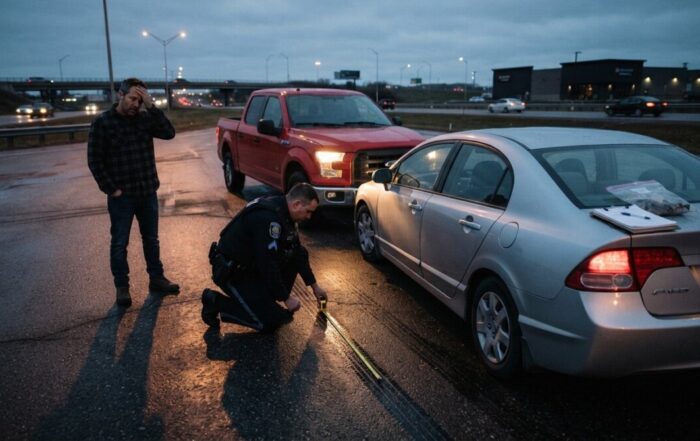
The investigator will start by reviewing the police report, medical records, and your recorded statement. They will check the accident scene, if possible, to see whether the damage matches the described impact. They may interview witnesses who were not listed on the police report. They will also run background checks on you, the other driver, and any passengers. This includes looking at social media profiles, court records, and prior insurance claims. If you have posted photos of yourself hiking or playing sports while claiming a disabling back injury, the investigator will capture that evidence.
The investigation often includes a formal examination under oath (EUO). This is a recorded interview where you answer questions under penalty of perjury. The insurer’s attorney asks about your medical history, your daily activities, and the details of the accident. The questions can feel repetitive, but that is intentional. The investigator wants to see if your answers remain consistent. Any contradiction between your EUO and your earlier statement can be used to deny the claim or reduce the payout.
Surveillance and Social Media Monitoring
Surveillance is one of the most common tools in accident fraud investigations. An investigator may park near your home and follow you to work, the grocery store, or the gym. They record your movements on video, looking for evidence that contradicts your reported limitations. If you claim you cannot lift more than ten pounds but are filmed carrying a heavy bag of groceries, that video becomes powerful evidence in court or settlement negotiations.
Social media is another goldmine for investigators. Your public posts, check-ins, and photos can undermine your claim. A picture of you at a theme park or a beach vacation can be used to argue that your injuries are not as severe as you claim. Even private accounts are not completely safe, as investigators can sometimes see mutual friends or public comments. The best practice is to assume that everything you post online can be seen by the insurance company.
Do not stop living your life, but do be smart. Avoid posting about the accident, your injuries, or any activities that could be misconstrued. If you are reading this after a crash, consider setting your social media accounts to private and pausing your posting activity until your claim settles. This is not an admission of guilt; it is simply a way to protect your case from misinterpretation.
How Medical Records Are Scrutinized
Medical records are the backbone of any injury claim. The SIU investigator will request records from every provider you visited, including your primary care physician, the emergency room, chiropractors, and physical therapists. They will compare the treatment dates with the accident date to ensure the injury is connected. They will also look for pre-existing conditions that could explain your symptoms without involving the crash.
A common tactic is to send your records to an independent medical examiner (IME). This is a doctor hired by the insurance company to review your case and provide a second opinion. The IME may examine you in person or simply review your file. Their report often concludes that your injuries are mild or that you have reached maximum medical improvement. Insurers use this report to justify a lower settlement offer.
You have the right to attend an IME, and you should bring a witness or record the session if state law allows. Answer the doctor’s questions honestly, but do not exaggerate your symptoms or downplay them. The goal is to present a consistent, truthful picture of your condition. If the IME report is biased or factually wrong, your attorney can challenge it with your own doctor’s testimony.
The Legal Side: Examinations Under Oath and Lawsuits
If the investigation does not resolve the claim, the insurer may require an examination under oath. This is not a casual conversation. It is a formal legal proceeding where your testimony is recorded and can be used against you. You are required to bring all relevant documents, including tax returns, medical bills, and employment records. The insurer’s attorney will ask detailed questions about your life before and after the accident.
An EUO is different from a deposition in a lawsuit, but it carries similar weight. You must answer truthfully, and you cannot refuse to answer without risking a denial of your claim. This is why having an attorney present is critical. Your lawyer can object to improper questions and help you avoid common pitfalls. If the insurer claims you committed fraud during the EUO, they can deny the claim and sue to recover any money already paid.
If the case goes to litigation, the discovery process allows both sides to exchange evidence. The insurer will present the surveillance footage, the IME report, and any inconsistent statements you made. Your attorney will counter with your medical records, expert testimony, and evidence of the accident’s impact on your daily life. Most cases settle before trial, but the threat of a fraud finding can pressure you into accepting a lower amount.
How to Protect Yourself During an Investigation
The best way to survive an accident fraud investigation is to be prepared before it starts. Keep a daily journal of your pain levels, your activities, and your medical appointments. Save every receipt for prescriptions, copays, and transportation to treatment. Do not miss appointments, and follow your doctor’s orders exactly. If you are told to wear a brace, wear it. If you are told not to lift heavy objects, don’t.
When you speak with the insurance adjuster, stick to the facts. Do not guess about speeds, distances, or medical details. If you do not know the answer, say so. Do not sign a medical release that gives the insurer unfettered access to your entire medical history. Instead, sign a limited release for records related to the accident and the body parts you injured. This prevents the insurer from digging into unrelated conditions like past mental health treatment or old injuries.
You should also be cautious about recorded statements. The adjuster may ask for a recorded call within days of the accident. You are not legally required to provide one, and you can politely decline until you have consulted with a lawyer. Anything you say on that call can be used to challenge your credibility later. For more context on how evidence is gathered in different scenarios, see our guide on how drug impairment is proven in accident cases.
When to Involve an Attorney
You do not need a lawyer to file a claim, but you should strongly consider one if your claim is flagged for investigation. An attorney knows how accident fraud investigations are conducted and can anticipate the insurer’s next move. They will handle the EUO, challenge the IME report, and negotiate with the SIU on your behalf. They also have access to accident reconstruction experts who can counter the insurer’s version of events.
The cost of representation is usually a contingency fee, meaning you pay nothing unless you win. This aligns the lawyer’s interests with yours. If you are worried about the pressure of an investigation, a lawyer can act as a buffer. They will tell you when to speak and when to stay silent. They can also advise you on whether to accept a settlement or push for a trial.
Different types of accidents bring different legal challenges. For example, the rules for commercial vehicles are stricter than for passenger cars. If your crash involved a commercial truck, you might benefit from reviewing how truck accident claims differ from car accident cases. Similarly, if you were hit in a parking lot, the liability analysis is unique. Read our breakdown of how parking lot accidents are evaluated legally to understand those nuances.
Frequently Asked Questions
Will I know if I am being investigated for fraud?
Not always. Insurers do not have to tell you that you are under investigation. However, you may notice signs: the adjuster becomes less friendly, requests unusual documents, or asks you to attend an examination under oath. If you receive a letter from the SIU, you are definitely under investigation.
Can I refuse to give a recorded statement?
Yes, you can decline a recorded statement. Your insurance policy may require you to cooperate, but that usually means providing information, not submitting to an interrogation. You can offer to provide a written statement instead, and you should always consult a lawyer before agreeing to a recorded call.
What happens if the insurer accuses me of fraud?
If the insurer denies your claim based on fraud, you have options. You can appeal the decision, file a complaint with your state’s insurance department, or file a lawsuit for breach of contract. A fraud accusation can also lead to criminal charges, but that is rare in civil accident cases. An attorney can defend your rights and challenge the insurer’s evidence.
Does a fraud investigation mean I will lose my claim?
No. An investigation is just a deeper review. Many claims survive the process and settle successfully. The key is to provide consistent, honest information and to have strong documentation. If you are represented by counsel, the insurer is more likely to evaluate your claim fairly than to rely on aggressive tactics.
Final Thoughts on Handling an Investigation
Accident fraud investigations are a routine part of the insurance industry, but they do not have to ruin your chance at fair compensation. The process works best when you are honest, organized, and patient. Do not let the pressure of a surveillance camera or a skeptical adjuster push you into accepting a lowball offer. Remember that the insurer’s job is to protect its bottom line, not to advocate for you.
If you believe your claim is being unfairly targeted, seek professional help. A qualified attorney can level the playing field and ensure that the investigation follows legal rules. If you were injured while working as a delivery driver, you face additional layers of liability, which are covered in our article on how delivery driver accidents are evaluated legally. Take a deep breath, gather your records, and call a legal expert. You have rights, and an investigation does not erase them. Call (833) 227-7919 today to get connected with a lawyer who can guide you through the process.

About Elias Brookstone
Recent Posts

How No Fault Insurance Systems Work: Key Facts
Learn how no fault insurance systems work and get help with your claim. Call (833) 227-7919 for a free case review.
How Comparative Negligence Laws Differ by State
Understand how comparative negligence laws differ by state and protect your settlement. Call (833) 227-7919 for a free case review.

Why State Laws Differ in Accident Cases and What That Means for You
Understand how state laws differ in accident cases and protect your claim. Call (833) 227-7919 for a free attorney referral.