
How Digital Evidence Changes Accident Cases in 2026
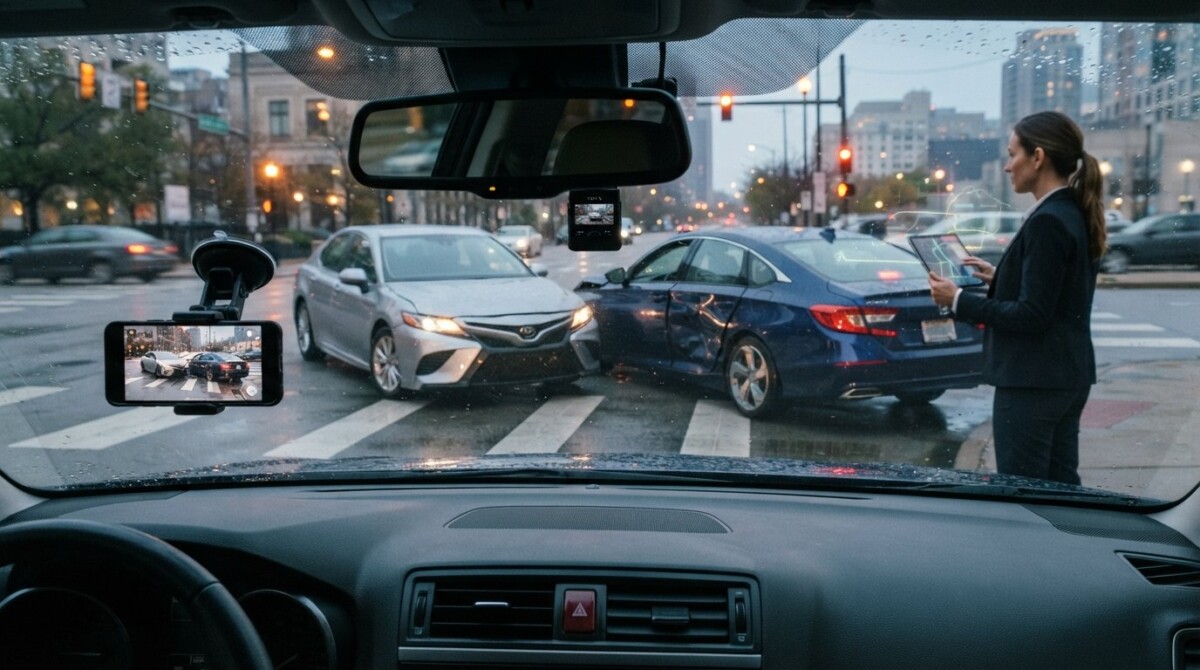
When two drivers collide at a busy intersection, the story of what happened no longer depends on memory alone. Smartphones, dash cams, and connected vehicles now capture split-second details that human witnesses often miss. For anyone hurt in a crash, this shift is not a minor technical footnote. It reshapes how liability is proven, how fast settlements move, and how much money a victim can realistically recover. Understanding the way digital evidence changes accident cases can be the difference between a claim that stalls and one that resolves on strong terms.
Personal injury claims have always revolved around proof: who was careless, when the carelessness occurred, and how it caused harm. What has changed is the raw material of proof. Instead of relying on a police sketch and a few witness statements, attorneys now collect time-stamped video, telematics data, GPS logs, and app records. Each piece can confirm a story or quietly destroy it. That dual power makes digital evidence both a shield for honest claimants and a threat to anyone exaggerating an injury.
At LawyerOffer, we connect injured people with attorneys who know how to gather and fight over this new evidence. The platform is not a law firm, but it does give crash victims a practical starting point: a way to find counsel who understands that a deleted text or an overwritten dash cam file can decide a case. In the sections below, we break down what digital evidence is, how it is used, where it goes wrong, and what you should do to protect it after an accident.
What Counts as Digital Evidence After a Crash
Digital evidence is any information stored or transmitted in electronic form that helps explain what happened before, during, or after a collision. It is broader than most people assume. A phone’s location history, a truck’s engine computer, a doorbell camera across the street, and even a fitness tracker that shows a sudden stop can all become exhibits. Attorneys and investigators cast a wide net because different sources corroborate one another. One file may show speed; another may show distraction; a third may show the force of impact.
The most common sources fall into a few families. Event data recorders, often called black boxes, log speed, braking, throttle position, and airbag deployment in the seconds surrounding a crash. Telematics systems in commercial fleets stream location, hard braking, and hours-of-service data to a central server. Smartphones generate GPS traces, call logs, and sensor readings that reveal whether a driver was holding or using a device. Surveillance and dash cam footage provides visual context that no witness statement can fully replace.
Because these sources are so varied, gathering them requires speed and legal precision. Some data overwrites itself within days. Others sit behind corporate privacy policies that resist disclosure until a subpoena arrives. That is why many firms bring in specialists early, and it is also why we often point readers to our guide on how private investigators are used in accident cases, where the role of evidence retrieval is explained in plain terms.
- Event data recorders that capture speed, braking, and airbag timing
- Fleet telematics showing location, hard stops, and driver hours
- Smartphone GPS, call, and sensor records
- Dash cams, traffic cameras, and private surveillance video
- Social media posts and messages that contradict injury claims
Each source carries its own rules for authentication. A video must be shown to be genuine and unaltered. A data report must be tied to the correct vehicle and time zone. A social media post must be linked to the right account. Courts increasingly accept this material, but only when the chain of custody is clean. A single gap in that chain can hand the other side a reason to exclude powerful proof.
How Digital Evidence Reshapes Liability and Fault
Liability in a car accident case usually turns on negligence: did one party fail to act reasonably, and did that failure cause the harm? Digital evidence answers that question with a precision that older methods could not match. A dash cam clip can show a driver drifting across a lane line three seconds before impact. A telematics report can show a commercial driver had been on the road eleven hours without rest. A phone record can place a text message in the seconds before a crash, supporting a distraction claim.
This precision cuts both ways. Insurers now use the same data to challenge claims. They may pull a claimant’s phone records to argue the victim was distracted too, or use fitness data to suggest an injury is less severe than claimed. The result is a more balanced battlefield, but also a more technical one. Cases that once hinged on dueling memories now hinge on who preserved and interpreted the data better. Attorneys who understand this dynamic can frame fault early and force the other side to respond to facts rather than speculation.
Comparative fault rules add another layer. In states that reduce recovery by the claimant’s share of fault, a video showing the victim glancing at a phone can shave a percentage off the final award. Digital evidence makes those percentage fights sharper, which is why early legal guidance matters. A firm that evaluates the data before filing can decide whether to settle quickly or build a stronger liability record. Our overview of how law firms evaluate accident cases walks through the early assessment steps that now include a data review.
There is also a strategic timing effect. When liability is clear from video, insurers often make a reasonable offer sooner because they know a jury will see the same footage. When liability is contested, the side with better data tends to control the negotiation. In both scenarios, digital evidence compresses the guesswork that once defined accident litigation.
The Impact on Damages and Settlement Value
Damages in an accident case fall into two broad buckets: economic losses like medical bills and lost wages, and non-economic losses like pain and suffering. Digital evidence influences both. Medical records can be cross-checked against activity data, and a claimant who posts photos of a hiking trip while claiming a disabling back injury will face hard questions. On the economic side, GPS and app data can support lost income claims for gig workers and delivery drivers whose earnings are tracked digitally.
The most visible effect is on settlement value. Insurers price risk, and digital evidence lowers uncertainty. A clear video of a rear-end collision at a red light gives the insurer little room to argue. A contested liability case with no footage leaves room for a low initial offer. Because digital proof tends to clarify fault and injury severity, it often pushes settlements toward the higher end of a reasonable range, though it can also expose weak claims and reduce inflated demands.
Attorneys also use digital evidence to rebut common insurer tactics. If an adjuster claims the impact was minor, a black box report showing significant delta-v (the change in velocity) can counter that narrative. If the insurer argues the victim delayed treatment, phone location data can show a prompt trip to the emergency room. Evidence that contradicts an insurer’s story is valuable leverage, and leverage is what moves settlement numbers.
Spoliation, Privacy, and the Race to Preserve Data
The single biggest risk with digital evidence is loss. Many systems overwrite data automatically: dash cams loop over old footage, telematics servers purge logs after a set period, and phone caches clear themselves. This process is called spoliation when a party fails to preserve evidence it should have kept. Courts can sanction parties for spoliation, but sanctions rarely restore a lost video. The practical lesson is simple: preservation must begin immediately.
Privacy law complicates the race. A vehicle’s data may belong to the owner, the manufacturer, or a fleet company. A phone’s contents may be protected by state and federal privacy statutes. Surveillance footage may belong to a business with no duty to hand it over without legal process. Attorneys send preservation letters to known data holders and, when needed, seek court orders. Delay gives the other side time to argue that evidence is gone or inaccessible.
There is also a confidentiality dimension worth noting. Communications between a crash victim and a lawyer are protected, and that protection matters when clients share sensitive data like medical histories or phone records. Our article on attorney client privilege in accident cases explains how that shield works and why it encourages full disclosure during evidence review.
To manage these risks, a practical preservation checklist helps:
- Photograph the scene and all vehicles before anything is moved.
- Note nearby cameras and ask owners to save footage.
- Notify your insurer and, if needed, retain counsel to send preservation letters.
- Back up your own phone data and avoid deleting anything.
- Keep the damaged vehicle and its event data recorder intact until inspected.
Following these steps does not require legal training, but it does require urgency. The sooner data is locked down, the harder it is for the other side to exploit gaps.
How Lawyers Use Digital Evidence in Negotiation and Trial
Digital evidence is not just a trial tool. It shapes every stage of a claim. In the demand letter, attorneys cite specific data points to anchor value: the recorded speed, the braking delay, the phone timestamp. In mediation, they present excerpts that make the other side’s narrative implausible. At trial, they use expert witnesses to interpret complex data for a jury. Each stage builds on the same foundation of authenticated, well-preserved records.
Experts play a central role. Accident reconstruction specialists convert telematics and black box data into diagrams and animations that show how a crash unfolded. Forensic phone examiners extract and verify digital traces without altering them. Medical experts tie injury data to crash forces. The cost of these experts is real, but so is their impact on credibility. A jury that watches a reconstruction of the collision tends to remember it long after closing arguments.
Negotiation also benefits from a credibility effect. When an insurer knows the claimant’s attorney has a strong data file, lowball offers become less attractive because the risk of a larger verdict rises. That is one reason case selection matters. Firms that invest in digital evidence tend to prioritize cases where the data supports a clear story, a process we cover in our article on how accident law firms prioritize cases. For crash victims, that means the quality of your evidence can influence whether a firm takes your case at all.
Frequently Asked Questions
How long does digital evidence last after an accident?
It depends on the source. Dash cam footage may loop every few hours or days. Telematics data may be retained for weeks or months. Phone records can last longer but may require legal process to obtain. The safest assumption is that critical data can disappear within days, so preservation should start immediately.
Can I collect digital evidence on my own?
You can and should take photos, save your own phone data, and ask nearby businesses to preserve footage. However, formal requests, subpoenas, and authentication usually require an attorney. Self-collected evidence can help, but it may be challenged if the chain of custody is unclear.
What if the other driver’s data is deleted?
If a party destroys evidence it had a duty to preserve, courts may impose sanctions, and jurors may draw negative inferences. An attorney can send preservation letters and seek court orders to prevent deletion. If data is already gone, the legal team will look for alternative sources like nearby cameras or witness phones.
Does digital evidence always help the injured person?
No. It can confirm fault and injury, but it can also reveal contributing behavior like phone use or delayed treatment. The key is to review the data early with counsel so you understand its strengths and weaknesses before the other side uses it.
How does digital evidence affect how long a case takes?
It can shorten or lengthen a case. Clear video often speeds settlement because liability is obvious. Complex data disputes, expert review, and preservation fights can add time. Most cases still resolve through negotiation, but the timeline depends on how contested the data becomes.
What This Means for Your Claim
Digital evidence has turned accident cases into information contests as much as legal ones. The side that identifies, preserves, and interprets the data fastest usually gains the upper hand. For injured people, the practical takeaway is to act quickly, avoid deleting anything, and involve an attorney before critical files vanish. For attorneys, the takeaway is that technology literacy is now a core skill, not a specialty.
If you were hurt in a crash, you do not have to navigate this alone. LawyerOffer helps you connect with qualified accident attorneys who understand how digital evidence changes accident cases and know how to use it to build a stronger claim. Reach out early, protect the data, and give yourself the best chance at a fair recovery.

About Micah Snowdon
Recent Posts

How Recent Court Rulings Impact Accident Claims in 2026
Recent court rulings are changing how accident claims are valued and defended. Call (833) 227-7919 to speak with an attorney and protect your recovery.

How New Injury Law Changes Affect Settlements in 2026
Recent injury law changes can shift your settlement value by tens of thousands. Call (833) 227-7919 to review your claim and protect your recovery.

How Updated Insurance Regulations Affect Claims in 2026
Updated insurance rules can speed up payouts or trigger new hurdles. Call (833) 227-7919 to see how updated insurance regulations affect claims.