
How Black Box Data Affects Accident Liability
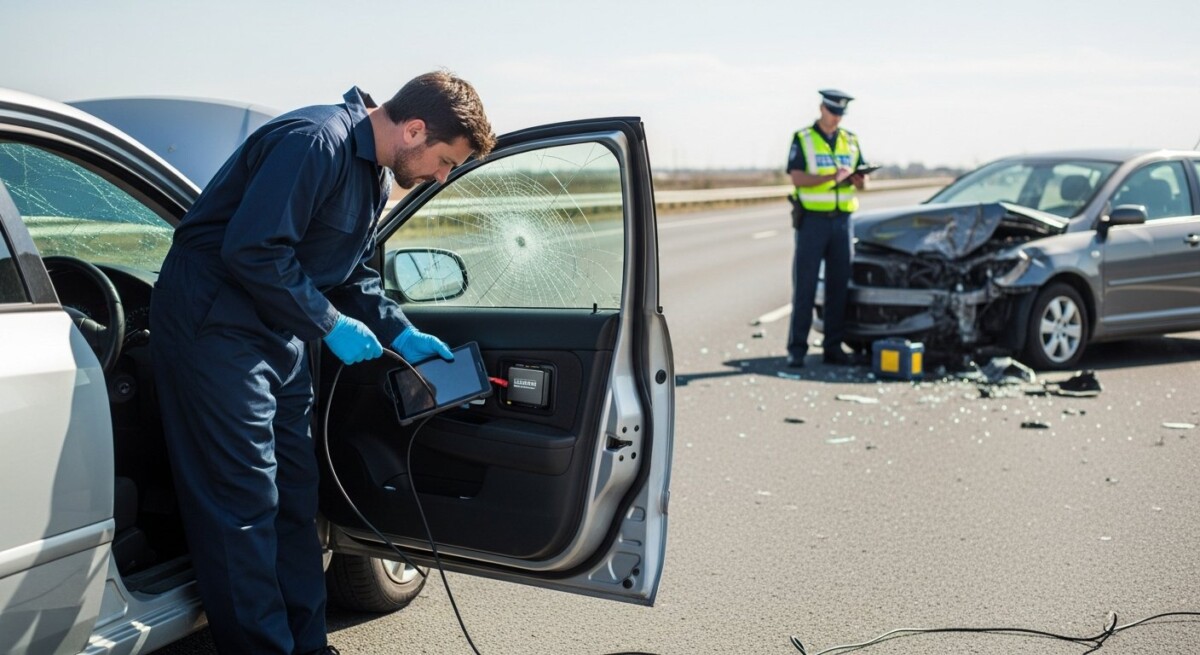
When a car crash happens, the story can become a battle of he said versus she said. Without independent witnesses, determining who caused the accident often comes down to who can present the most convincing evidence. But modern vehicles have changed that dynamic completely. Most cars manufactured after 2012 contain an Event Data Recorder (EDR), commonly known as a black box. This device silently captures critical information about your vehicle in the seconds before, during, and after a collision. For anyone involved in a serious accident, understanding how black box data affects accident liability is essential, as it can confirm fault, protect your rights, or even prove your innocence.
Black box data offers a level of objectivity that human memory cannot match. It records speed, brake usage, steering input, seatbelt status, and even engine throttle position. This information creates a precise, digital timeline of the crash. For insurance companies and attorneys, this data is gold. It removes guesswork and provides a factual baseline for negotiations. If you are pursuing a claim, knowing what this data shows and how to preserve it can be the difference between a fair settlement and a frustrating denial.
What Does a Black Box Actually Record?
The term black box is a bit of a misnomer because the EDR is not designed for retrieval by the vehicle owner. It is a small chip located inside the airbag control module, usually positioned under the center console or dashboard. Its primary purpose is to monitor safety systems, but it continuously records a rolling window of driving data. In the event of a crash, the most recent data is locked into memory and saved for later analysis.
While specific data points vary by manufacturer, most EDRs capture a consistent set of metrics. This data is usually limited to the five to ten seconds immediately preceding the impact. This may seem like a short time, but it is often enough to establish a clear picture of driver behavior.
- Vehicle speed: The exact speed at the moment of impact and the speed during sudden deceleration.
- Brake activity: Whether the brakes were applied, how hard, and for how long before the crash.
- Throttle position: How far the accelerator pedal was pressed, indicating if the driver was accelerating or maintaining speed.
- Steering angle: The degree to which the steering wheel was turned, showing evasive maneuvers or loss of control.
- Seatbelt status: Whether the driver and passengers were buckled at the time of the crash.
This information does not lie. It does not have a biased perspective, and it does not forget details. However, accessing this data is not always automatic. The information belongs to the vehicle owner, but manufacturers and law enforcement often have the tools to retrieve it. If you are involved in a crash, preserving this data is critical. If the vehicle is towed to a yard and left untouched, the data remains safe. If the car is repaired or sold, the data can be lost forever.
Why Insurers and Attorneys Value This Data
Insurance adjusters are in the business of minimizing payouts. They look for any reason to reduce liability or shift blame to the claimant. Black box data provides them with an objective tool to achieve those goals. If you claim you were rear-ended at a stoplight, but the EDR shows you were moving at 10 mph and hit the brakes suddenly, the adjuster may argue that you stopped abruptly without cause. This could reduce your settlement or eliminate it entirely.
Conversely, this data can be your greatest ally. In our guide on how accident liability is determined without witnesses, we explain that circumstantial evidence often dictates the outcome. A black box provides direct evidence. For example, if you are accused of running a red light, the EDR can show that you were traveling at a safe speed and applied the brakes in a controlled manner, suggesting you had the green light. This type of proof is difficult for an opposing party to refute.
Attorneys frequently use this data during settlement negotiations. Presenting a defense attorney with a printed report showing their client was speeding at 75 mph in a 45 mph zone changes the conversation instantly. The case shifts from a contested liability dispute to a conversation about damages. This is why legal professionals often file a preservation letter with the at-fault driver’s insurance company immediately after an accident. This letter requests that the vehicle be stored securely and that the EDR data not be overwritten or destroyed.
Legal Challenges and Privacy Concerns
Despite its utility, the use of black box data is not without controversy. The primary issue revolves around privacy and consent. In most states, the owner of the vehicle owns the data stored within the EDR. This means that law enforcement cannot simply download the information without a warrant, and insurance companies generally need the owner’s permission. However, the rules change when a lawsuit is filed. During the discovery phase, courts frequently order the release of EDR data because it is considered highly relevant to the case.
There is also the issue of data reliability. While the EDR is a precise instrument, it is not infallible. It records data based on sensors that may be damaged during the crash itself. A violent impact can cause the system to record erroneous values or fail to record altogether. Additionally, aftermarket modifications, such as changing tire sizes or altering the suspension, can affect the accuracy of speed calculations. Attorneys who are skilled in accident reconstruction understand these limitations and can challenge data that seems inconsistent with physical evidence at the scene.
Another legal challenge is the timing of the data retrieval. If a vehicle sits in a salvage yard for months, the battery may die. A dead battery does not erase the EDR memory, but it can make retrieval more difficult. Conversely, if the airbags did not deploy, the EDR may continue to overwrite the crash data with new driving information if the car is driven again. This is why securing the vehicle immediately after the accident is a priority for any knowledgeable attorney.
How to Protect Your Claim Using EDR Evidence
If you are involved in an accident, you should assume that data exists and that it will be used against you if it is unfavorable. The first step is to notify your insurance company and the at-fault party’s insurer that you intend to preserve all vehicle data. You can do this verbally, but sending a written request is better. This creates a paper trail and holds the other side accountable if they fail to preserve the evidence.
Next, consider whether you need legal representation. The stakes are high, and the data retrieval process is technical. A lawyer can hire an accident reconstruction expert who knows exactly how to download and interpret the data from specific vehicle makes and models. This is not a DIY project. Using the wrong software or procedure can corrupt the data, making it inadmissible in court. An expert ensures that the chain of custody is maintained and that the data is presented in a way that is understandable to a judge or jury.
The timing of your actions also matters. Evidence can disappear, and witnesses’ memories fade. In our article on how timing affects accident lawsuit outcome, we detail how delays can weaken a case. The same principle applies to black box data. The longer you wait, the higher the chance that the vehicle is repaired, sold, or scrapped. Acting quickly preserves your ability to use this powerful tool.
The Role of Data in Determining Fault Percentages
In many states, liability is not an all-or-nothing proposition. Comparative negligence rules allow fault to be split among multiple parties. For example, if one driver was speeding but the other made an illegal lane change, both may share responsibility. Black box data allows adjusters to assign specific percentages to each party based on actual behavior. This prevents a situation where a driver who is 20% at fault is forced to pay 100% of the damages.
This granularity is particularly valuable in multi-vehicle pileups. In a chain-reaction crash, it is often unclear who hit whom first and with what force. The EDR data from each vehicle can be synchronized using the timestamps to reconstruct the sequence of events. This can reveal that the driver in the middle was pushed into the car ahead, meaning the driver at the back is fully responsible for the entire chain. Without this data, the middle driver might have been unfairly blamed.
Insurance policies also come into play here. If you have significant assets, a standard auto policy may not be enough to cover a large judgment. In our guide on how umbrella insurance affects accident claims, we discuss how excess liability coverage protects you. Black box data can determine whether that umbrella policy is triggered. If the data shows you were grossly negligent, such as driving at extreme speeds, your insurer may deny coverage based on policy exclusions. Understanding your coverage limits is just as important as understanding the data itself.
Frequently Asked Questions
Can I refuse to share my black box data with my insurance company?
You can refuse, but there are consequences. Most auto insurance policies contain a cooperation clause. This clause requires you to assist the insurer with their investigation. If you refuse to release the data, the insurer may deny your claim entirely, arguing that you breached the policy terms. If you are worried about what the data shows, you should consult with an attorney before making a decision. However, if you are not at fault, sharing the data usually speeds up the claims process and helps you get paid faster.
Does my car have a black box?
If your vehicle was manufactured after 2012, it almost certainly has an EDR. The National Highway Traffic Safety Administration (NHTSA) mandated that all light vehicles include EDRs starting in 2013. Even some models from the late 1990s and early 2000s had basic versions of this technology. You can check your owner’s manual or look for a label on the underside of the hood that mentions “Event Data Recorder” or “Crash Data.”
Can law enforcement access my black box without a warrant?
Generally, no. In the 2015 case of State v. Withers, the Ohio Supreme Court ruled that downloading EDR data is a search under the Fourth Amendment, requiring a warrant or consent. However, this protection varies by state. Some states have specific statutes that allow police to access the data if they have probable cause, such as in a fatality accident. If you are arrested or cited, you should explicitly state that you do not consent to the retrieval of your vehicle’s data until you speak with a lawyer.
Getting Professional Help with Your Claim
Black box data is a powerful piece of evidence, but it is only useful if you know how to leverage it. The data is technical, the retrieval process is complex, and the legal rules regarding its admissibility vary by jurisdiction. Attempting to navigate this on your own can lead to mistakes that jeopardize your entire claim. A single misstep in the preservation process can render the data useless, leaving you without your strongest evidence.
Working with an experienced attorney levels the playing field. They will ensure the data is preserved, retrieved properly, and interpreted accurately. They will also challenge any data that is presented against you, questioning the methodology and the conclusions drawn by the opposing side’s experts. This is not a luxury; it is a necessity when significant financial compensation is on the line. The cost of hiring a lawyer is often outweighed by the increase in the settlement amount.
If you are dealing with the aftermath of a crash and believe black box data could affect your liability, do not wait. Contact LawyerOffer to connect with a qualified attorney in your area. We provide educational resources to help you understand your rights, and we facilitate referrals to legal professionals who can fight for your recovery. Understanding how black box data affects accident liability is the first step, but taking action is what secures your future.

About Stefan Lively
Recent Posts
How Speed Is Proven After a Crash: Key Evidence
Learn how speeding is proven after an accident using EDR data, skid marks, and video. Call (833) 227-7919 for a free attorney referral.
How Texting Evidence Is Used in Accident Cases
Discover how texting evidence is used in accident cases to prove fault and win claims. Call (833) 227-7919 for a free case review.

How Texting Evidence Is Used in Accident Cases
Learn how texting evidence is used in accident cases and how it can prove fault or challenge claims. Call (833) 227-7919 for a free attorney referral.