
How Phone Data Is Used in Accident Cases
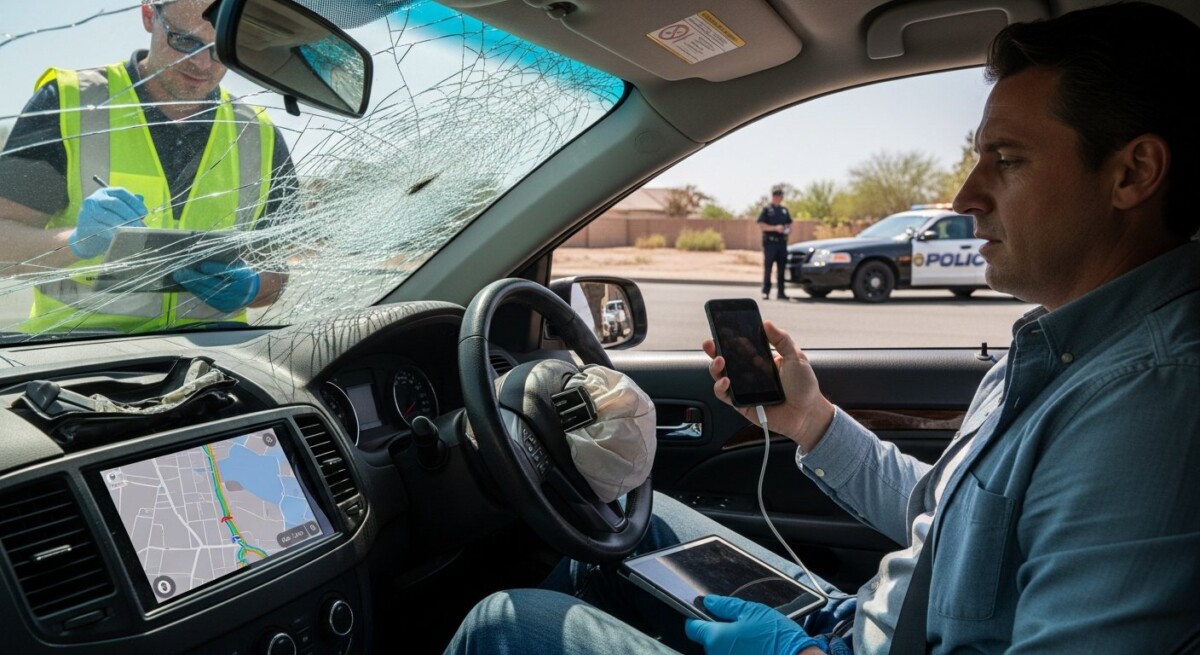
When you are hurt in a car crash, your first instinct is often to focus on injuries and vehicle damage. You might not think about your smartphone. Yet that device in your pocket can become one of the most powerful pieces of evidence in your personal injury claim. Attorneys, insurers, and accident reconstruction experts routinely analyze phone records, GPS logs, and sensor data to determine exactly what happened before, during, and after a collision. Understanding how phone data is used in accident cases can help you protect your rights and avoid costly mistakes.
This information can work for you or against you. If you were distracted at the moment of impact, that data could reduce your compensation. If you were following the rules of the road, the same data might prove the other driver was at fault. Either way, knowing what investigators can retrieve and how they use it gives you a strategic advantage. This guide breaks down the types of phone data, the legal limits on access, and the practical steps you should take after a crash.
The Types of Phone Data That Matter in an Accident Claim
Modern smartphones collect a staggering amount of information, often without you realizing it. In the aftermath of a collision, legal teams can request or subpoena several distinct categories of data. Each type serves a different purpose in reconstructing the events leading up to the crash.
Call logs and text message records are the most obvious starting points. They show whether a driver was on the phone or sending a message at the exact moment of impact. However, these records have limits. They do not always show the content of messages, and they may not reveal whether the phone was in active use. For that level of detail, investigators need to examine app usage logs and data traffic.
GPS and location services provide a more complete picture. Your phone continuously logs your position, speed, and direction. This data can place a driver at a specific intersection, show a sudden stop or swerve, and even estimate speed at the time of the crash. In newer vehicles, the phone may sync with the car’s infotainment system, creating an even richer data set.
Sensor Data and Built-in Diagnostics
Beyond GPS, accelerometers and gyroscopes inside your phone track motion. When a collision occurs, these sensors record a sudden deceleration spike. Some apps, like those designed for fitness or driving, actively log this information. Even without a dedicated app, the phone’s operating system may retain motion data in temporary files. Experts can use this to verify the force of impact and the direction of travel.
Bluetooth and Wi-Fi connections also matter. They can show whether a driver was using a hands-free system, streaming audio, or connected to a vehicle’s network. This data helps establish whether a driver was engaged in a distracting activity, even if they were not physically holding the phone. In some cases, the data can also reveal whether the phone was in airplane mode, which is a red flag for intentional concealment.
How Attorneys and Insurers Use This Evidence
The primary goal of using phone data is to establish liability. In a typical rear-end collision, the driver behind is usually at fault. But if the lead driver was checking emails and slammed on their brakes unexpectedly, the case becomes more complex. Phone data can untangle these scenarios by providing a timeline that matches each driver’s actions.
For example, a lawyer might use GPS data to show that the at-fault driver was speeding in the minutes before the crash. Alternatively, text message records could prove that the other party was texting while driving, which is direct evidence of negligence. On the defense side, an insurer might use your phone data to argue that you were distracted and therefore partially responsible for your own injuries. This is called comparative negligence, and it can reduce your settlement by the percentage of fault assigned to you.
Phone data also plays a role in verifying injury claims. If you claim you suffered a severe neck injury that left you bedridden, but your phone’s sensor data shows you walking around a theme park two days later, the defense will challenge your credibility. Conversely, if your data shows a sudden stop followed by a long period of inactivity, it supports your account of the crash and recovery period.
In our guide on how follow up care strengthens accident cases, we explain why consistent medical treatment is essential. Phone data can corroborate your compliance with that treatment plan, such as checking into physical therapy appointments or refilling prescriptions.
Legal Boundaries: What Investigators Can and Cannot Access
Your phone is not an open book. The Fourth Amendment protects against unreasonable searches, but that protection is weaker in civil cases like personal injury claims. Here, the rules are governed by civil discovery laws, which are more permissive than criminal search warrants. Still, there are limits.
In most states, an attorney must file a request for production or a subpoena to obtain phone records from a carrier. The request must be specific about the time frame and the type of data sought. Courts generally require a showing that the information is relevant and proportional to the needs of the case. A fishing expedition for years of unrelated data is unlikely to be approved.
Access to the phone itself is a different matter. If you hand your phone to an investigator, or if you voluntarily connect it to a diagnostic machine, you have effectively consented to the search. If you refuse, the opposing side can file a motion to compel. In extreme cases, a judge may impose sanctions, including the dismissal of your claim, if you refuse a lawful discovery order.
There are also laws like the federal Stored Communications Act, which protects certain electronic communications held by third parties like service providers. However, this law does not prevent a party from subpoenaing their own data or from accessing data stored locally on the device. Legal counsel can help you navigate these rules, but the safest approach is to assume that your phone data is discoverable.
Distracted Driving: The Most Common Use of Phone Data
Distracted driving is a leading cause of accidents in the United States, and phone data is the smoking gun in many of these cases. According to the National Highway Traffic Safety Administration, distracted driving claimed over 3,300 lives in a recent year. Insurers take this seriously, and they actively mine phone data to identify distraction.
If you are involved in a crash, the other driver’s insurer will likely request your phone records within days. They are looking for a pattern of usage that includes the time of the accident. A single text or a quick social media scroll at the wrong moment can change the outcome of your case. Even if you were stopped at a red light when you picked up the phone, the log will show that you were handling the device, which undermines your credibility.
To protect yourself, you should never use your phone while driving. This includes sending voice-to-text messages and using GPS apps that require manual input. If you must use the phone, pull over to a safe location. This simple habit can prevent a catastrophic injury and preserve your legal position.
What to Do Immediately After an Accident
The actions you take in the minutes and hours after a crash can significantly influence how phone data is used in your favor. First, call 911 and report the accident. Do not delete any data from your phone, even if it feels embarrassing or incriminating. Deleting messages or clearing your history can be interpreted as spoliation of evidence, which carries severe legal penalties.
Second, document the scene with your phone, but do so carefully. Taking photos of the vehicles, skid marks, and road conditions is helpful. However, do not post anything about the accident on social media. Insurance adjusters routinely monitor social networks, and a casual post about feeling “okay” can be used to minimize your injuries.
Third, be cautious about giving your phone to law enforcement or insurance representatives. You have a right to consult with an attorney first. Politely decline immediate access and state that you will provide the necessary information through your legal counsel. This is not an admission of guilt; it is a standard protective measure.
Preserving Evidence and Avoiding Common Mistakes
Here are the critical steps to preserve your phone data and your claim:
- Do not perform a factory reset or erase any apps, call logs, or text messages after the accident.
- Disable automatic cloud backup deletion, and ensure that location history is not being cleared.
- Keep the phone charged and powered on, as some data is only captured when the device is active.
- Do not install new apps or update the operating system until your attorney has reviewed the device.
Each of these steps protects the integrity of the evidence. A forensic expert can often recover deleted files, but that process is easier and more reliable when the device has not been tampered with. The moment you alter the phone, you risk losing crucial data or facing accusations of obstruction.
The emotional stress of an accident can make you forget these steps. That is why having a trusted legal partner matters. They can issue a preservation letter to the phone carrier and the other party, ensuring that text message records and call logs are retained for the duration of the case.
When Phone Data Helps Your Case
It is not all bad news. Phone data can be your strongest ally in proving that you were not at fault. For example, if the other driver claims you ran a red light, your GPS data can show that you were stopped at the intersection and only proceeded when the light changed. This is a precise, objective rebuttal to a subjective accusation.
Similarly, if you were hit by a commercial truck, the truck driver’s phone data might show that they were using a delivery app at the time of the crash. This is powerful evidence of negligence that can lead to a higher settlement or a successful trial verdict. In cases involving catastrophic injuries, this data can be the difference between a modest offer and a life-changing award.
Phone data also helps establish the severity of the impact. The sensor data showing a high-speed collision can support your claim for substantial medical expenses and pain and suffering. It can also help your accident reconstruction expert build a compelling narrative for the jury, making the abstract concept of “force” tangible and understandable.
For victims of serious crashes, the psychological impact is often overlooked. If you are experiencing anxiety or depression after the accident, your phone data might show a sudden decrease in physical activity or a change in sleep patterns (tracked by your phone’s health app). This can support a claim for emotional distress. Our analysis of how PTSD claims are evaluated in accident cases offers deeper insight into this process.
Frequently Asked Questions
Can the police access my phone without a warrant after an accident?
In most cases, no. A warrant is required for a forensic search of a phone by law enforcement in a criminal investigation. However, in a civil accident case, the rules are different. The other party’s attorney can subpoena your phone records from the carrier without a warrant, and you may be required to provide your phone for inspection if a judge orders it.
Will my insurance rates increase if my phone data shows I was distracted?
Yes, it is highly likely. If your phone data shows that you were texting or using an app at the time of the crash, the insurer will almost certainly raise your rates or non-renew your policy. Worse, they may deny your claim entirely if they can prove you were violating a state law against distracted driving.
How far back can investigators retrieve phone location data?
It depends on the carrier and the device settings. Some carriers retain location data for up to two years, while cloud services like Google or Apple may store it indefinitely. Even if you turn off location services, your phone connects to cell towers, and those logs are maintained by the carrier for a specific period, often 18 to 24 months.
Can I refuse to provide my phone to the other side?
You can refuse initially, but a court can compel you to produce it. If you continue to refuse after a court order, you risk having your case dismissed or receiving an adverse inference instruction. This means the jury will be told they can assume the data would have been unfavorable to you. It is rarely worth the risk.
What should I do if I used my phone right before the crash?
You should be honest with your attorney immediately. Do not attempt to hide or delete the evidence. Your attorney can assess the situation and potentially negotiate a better outcome than if you are caught lying later. In some cases, the usage might have been legally permissible, such as a hands-free call, which changes the analysis.
Taking the Next Step with Legal Help
Navigating the complexities of phone data, civil discovery, and insurance negotiations is overwhelming for most people. You do not have to do it alone. An experienced attorney can subpoena the other driver’s data, hire forensic experts to analyze your device, and build a strategy that protects your interests. They know what to look for and how to present it to an insurance adjuster or a jury.
If you are facing a personal injury case, the time to act is now. Phone data is often time-sensitive; carriers may purge records, and cloud backups may overwrite crucial files. Preserving that evidence requires prompt action. A lawyer can send the necessary legal holds to ensure nothing is deleted before you have a chance to use it.
Do not let a simple mistake turn your accident into a legal nightmare. Your smartphone tells a story, and with the right legal guidance, that story can support your path to recovery and full compensation. If you are ready to discuss your case with a qualified professional, reach out to a legal referral service to get connected with an attorney who handles car accident claims in your state.
Understanding how phone data is used in accident cases is your first line of defense. It empowers you to make informed decisions, avoid common pitfalls, and secure the maximum settlement you deserve. Remember that every text, every GPS ping, and every sensor reading can be used as evidence. Handle your phone with care, and let a professional handle the legal heavy lifting.

About Camden Roth
Recent Posts
How Speed Is Proven After a Crash: Key Evidence
Learn how speeding is proven after an accident using EDR data, skid marks, and video. Call (833) 227-7919 for a free attorney referral.
How Texting Evidence Is Used in Accident Cases
Discover how texting evidence is used in accident cases to prove fault and win claims. Call (833) 227-7919 for a free case review.
How Texting Evidence Is Used in Accident Cases
Learn how texting evidence is used in accident cases and how it can prove fault or challenge claims. Call (833) 227-7919 for a free attorney referral.