
Proving Distracted Driving in Court: Evidence That Wins
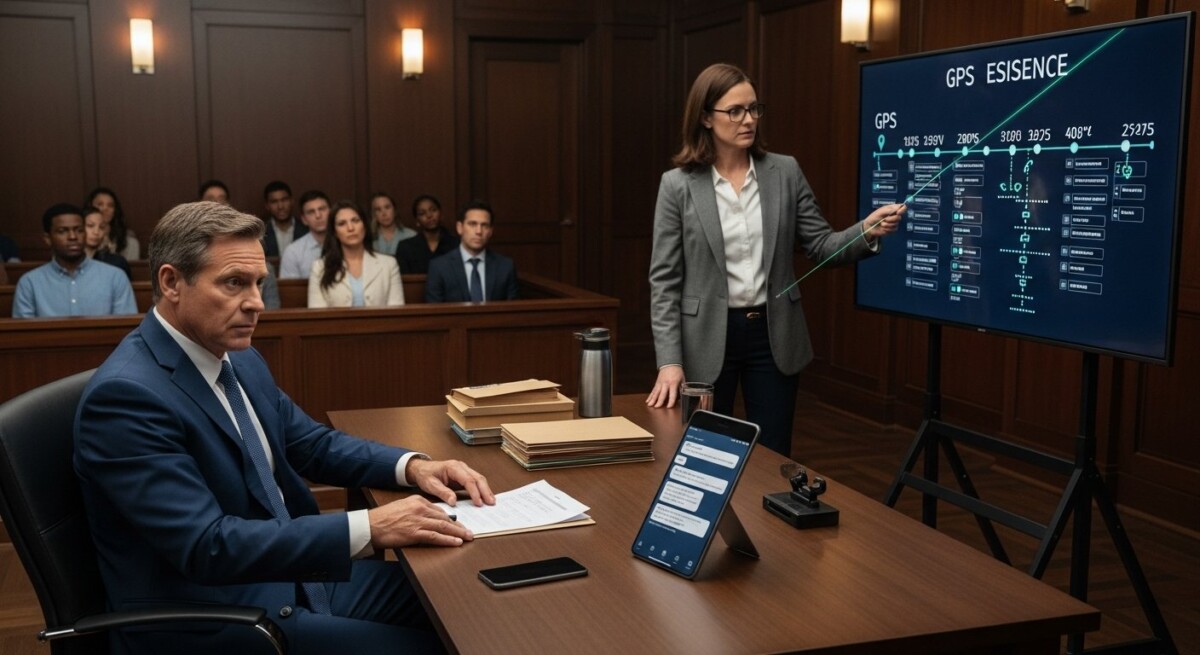
Distracted driving causes thousands of serious crashes every year, yet proving it in court is rarely straightforward. Unlike drunk driving, where a breathalyzer provides clear evidence, distracted driving often leaves no direct physical trace. Attorneys must reconstruct the driver’s actions through phone records, witness testimony, and digital data. Understanding how distracted driving is proven in court can help victims build stronger claims and secure fair compensation for their injuries.
If you or a loved one has been injured by a distracted driver, you may feel overwhelmed by the legal process. The burden of proof rests on your shoulders, but you do not have to face it alone. Legal professionals and referral services can connect you with attorneys who know exactly what evidence judges and juries expect. This article explains the methods lawyers use, the challenges they overcome, and the steps you can take to protect your case.
The Legal Standard for Distracted Driving Cases
In civil court, distracted driving claims generally rely on the legal concept of negligence. To win, you must prove four elements: the driver owed you a duty of care, the driver breached that duty by engaging in distracting activities, the breach caused the accident, and you suffered damages as a result. Proving the breach is the hardest part because it requires showing what the driver was doing in the moments before the crash.
Courts recognize three main categories of distraction: visual (taking eyes off the road), manual (taking hands off the wheel), and cognitive (taking the mind off driving). Texting while driving involves all three, which is why it receives the most scrutiny. However, other behaviors like eating, adjusting the radio, or talking to passengers also qualify. The key is demonstrating that the driver’s attention was diverted in a way that made the crash foreseeable.
Because distracted driving is a form of negligence, the same rules apply as in other personal injury claims. Our guide on how nerve damage claims are proven in court shows that documentation and expert testimony are often the backbone of civil litigation. The same principles apply here, though the specific evidence differs.
Phone Records: The Foundation of a Distracted Driving Claim
Cell phone records are often the most powerful evidence in distracted driving cases. Attorneys can subpoena call logs, text message timestamps, and data usage records from the driver’s carrier. If records show the driver sent a text message at the exact time of the crash, that creates a strong inference of distraction. Even a call that connected seconds before impact can support your claim.
Modern smartphones also generate location data and app usage logs. An attorney may hire a digital forensics expert to extract this information from the driver’s phone or from cloud backups. These experts can often determine whether the driver was actively typing, scrolling, or using a navigation app when the collision occurred. This level of detail can be persuasive to a jury.
However, phone records alone rarely tell the whole story. Drivers may claim they were using a hands-free device or that someone else was using the phone. To counter these defenses, lawyers look for corroborating evidence such as:
- Witness statements describing the driver looking down or holding a device
- Dashcam or traffic camera footage showing the driver’s behavior
- Vehicle data from the event data recorder (EDR) showing sudden braking or swerving
- Social media posts or messages sent around the time of the crash
- Testimony from passengers about the driver’s actions
Each piece of evidence strengthens the overall picture. A single text message timestamp may not be enough, but combined with witness testimony and vehicle data, it becomes harder for the defense to deny distraction. Attorneys often present this evidence chronologically to show the jury exactly what happened in the seconds before impact.
Eyewitness Testimony and Its Limits
Eyewitnesses can provide compelling testimony about a driver’s actions. A witness may recall seeing the driver hunched over a phone, drifting across lanes, or failing to brake. In some cases, passengers in the other vehicle may have observed the driver’s face illuminated by a screen. This type of testimony humanizes the case and helps jurors understand the driver’s state of mind.
Yet eyewitness testimony is not always reliable. People often misremember details, especially in high-stress situations. Defense attorneys will attack inconsistencies in witness accounts, pointing out that the witness could not see clearly or was distracted themselves. For this reason, lawyers encourage witnesses to write down what they saw as soon as possible after the accident. A contemporaneous statement carries more weight than a recollection offered months later.
Surveillance footage from nearby businesses, traffic cameras, or red-light cameras can corroborate witness testimony. If a camera captured the driver’s vehicle swerving or failing to stop, that visual evidence is difficult to refute. In some cases, footage even shows the driver holding a phone, though camera angles often make this hard to confirm. Attorneys work with video enhancement experts to clarify blurry images and extract details that are not visible to the naked eye.
Event Data Recorders and Vehicle Telematics
Most modern vehicles are equipped with event data recorders (EDRs), sometimes called automotive black boxes. These devices capture data from the seconds before a crash, including vehicle speed, throttle position, brake application, and steering input. If the data shows the driver did not brake at all before a collision, that suggests they were not paying attention.
EDR data can also reveal erratic driving patterns, such as sudden swerves or rapid acceleration, that indicate a lapse in focus. However, EDRs do not directly measure distraction. They only show the vehicle’s physical response to the driver’s inputs. Lawyers must combine EDR data with other evidence to tell a complete story.
Vehicle telematics systems, such as those offered by automakers or insurance companies, provide even more detailed information. These systems may record GPS routes, hard braking events, and even phone usage if the vehicle supports Apple CarPlay or Android Auto. An attorney can request this data through discovery, though the driver may need to consent to its release. In some states, courts have ruled that EDR data belongs to the vehicle owner, which can complicate access.
When EDR data is available, it can be a game-changer. For example, if the data shows the driver was traveling at full speed without any evasive action, the defense must explain why a reasonable driver would not have reacted. This is especially powerful in cases where the driver claims they looked up just before the crash. The data often contradicts such claims, as our analysis of car accident lawyer strategies shows.
The Role of Expert Witnesses
Expert witnesses play a crucial role in distracted driving cases. Accident reconstruction experts use physical evidence from the scene, vehicle damage, and EDR data to calculate speeds and trajectories. Their analysis can show that the crash occurred because the driver failed to react, which supports the distraction theory. These experts often use computer simulations to demonstrate the accident sequence to the jury.
Human factors experts analyze driver behavior and perception. They can explain how long it takes a driver to process a hazard and apply the brakes, a concept known as perception-reaction time. If the evidence shows the driver had ample time to react but did not, the expert can opine that the driver was likely distracted. This testimony helps jurors understand why a driver might not have braked in a situation where a focused driver would have.
Digital forensics experts extract and interpret data from phones, navigation systems, and connected car platforms. They can often recover deleted messages, identify when apps were opened, and determine whether the driver was typing or scrolling. This technical expertise is essential when phone records alone are insufficient. The combination of expert testimony and hard data creates a powerful case that is difficult to overcome.
If the case involves psychological injuries, such as post-traumatic stress or chronic pain, medical experts may also testify. Our guide on proving psychological injuries in court explains how these experts document emotional harm. While not directly related to distraction, this testimony establishes the full extent of your damages, which increases the compensation you can recover.
Challenging Common Defenses
Defense attorneys often argue that the driver was not distracted, but rather that the accident was unavoidable or caused by the plaintiff. They may claim the driver was using a hands-free system, which some states allow, or that the phone was being used for navigation. To counter these arguments, your attorney must show that any phone use, even hands-free, can be distracting when it diverts cognitive attention.
Another common defense is that the other driver caused the crash. The defense may argue that the plaintiff made an illegal turn, ran a red light, or was speeding. In response, your lawyer will use accident reconstruction and witness testimony to show that the defendant’s distraction was the primary cause. Even if the plaintiff was partially at fault, comparative negligence laws in many states allow recovery as long as the plaintiff is less than 50% at fault.
Defendants may also claim that the phone call or text occurred after the crash, not before. Attorneys must carefully analyze timestamps to refute this. Cellular records often show the exact time a message was sent or received, and EDR data provides the precise time of impact. If the text was sent seconds before impact, the argument collapses. This is why preserving evidence immediately after the accident is so important.
Steps to Strengthen Your Case Early
What you do immediately after a crash can make or break your case. If you are physically able, take photos of the scene, the vehicles, and any visible injuries. Ask witnesses for their contact information and whether they saw the other driver using a phone. Report the accident to the police and request a copy of the police report, which may include observations about the other driver’s behavior.
Seek medical attention right away, even if you feel fine. Some injuries, such as whiplash or concussions, take hours or days to appear. Medical records create a paper trail linking your injuries to the crash. If you wait too long to see a doctor, the defense may argue that your injuries were pre-existing or unrelated to the accident.
Preserve your own phone records and vehicle data. Your attorney may need to show that you were not distracted, especially if the defense tries to shift blame. Do not delete any messages or apps, and do not post about the accident on social media. Insurance companies and defense attorneys often monitor social media for posts that contradict your claims.
Finally, do not speak to the other driver’s insurance company without legal advice. They may use your statements against you or pressure you into a quick settlement that undervalues your claim. A referral service like LawyerOffer can connect you with an attorney who will handle communications and protect your rights.
Frequently Asked Questions
Can a distracted driving case win without phone records?
Yes, but it is harder. Witness testimony, dashcam footage, and EDR data can all support a distracted driving claim. Phone records are the strongest evidence, but other proof can be sufficient if it clearly shows the driver’s attention was diverted.
How long do I have to file a distracted driving lawsuit?
Each state has a statute of limitations for personal injury claims, typically ranging from one to six years. It is critical to act quickly, as evidence may be lost and witnesses may become unavailable. An attorney can confirm the deadline in your state.
What compensation can I recover in a distracted driving case?
You can recover economic damages such as medical bills, lost wages, and property damage. You may also recover non-economic damages for pain and suffering, emotional distress, and loss of enjoyment of life. In cases involving gross negligence, punitive damages may be available.
Is texting while driving always considered negligence?
In most states, texting while driving is illegal, and violating the law is considered negligence per se. This means the driver is automatically deemed negligent if the violation caused the accident. However, you still need to prove that the texting led to the crash.
Building Your Case with Professional Guidance
Proving distracted driving in court requires a strategic combination of evidence, expert testimony, and legal knowledge. You do not need to navigate this process alone. A qualified attorney can subpoena records, hire experts, and build a narrative that resonates with a jury. If you are unsure where to start, a legal referral service can match you with a lawyer who has experience in these cases.
The evidence in distracted driving cases is often technical, but the goal is simple: to show that the driver made a choice that endangered your life. With the right representation, you can hold them accountable and recover the compensation you deserve. Document everything, act quickly, and let a professional guide you through the legal system.

About Viona Hartwell
Recent Posts
How Speed Is Proven After a Crash: Key Evidence
Learn how speeding is proven after an accident using EDR data, skid marks, and video. Call (833) 227-7919 for a free attorney referral.
How Texting Evidence Is Used in Accident Cases
Discover how texting evidence is used in accident cases to prove fault and win claims. Call (833) 227-7919 for a free case review.
How Texting Evidence Is Used in Accident Cases
Learn how texting evidence is used in accident cases and how it can prove fault or challenge claims. Call (833) 227-7919 for a free attorney referral.