
How Texting Evidence Is Used in Accident Cases
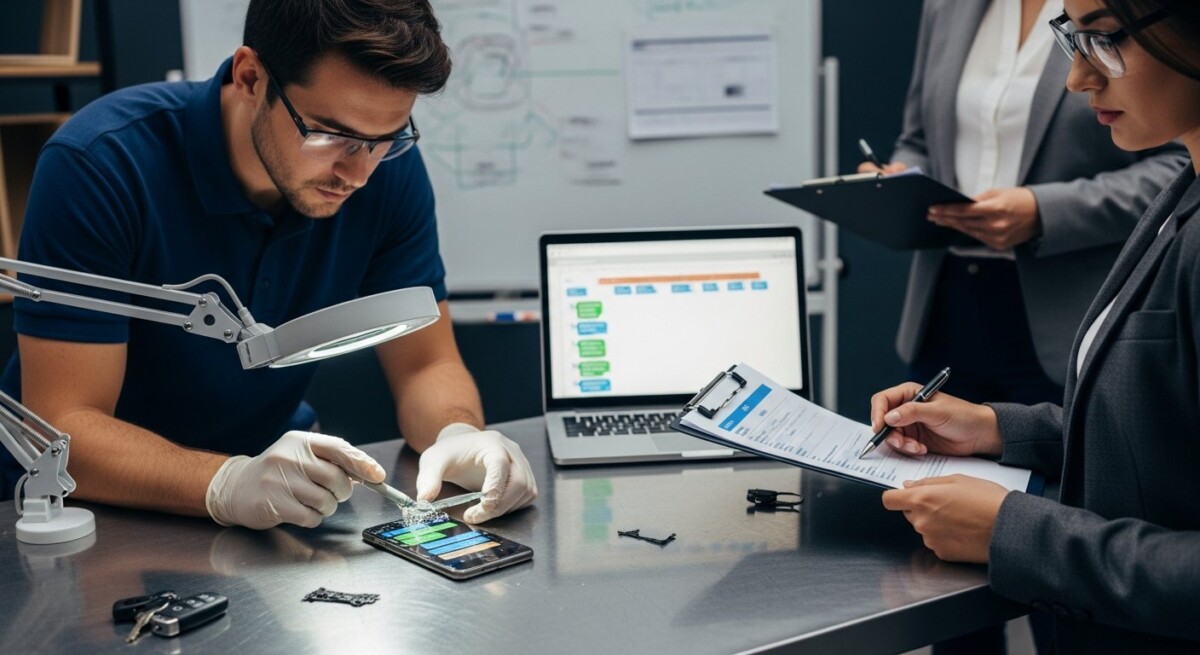
When you are hurt in a car crash, the last thing you expect is for your own phone to become a key piece of evidence. Yet in today’s connected world, a single text message can shift the entire direction of an accident claim. Attorneys and insurance adjusters now routinely request phone records, and they know exactly how texting evidence is used in accident cases to prove fault, challenge credibility, or even disprove a claim. Understanding this process can help you protect your rights, whether you are the injured party or the driver being accused of distraction.
Texting evidence goes far beyond reading a message aloud in court. It includes the content of messages, the timestamps, the duration of a texting session, and even metadata that reveals when a phone was unlocked or an app was used. This data can place a phone in a driver’s hand at the precise moment of a collision. For victims, this evidence can be the difference between a fair settlement and a denied claim. For legal professionals, it is a tool to reconstruct events with surprising accuracy.
In this guide, we break down how texting evidence is used in accident cases, what you need to know if your phone is requested, and how to work with a lawyer who can use this evidence effectively. If you are dealing with an accident claim right now, you can call (833) 227-7919 to discuss your situation with a qualified attorney through LawyerOffer’s referral service.
The Legal Foundation of Texting Evidence
Texting evidence is a form of electronic data that can be admitted in court if it meets certain legal standards. The most critical standard is authentication. This means the party presenting the evidence must show that the text messages are genuine and that they have not been altered. In practice, this often involves obtaining records directly from a wireless carrier, which are considered more reliable than a screenshot taken from a phone.
Another key principle is relevance. The evidence must relate to the facts of the case. For example, if a driver sent a text message three minutes before a crash, that message may not be relevant unless it proves the driver was still engaged with the phone at the time of impact. However, if a message was sent at the exact moment of the collision, it becomes highly relevant. Courts also consider whether the evidence is more prejudicial than probative, but in most accident cases, texting evidence is deemed admissible because it directly speaks to negligence.
Beyond the messages themselves, metadata plays a crucial role. Metadata can include the exact time a message was sent, the cell tower that handled the transmission, and the duration of a call or text session. This information is often obtained through a subpoena or a discovery request. For a thorough explanation of how broader phone data is used, read our guide on how phone data is used in accident cases.
How Texting Evidence Is Used to Prove Distracted Driving
Distracted driving is now a leading cause of accidents, and texting is the most common distraction. To prove that a driver was texting at the time of a crash, attorneys typically look for three things: the content of the message, the timing of the message, and the physical evidence of phone use.
The content of a message can show intent or state of mind. For example, a text that says “On my way, running late” may not prove distraction, but a message that says “Look at this video” suggests the driver was not paying attention to the road. Timing is even more important. If a text was sent at 3:45:12 PM and the crash occurred at 3:45:15 PM, that is strong evidence of distraction. Physical evidence, such as the phone’s screen being unlocked or an app being in use, can corroborate the timing.
Attorneys often use a combination of these elements to build a timeline. Here is how they typically approach it:
- Obtain a court order or subpoena for the driver’s phone records from the wireless carrier.
- Analyze the metadata to identify the exact time and duration of each text message.
- Compare that timeline with the accident report, witness statements, and any traffic camera footage.
- Look for patterns, such as repeated texting over a short period, which may indicate a habit of distracted driving.
- Use the evidence to negotiate with insurance companies or present it in court.
Insurance companies are particularly interested in this evidence because it can help them deny a claim or reduce a payout. If you are the at-fault driver, this evidence can be damaging. If you are the victim, it can be your strongest tool. In either case, having an attorney who knows how to handle electronic evidence is essential.
Texting Evidence in Comparative Fault Cases
Even if you were not the one texting, texting evidence can still affect your claim through comparative fault. Many states use a system of comparative negligence, where each party’s percentage of fault reduces their recovery. For example, if you were rear-ended by a texting driver, but you were also checking your phone at a red light, the other side might argue that you were partially at fault for not noticing the impending collision.
Texting evidence can be used to challenge your version of events. If you claim that you were fully stopped and paying attention, but your phone records show that you sent a text just before the crash, the defense will use that to undermine your credibility. This does not necessarily mean you lose your case, but it can reduce your settlement amount.
On the other hand, if the other driver was texting, their evidence can be used to establish that they were the primary cause of the accident. This can be particularly powerful when combined with eyewitness testimony or traffic camera footage. An experienced attorney will know how to present this evidence in a way that maximizes your recovery while minimizing any suggestion of your own fault.
How to Obtain Texting Evidence for Your Claim
If you believe the other driver was texting, you cannot simply ask for their phone and start scrolling. The legal process requires formal requests. Here are the steps your attorney will typically take:
- Preserve evidence: Your attorney will send a spoliation letter to the other party, demanding that they preserve all phone records and data. This prevents them from deleting messages.
- Send a discovery request: During a lawsuit, your attorney can request the other party’s phone records, including text message logs and metadata.
- Issue a subpoena: If the other party fails to comply, your attorney can subpoena the wireless carrier directly. The carrier will produce records showing the date, time, and recipient of each message.
- Hire an expert: In some cases, a digital forensics expert is needed to extract deleted messages or analyze data from the phone itself.
This process can be complex and time-consuming, which is why having a lawyer is so important. A referral service like LawyerOffer can connect you with an attorney who has experience in handling electronic evidence. They can manage the legal process while you focus on recovery.
Challenges and Limitations of Texting Evidence
Texting evidence is powerful, but it is not without challenges. One major issue is the potential for deletion. Many people delete texts automatically, or they use apps that disappear messages after a certain time. Even if messages are deleted from the phone, they may still exist on the carrier’s servers for a period, but not indefinitely. This is why preservation is urgent.
Another challenge is the difference between a text message and an iMessage or app-based message. iMessages, which are sent over the internet, may not be stored by the carrier in the same way as traditional SMS. This can make them harder to obtain. Similarly, messages sent through apps like WhatsApp or Facebook Messenger require a different legal process, often involving the app company itself.
There is also the question of who was actually holding the phone. A text message proves that a phone was used, but it does not prove who was using it. In a car with multiple passengers, the defense may argue that a passenger sent the text. This is where location data and other evidence, such as phone placement or driver behavior, become important. For a deeper dive into these issues, see our article on how phone data is used in accident cases.
How Texting Evidence Impacts Settlement Negotiations
In many accident cases, the evidence never makes it to trial. Instead, it is used during settlement negotiations. Insurance companies are in the business of minimizing payouts, and they will use any evidence to argue that you were at fault or that your damages are not as severe as you claim. Texting evidence can be a double-edged sword.
If you are the victim, strong evidence that the other driver was texting can pressure the insurance company to offer a higher settlement. It shifts the liability clearly to their insured, leaving little room for argument. This can lead to a faster resolution and a larger payout. If the evidence is weak or ambiguous, the insurance company may use it to justify a lowball offer.
If you are the at-fault driver, texting evidence can be used to deny your claim or to reduce what the victim receives. In some states, texting while driving is considered gross negligence, which can lead to punitive damages. This makes the stakes even higher. An attorney can help you navigate these negotiations, but the evidence will speak for itself.
Frequently Asked Questions About Texting Evidence
Can I sue someone for texting and driving if it caused my accident?
Yes. If a driver’s texting caused a crash that injured you, you can file a personal injury claim. Texting evidence can prove their negligence, and you may be entitled to compensation for medical bills, lost wages, and pain and suffering.
How long do cell phone carriers keep text message records?
Most carriers keep call and text detail records for 12 to 18 months, but content of messages is often not stored at all. This is why it is critical to preserve evidence quickly. Your attorney can issue a subpoena to obtain these records before they are deleted.
What if the other driver deleted their texts?
Even if texts are deleted from the phone, a digital forensics expert may be able to recover them. Additionally, the carrier may still have logs of the message metadata. Do not assume that deletion means the evidence is gone.
Can I use my own text messages as evidence if I was the victim?
Yes, but you must be careful. If you were texting while driving, even if the other driver caused the crash, your messages can be used against you to show comparative fault. Always consult with an attorney before sharing any of your own phone records.
How do I get a lawyer to help me with my accident case?
You can contact LawyerOffer at (833) 227-7919, and they will connect you with a qualified attorney in your area. The consultation is free, and you pay nothing upfront if you decide to pursue a claim.
Protecting Your Rights With Texting Evidence
Texting evidence is a powerful force in accident cases, but it is only useful if it is obtained legally and presented correctly. Whether you are the victim or the accused, you need an attorney who understands the nuances of electronic data. A lawyer can negotiate with insurance companies, issue subpoenas, and build a compelling case on your behalf. If you are involved in an accident, do not wait until evidence is lost. Contact LawyerOffer today at (833) 227-7919 to speak with a lawyer who can help you navigate the complexities of your claim. Your phone’s data may hold the key to your recovery, and you deserve to have it used in your favor.

About Nyelle Porter
Recent Posts
How Speed Is Proven After a Crash: Key Evidence
Learn how speeding is proven after an accident using EDR data, skid marks, and video. Call (833) 227-7919 for a free attorney referral.
How Texting Evidence Is Used in Accident Cases
Discover how texting evidence is used in accident cases to prove fault and win claims. Call (833) 227-7919 for a free case review.
How Texting Evidence Is Used in Accident Cases
Learn how texting evidence is used in accident cases and how it can prove fault or challenge claims. Call (833) 227-7919 for a free attorney referral.