
Brake Failure Liability: Who Pays After an Accident?
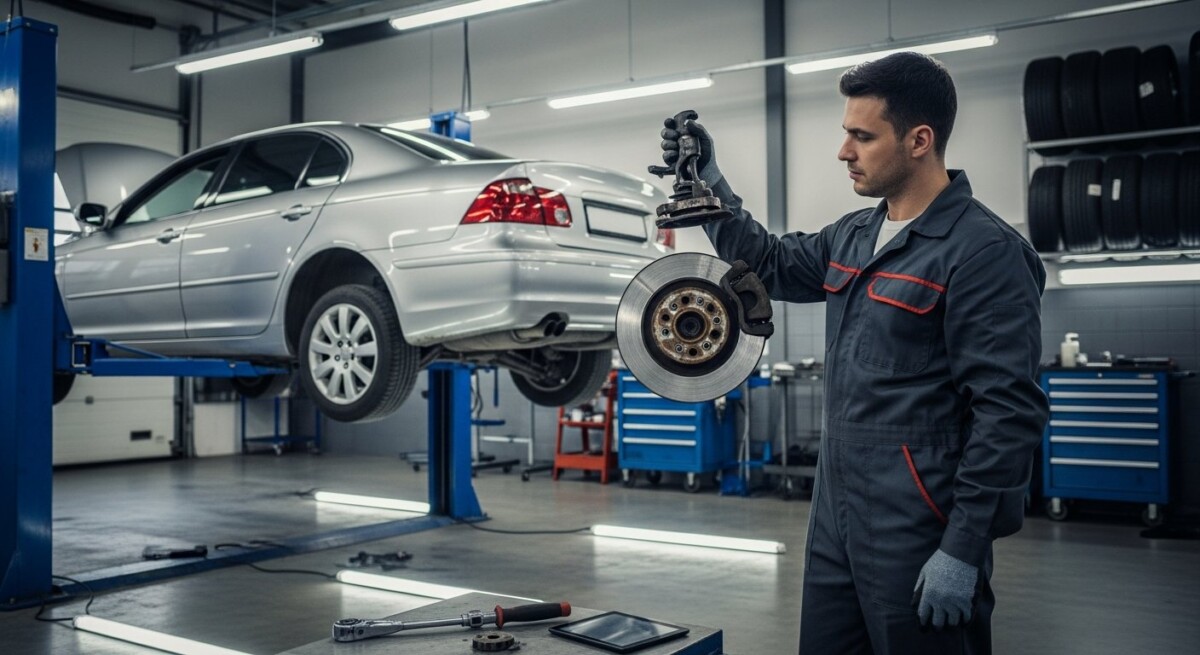
Imagine pressing the brake pedal and feeling it sink to the floor with no resistance. Your car does not slow down, and you are hurtling toward an intersection. Brake failure is a terrifying event, and when it causes a crash, the legal aftermath becomes incredibly complex. Unlike a rear-end collision caused by distracted driving, a brake failure accident does not automatically place the blame on the driver behind the wheel. Liability can shift to mechanics, manufacturers, or even vehicle owners who neglected maintenance. Understanding how brake failure affects liability determination is essential for anyone involved in such an accident, because the path to compensation depends entirely on pinpointing the root cause of the mechanical failure.
This guide breaks down the legal principles that govern these cases. We will examine the evidence that investigators use, the parties who might be responsible, and the critical steps you should take immediately after a crash. If you are dealing with the aftermath of a brake failure accident, knowing your rights is the first step toward rebuilding your life. The determination of fault in these scenarios often requires a deep dive into maintenance records, parts recalls, and forensic engineering reports.
The Legal Framework for Brake Failure Claims
Civil liability in a brake failure accident hinges on the legal concept of negligence. To prove negligence, you must show that another party breached a duty of care, and that this breach directly caused your injuries. However, the “duty of care” varies depending on who you are accusing. A driver has a duty to operate the vehicle safely, a mechanic has a duty to repair brakes correctly, and a manufacturer has a duty to design and build safe parts. The core question of how brake failure affects liability determination is answered by examining which of these duties was breached.
In many states, there is a legal presumption called “negligence per se.” If a driver violates a traffic law that causes the accident, they are automatically considered negligent. But brake failure is different. If the driver had no reason to know the brakes were faulty, they may not be negligent. Instead, the liability may fall on the mechanic who installed the brake pads incorrectly or the manufacturer who produced a defective brake line. This distinction is why accident reconstruction and vehicle inspection are so vital.
Primary Parties Who Can Be Held Liable
Determining fault in a brake failure case is rarely a simple process. Several parties could share responsibility, and the specific facts of your accident will dictate who is named in the lawsuit. Here are the most common defendants in these claims:
- The Vehicle Owner: If the owner ignored warning signs like squealing brakes or a soft pedal, they could be liable for negligent maintenance.
- The Repair Shop or Mechanic: A shop that performed faulty brake work, used wrong parts, or failed to bleed the brake lines properly is liable for the resulting damage.
- The Vehicle or Parts Manufacturer: If a brake component failed due to a design defect or manufacturing error, the company that made it can be held strictly liable under product liability laws.
- The Government Entity: In rare cases, poor road conditions that cause debris to damage the brake system could place liability on a public agency.
Each of these parties has different insurance policies and legal defenses. A claim against a manufacturer involves complex product liability law, which requires proving the defect existed before the car left the factory. On the other hand, a claim against a mechanic requires showing that they deviated from the standard of care expected of a professional. Identifying the right defendant is the most critical strategic decision your attorney will make.
How Evidence Shapes the Liability Decision
The physical evidence left at the crash scene is the most powerful tool for establishing fault. Investigators will look for skid marks, but in a brake failure case, skid marks may be absent. The absence of tire marks can actually support the argument that the brakes failed. Experts will also inspect the vehicle’s brake fluid lines, master cylinder, and anti-lock braking system (ABS) module for leaks or failures.
An electronic data recorder (EDR), commonly known as the car’s “black box,” can provide critical information. This device records vehicle speed, brake pedal activation, and whether the ABS was engaged in the seconds before impact. If the EDR shows the driver pressed the brake pedal but the vehicle did not decelerate, this strongly supports a mechanical failure theory. Conversely, if the EDR shows no brake application, the driver may be found negligent. This data is objective and can be the deciding factor in court.
Maintenance records are equally important. If the driver recently had brake work done, the invoices and shop records will be subpoenaed. A mechanic who failed to torque the lug nuts or who installed a mismatched brake caliper will be exposed through these documents. Additionally, checking for recalls on the specific vehicle model is a standard step. If a known defect exists and the manufacturer failed to fix it, liability shifts significantly.
Product Liability vs. Negligence Claims
When a defective part causes the accident, the legal theory shifts from negligence to strict product liability. Under strict liability, you do not need to prove that the manufacturer acted carelessly. You only need to prove that the product was defective and that the defect caused your injury. This is a crucial distinction that changes the burden of proof.
There are three types of product defects: design defects, manufacturing defects, and failure to warn. A design defect means the brake system was inherently dangerous from the start. A manufacturing defect means the design was sound, but something went wrong during production. Failure to warn means the manufacturer knew about a risk but did not provide adequate instructions or warnings to consumers. Proving any of these requires extensive expert testimony from engineers who can explain the technical failure to a jury.
In contrast, a negligence claim against a driver or mechanic focuses on their behavior. Did the driver ignore a dashboard warning light? Did the mechanic use cheap, substandard parts to save money? These questions address the conduct of the parties, not the design of the vehicle. Often, a single accident will involve both theories. For example, a driver might be partially at fault for not maintaining the car, while the manufacturer is also at fault for a faulty brake line.
The Role of Comparative Fault in Brake Failure Cases
Most states use a comparative fault system, which means you can recover damages even if you are partially to blame for the accident. However, your financial award will be reduced by your percentage of fault. For example, if the jury finds that you are 30 percent at fault for not replacing worn brake pads, and your total damages are $100,000, you would only receive $70,000.
In a brake failure scenario, the defendant will often argue that you were contributorily negligent. They might claim that you ignored warning signs, such as a grinding noise or a vibrating pedal, which would have alerted a reasonable person to the problem. Alternatively, they might argue that you were driving too fast for the conditions, which made it impossible to stop even with working brakes. Defeating these arguments requires showing that the failure was sudden and without warning, leaving you with no opportunity to react.
This is why immediate action after the crash is vital. If you delay in seeking medical attention or legal counsel, the defense will argue that your injuries are not serious or that you are exaggerating your damages. The sooner you preserve evidence, the better your chances of minimizing your own percentage of fault.
Steps to Take Immediately After a Brake Failure Accident
Your actions in the moments and days following a brake failure accident can make or break your case. The priority is always safety, but once you are safe, you must begin protecting your legal rights. Here is a checklist of steps to follow:
- Call the police: Ensure a formal accident report is filed, even if the damage seems minor. The officer’s notes will document the condition of the vehicle.
- Do not repair the vehicle: The car is your primary evidence. Have it towed to a secure location and do not allow anyone to touch the brakes.
- Document everything: Take photos of the accident scene, the vehicle, and any visible fluid leaks under the car.
- Seek medical attention: Adrenaline can mask injuries. A medical report also creates a link between the crash and your injuries.
- Preserve the black box data: Inform your attorney immediately so they can issue a spoliation letter to prevent the vehicle’s data from being erased.
Following these steps ensures that the evidence remains intact for the experts who will analyze it. Without this preservation, the insurance company could argue that the brakes were fine and that the accident was your fault.
Why Legal Representation is Crucial
Insurance companies are in the business of minimizing payouts. They will send their own adjusters and investigators to the scene, and their goal will be to shift blame onto you. They might argue that the brake failure was caused by your failure to maintain the vehicle, even if you had no idea there was a problem. Navigating these negotiations without legal counsel is a significant disadvantage.
An experienced personal injury attorney has the resources to hire independent engineers and accident reconstructionists. These experts can examine the brake system and provide testimony that contradicts the insurance company’s narrative. Furthermore, an attorney understands the nuances of product liability law and can identify all potentially responsible parties. In our guide on how tire failure affects accident claims and payouts, we highlight similar principles of mechanical failure and liability that apply here.
Legal representation also levels the playing field when dealing with large corporations. If a major auto manufacturer is the defendant, they will have a team of high-powered lawyers. Your attorney will need to fight against their motions and defenses. The complexity of these cases means that going it alone is almost never a good idea.
Damages Available in Brake Failure Lawsuits
If you successfully prove liability, you are entitled to compensation for your losses. These damages are designed to make you “whole” again, to the extent that money can. The categories of damages include economic and non-economic losses. Economic damages are tangible costs like medical bills, lost wages, and future rehabilitation costs.
Non-economic damages are more subjective and include pain and suffering, emotional distress, and loss of enjoyment of life. In cases involving gross negligence or willful misconduct, punitive damages may also be awarded. These are designed to punish the defendant and deter similar behavior in the future. For example, if a manufacturer knowingly sold a vehicle with defective brakes and hid the problem, punitive damages could be substantial.
The specific amount of your claim will depend on the severity of your injuries and the impact on your life. A minor injury with a quick recovery will yield a smaller settlement than a catastrophic injury requiring lifelong care. An attorney will work with medical experts to calculate the full extent of your future medical needs, ensuring that your settlement covers not just your current bills but also your future expenses.
Frequently Asked Questions
Can I sue if my brakes failed but I was not injured?
Generally, you need to have suffered actual damages, such as property damage or physical injury, to file a lawsuit. If the only damage is to your car, you may have a claim for the repair costs against the responsible party, but you cannot sue for pain and suffering without an injury.
How long do I have to file a brake failure lawsuit?
The statute of limitations varies by state, but it is typically between two and three years from the date of the accident. For product liability claims, the clock may start running when the defect was discovered or should have been discovered. It is crucial to consult with an attorney immediately to ensure you do not miss the deadline. You can find more detail on accident claim deadlines on our blog.
What if the other driver’s brakes failed?
If the other driver’s brakes failed, they are still responsible for the accident, but the liability may shift to their mechanic or the vehicle manufacturer. You can file a claim against the driver’s insurance policy, and their insurance company will investigate the cause of the failure.
How much does it cost to hire a lawyer for this?
Most personal injury attorneys work on a contingency fee basis. This means they only get paid if you win your case. The fee is typically a percentage of your settlement or court award, and you do not pay anything upfront. This arrangement makes legal representation accessible to everyone, regardless of their financial situation.
If you are involved in a dispute over a brake failure accident, you need to act fast to protect your rights. The evidence can disappear quickly, and the insurance companies will not wait for you to get organized. Understanding how brake failure affects liability determination is the first step, but taking action is the second. Do not let a complex legal battle intimidate you into accepting a lowball settlement.
Contact a qualified attorney who can investigate your claim, preserve the necessary evidence, and fight for the maximum compensation you deserve. Your financial recovery depends on the strength of your legal strategy. Visit our contact page to get started with a free case evaluation and find out what your next step should be.

About Maeve Lockridge
Recent Posts
How Speed Is Proven After a Crash: Key Evidence
Learn how speeding is proven after an accident using EDR data, skid marks, and video. Call (833) 227-7919 for a free attorney referral.
How Texting Evidence Is Used in Accident Cases
Discover how texting evidence is used in accident cases to prove fault and win claims. Call (833) 227-7919 for a free case review.

How Texting Evidence Is Used in Accident Cases
Learn how texting evidence is used in accident cases and how it can prove fault or challenge claims. Call (833) 227-7919 for a free attorney referral.