
How Tire Failure Affects Accident Claims and Payouts
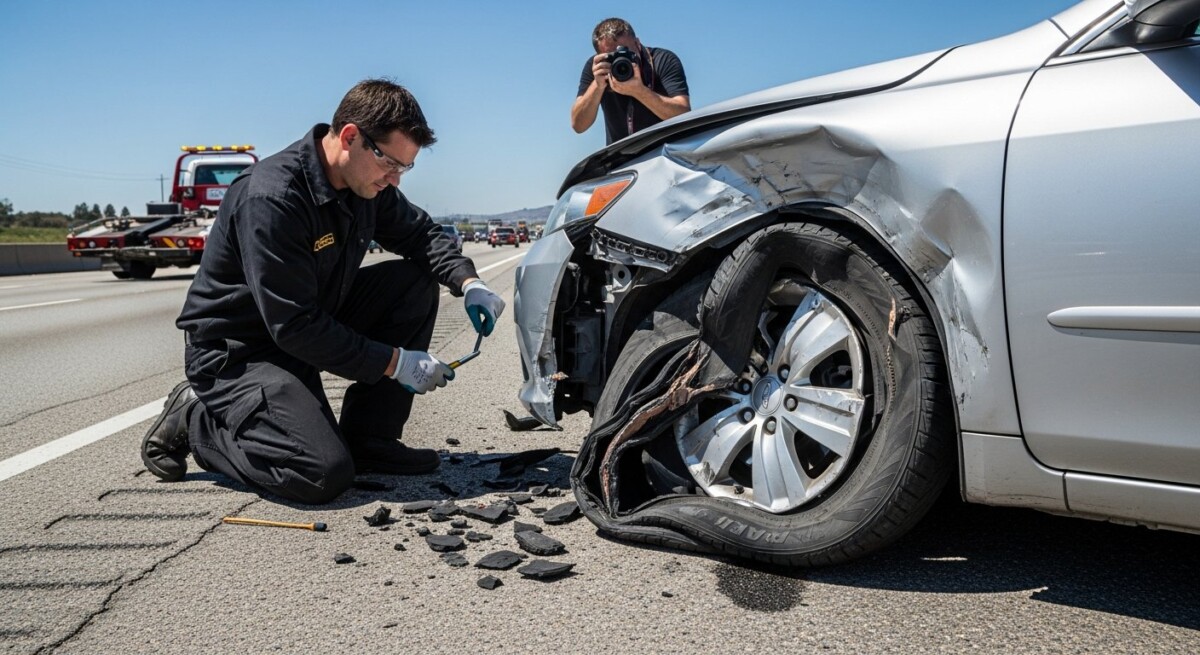
A blowout on the highway is terrifying. One moment the vehicle feels stable, and the next, the steering wheel shakes violently as the car pulls to one side. For many drivers, the immediate concern is safety. But if a tire failure leads to a collision, a second problem emerges: how do you prove who was at fault? The answer is not always straightforward, and it can dramatically change the value of your claim. Insurance companies scrutinize tire-related crashes closely because they often involve questions of maintenance, manufacturing defects, and driver reaction. Understanding how tire failure affects accident claims is the first step toward protecting your right to compensation.
When a tire fails, the cause matters more than the physical damage. If the tire blew out because of a defect, the manufacturer might be liable. If it failed because of worn tread or improper inflation, the driver could be found negligent. This distinction determines which insurance policy pays, and whether you can recover damages at all. In this guide, we break down the legal and practical issues that arise after a tire-related accident, and we explain how to build a strong case with the help of a qualified attorney.
Common Causes of Tire Failure in Accidents
Not all tire failures are the same. The physical result, such as a sudden loss of air or a tread separation, can stem from several distinct root causes. Identifying the root cause is essential because it points to the responsible party. In legal terms, liability follows the cause, not the effect. A tire that was never properly maintained may be the driver’s responsibility, while a tire with a faulty steel belt may be the manufacturer’s problem.
Here are the most common causes that appear in accident claims:
- Manufacturing defects: Weak sidewalls, poor rubber adhesion, or faulty bead design can cause a tire to fail within the first few thousand miles.
- Improper maintenance: Driving on under-inflated tires, over-inflated tires, or tires with worn tread below 2/32 of an inch increases the risk of blowouts.
- Road hazard damage: Potholes, debris, or curbs can cause internal damage that leads to a delayed failure, often days or weeks later.
- Overloading: Exceeding the vehicle’s weight rating puts excessive stress on tires, generating heat that can cause a sudden blowout.
- Age-related degradation: Tires older than six years can suffer from dry rot, even if the tread looks usable.
Each of these causes leads to a different legal strategy. For example, a road hazard claim might involve the government agency responsible for road maintenance, while a defect claim might require expert testimony from an engineer. A skilled lawyer can order a tire inspection and preserve the damaged tire as evidence, which is often the single most important step after a crash.
Legal Liability for Tire-Related Crashes
Liability in a tire failure accident is rarely shared equally. The legal system looks for the party whose negligence or wrongdoing caused the failure. In many cases, this is the driver who failed to maintain the vehicle. Most states require drivers to keep their vehicles in a safe operating condition, and a visible bald tire is a clear sign of neglect. If the tire failure caused a crash, the driver could be held liable for injuries to others, even if the driver did not intend to cause harm.
There is also a legal doctrine called strict liability that applies to defective products. Under this rule, a tire manufacturer can be held responsible for injuries caused by a defective tire, regardless of whether the manufacturer acted negligently. The injured party only needs to prove that the product was defective and that the defect caused the injury. This is why preserving the tire is critical. Without the physical evidence, it becomes a word-against-word dispute about whether the tire was faulty or simply worn out.
In some cases, a mechanic or repair shop that mounted the tire incorrectly can be liable. An improper mounting can damage the bead, leading to a sudden air loss at high speed. Similarly, a shop that sold a used tire with hidden damage may face liability. The key takeaway is that multiple parties can share responsibility, and sorting out the chain of causation requires a thorough investigation.
How Fault Determination Changes Your Claim
The way fault is assigned directly impacts how tire failure affects accident claims. In a standard rear-end collision, fault is usually clear: the driver who hit the other car is at fault. But in a tire failure scenario, the driver of the failed vehicle might argue they had no control over the car. This argument can succeed if the failure was sudden and unforeseeable. However, if the driver ignored warning signs like vibrations or a slow leak, the argument collapses.
Insurance adjusters look at several factors when deciding fault. First, they review the maintenance history of the vehicle. Did the driver have the tires rotated and replaced on schedule? Second, they consider the age and condition of the tire. A tire that is five years old with 40,000 miles is more likely to be considered worn out than defective. Third, they examine the crash scene data, including skid marks and the final position of the vehicles. This data helps determine whether the driver attempted to brake or steer before the collision.
If you are the driver of the failed vehicle, you could face a denial of your claim if the insurer believes you were negligent. If you are the victim of another driver’s tire failure, you need to prove that the other driver knew or should have known about the tire problem. This is where an attorney becomes invaluable. A lawyer can subpoena maintenance records, interview witnesses, and work with accident reconstruction experts to build a narrative that supports your version of events.
Evidence Needed to Prove a Tire Defect Claim
Proving a tire defect is much harder than proving poor maintenance. Manufacturers hire teams of engineers to defend their products, and they will argue that the tire failed because of misuse, not a flaw. To counter this, you need robust evidence. The most critical piece is the tire itself. It must be removed from the vehicle and stored in a cool, dry place where it will not degrade further. Do not let the insurance company take possession of the tire, as they may lose it or alter it.
Next, you need an expert inspection. A tire engineer can examine the separated layers, look for signs of fatigue, and determine whether the failure originated from a manufacturing defect or an external impact. This inspection is not cheap, but it is often the deciding factor in the case. In our guide on proving fault with GPS data in accident claims, we explain how electronic data can complement physical evidence. GPS logs can show your speed and braking patterns, which helps corroborate your testimony that the failure was sudden.
You should also gather the following documents:
- The purchase receipt for the tires, showing the date and mileage
- Maintenance records, including rotation and pressure checks
- Photographs of the damaged tire and the crash scene
- Weather conditions at the time of the accident
- The vehicle’s load weight at the time of the crash
This evidence package gives your attorney the tools to negotiate with the insurer. Without it, the claim is unlikely to succeed, because the manufacturer will simply argue that the tire was abused. Remember, the burden of proof is on you to show that the defect existed before the accident.
Comparative Negligence in Tire Failure Cases
Most states use a comparative negligence system, which means that your compensation is reduced by your percentage of fault. For example, if you were driving 70 mph in a 55 mph zone and the tire blew out, the insurer might argue that you were 20 percent at fault for speeding. Your total damages would then be reduced by that 20 percent. If your damages were $100,000, you would receive only $80,000.
This rule cuts both ways. If the other driver’s tire failed, they might argue that you were following too closely and could have avoided the crash. To protect your claim, you need to show that your actions were reasonable. Using the black box data from your vehicle can help here, as it records your speed and steering inputs in the seconds before impact. This data can prove that you had no time to react to a sudden blowout.
In pure comparative negligence states, you can recover damages even if you are 99 percent at fault, though your recovery is tiny. In modified comparative negligence states, you are barred from recovery if you are 50 or 51 percent at fault. This makes the fault determination even more critical. A small shift in the percentage can mean the difference between a substantial settlement and zero compensation.
The Role of Insurance Coverage and Umbrella Policies
Tire failure accidents often involve severe injuries because the loss of control leads to rollovers or head-on collisions. The medical bills and lost wages can quickly exceed the at-fault driver’s policy limits. This is where understanding your own coverage becomes vital. If you have uninsured or underinsured motorist coverage, it can step in to pay the difference. If not, you might be forced to pursue the driver personally, which is rarely successful if they have limited assets.
There is also an often-overlooked layer of protection: the umbrella policy. A personal umbrella policy provides extra liability coverage above your auto and homeowners policies. It is designed for exactly this type of scenario, where a single accident causes damages that exceed standard limits. In our article on how umbrella insurance affects accident claims, we detail how these policies can protect your assets and provide a larger pool of money for your claim. If the at-fault driver has an umbrella policy, it can be the difference between a fair settlement and a lawsuit that goes to trial.
For the injured party, it is essential to identify all available insurance policies early in the case. This includes the driver’s auto policy, their umbrella policy, and any commercial policies if the vehicle was used for business. Your attorney can send discovery requests to uncover these policies. Missing an umbrella policy is a common mistake that leaves money on the table.
Steps to Take Immediately After a Tire Failure Crash
Your actions in the minutes and hours after a tire failure can make or break your claim. The scene is chaotic, and adrenaline is high, but you must stay focused. The following steps are designed to protect your health and your legal rights. Even if you feel fine, injuries like whiplash or internal bleeding may not appear for hours.
- Move to a safe location if possible, and call 911 to report the accident and request medical assistance.
- Take photographs of all vehicles, the damaged tire, and the surrounding road conditions. Include a wide shot to show the whole scene.
- Exchange information with the other driver, but do not discuss fault or apologize. Anything you say can be used against you.
- Seek medical attention immediately, even for minor aches. A prompt medical record connects your injuries to the crash.
- Contact a personal injury attorney before speaking to any insurance adjuster. The insurer may offer a quick settlement that is far below what your claim is worth.
These steps are critical because they establish a timeline. The insurer will later question whether your injuries are real if you waited days to see a doctor. Similarly, if you do not photograph the tire, the defense will argue that you disposed of the evidence because it showed the tire was bald. In many cases, the claim gets denied after initial approval because new evidence emerges that contradicts the first report. Protecting the evidence on day one prevents this outcome.
Frequently Asked Questions
Can I sue the tire manufacturer after a blowout?
Yes, you can sue the tire manufacturer if you can prove the tire was defective. You will need to show that the defect existed when the tire left the factory and that it caused your accident. An expert inspection of the tire is essential to support this claim.
What if the other driver’s tire was bald?
If the other driver’s tire was bald, that driver is likely negligent for failing to maintain the vehicle. You can file a claim against their auto insurance policy. The insurer will likely try to settle quickly to avoid proving fault in court.
Does my insurance cover me if my own tire fails?
If you have collision coverage, it will pay to repair your vehicle, regardless of who is at fault. However, your rates may increase. If the failure was caused by a defect, you can seek reimbursement from the manufacturer through a product liability claim.
How long do I have to file a claim after a tire failure?
The statute of limitations varies by state, but it is typically two years for personal injury and three years for property damage. You should act quickly, because evidence like the tire degrades over time, and witnesses become harder to locate.
Securing Fair Compensation for Your Injuries
Tire failure accidents are complex because they sit at the intersection of product liability, auto negligence, and insurance law. The party who should pay is not always obvious, and the insurance companies will use this ambiguity to minimize their payout. This is why you need an advocate who understands the nuances of these cases. A dedicated attorney can investigate the cause, preserve the evidence, and negotiate aggressively on your behalf.
If you or a loved one has been injured in a tire-related crash, do not wait. Contact LawyerOffer today to be connected with a qualified personal injury attorney in your area. Our referral service is free, and you pay nothing upfront. Call us at (833) 227-7919 to discuss your case and learn how tire failure affects accident claims in your specific situation.

About Lissette Hollowell
Recent Posts
How Speed Is Proven After a Crash: Key Evidence
Learn how speeding is proven after an accident using EDR data, skid marks, and video. Call (833) 227-7919 for a free attorney referral.

How Texting Evidence Is Used in Accident Cases
Discover how texting evidence is used in accident cases to prove fault and win claims. Call (833) 227-7919 for a free case review.

How Texting Evidence Is Used in Accident Cases
Learn how texting evidence is used in accident cases and how it can prove fault or challenge claims. Call (833) 227-7919 for a free attorney referral.