
How Fatigue Affects Accident Liability Claims
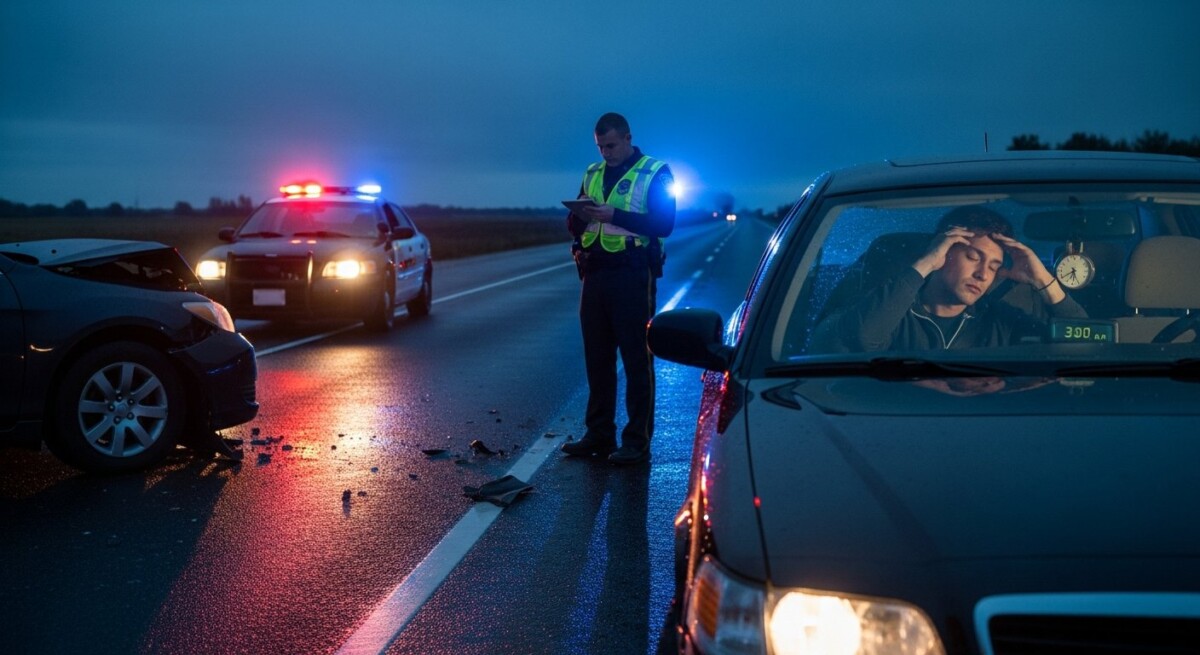
After a long shift, a sleepless night, or a grueling road trip, your reaction time slows and your judgment dulls. When a crash happens in that state, the legal aftermath becomes complicated. Fatigue is not just a personal health issue; it is a legal factor that can shift blame, reduce compensation, or even bar recovery entirely. Understanding how fatigue affects accident liability claims is essential for anyone involved in a collision, whether you are the tired driver or the victim of one. This knowledge can mean the difference between a fair settlement and a denied claim.
Why Courts Treat Fatigue Like a Form of Negligence
The legal system does not view drowsy driving as an accident. It views it as a preventable choice. When a driver gets behind the wheel while exhausted, they are engaging in behavior that a reasonable person would recognize as dangerous. This is the foundation of negligence, and it is why fatigue often plays a central role in liability determinations.
In personal injury law, negligence is proven by showing that a driver owed a duty of care, breached that duty, and caused damages as a result. Driving while fatigued breaches the duty of care because it impairs the same abilities that alcohol does: attention, reaction time, and decision making. Attorneys and insurance adjusters look for signs of this breach, such as a driver who admits to driving for 14 hours straight or who fell asleep at the wheel.
If you are the injured party, proving the other driver was fatigued can strengthen your case. If you are the fatigued driver, this same evidence can be used against you to establish fault. The key takeaway is that fatigue is not a mitigating excuse; it is an aggravating factor that often increases liability. For a deeper look at how fault is assigned when evidence is scarce, see our guide on how accident liability is determined without witnesses.
The Science of Drowsy Driving and Its Legal Equivalency
The National Safety Council estimates that a driver who has been awake for 18 hours has a reaction time comparable to someone with a blood alcohol content of 0.05 percent. After 24 hours awake, that equivalency jumps to 0.10 percent, which is above the legal limit in all states. These statistics are powerful tools in litigation because they allow attorneys to compare drowsy driving to drunk driving in front of a jury.
Microsleeps and the Moment of Impact
One of the most dangerous effects of fatigue is the microsleep, a brief episode of sleep that lasts up to 30 seconds. At highway speeds, a 4-second microsleep means the driver has traveled the length of a football field without any awareness. When a crash occurs during a microsleep, there is often no braking, no steering correction, and no skid marks. This absence of evasive action is a strong indicator of fatigue, and it is a detail that accident reconstruction experts use to establish liability.
From a legal perspective, a microsleep is damning because it proves the driver lost consciousness. Even if the driver did not intend to fall asleep, the court will likely find that they should have known fatigue was imminent. Stopping for coffee, opening a window, or turning up the radio are not considered reasonable countermeasures. The only safe response is to pull over and rest. Failure to do so is negligence per se in many jurisdictions.
How Insurance Companies View Fatigue Claims
Insurance adjusters are trained to look for policy loopholes and comparative fault arguments. When fatigue is a factor, they often use it to reduce payouts. If you file a claim against a drowsy driver, the insurer may argue that you had a chance to avoid the accident by noticing the other vehicle swerving. This is a tactic to shift a percentage of fault onto you, which directly reduces your settlement amount.
Conversely, if you are the fatigued driver, the insurer may deny coverage entirely if they can prove gross negligence. Gross negligence goes beyond simple carelessness and implies a reckless disregard for safety, such as driving for 20 hours straight on little sleep. Many auto policies have exclusions for intentional or reckless acts, and insurers may try to classify severe fatigue under this umbrella to avoid paying out.
To protect yourself, documentation is critical. The following evidence can make or break a fatigue-related claim:
- Electronic logging device data from commercial trucks, which shows hours of service violations.
- Phone records indicating texting or calling during the drive, which suggests the driver was awake but distracted.
- Witness statements from rest stops or gas stations describing the driver’s appearance or behavior.
- Dashcam footage showing the vehicle drifting across lane markers before impact.
- Medical records or prescription histories that indicate sleep disorders like insomnia or sleep apnea.
This evidence helps establish a timeline of fatigue. Without it, the claim becomes a he-said-she-said battle, which rarely ends well for the injured party. If you are struggling to gather this evidence, a referral service can connect you with an attorney who knows exactly what to subpoena.
Commercial Trucking and Federal Hours of Service Rules
Fatigue claims take on a different dimension when the at-fault driver operates a commercial vehicle. Trucking companies are regulated by the Federal Motor Carrier Safety Administration (FMCSA), which imposes strict Hours of Service (HOS) rules. These rules limit driving time to 11 hours after 10 consecutive hours off duty, and they mandate a 30-minute break within the first 8 hours of a shift.
When a truck driver violates these rules and causes a crash, the trucking company can be held vicariously liable. This means the company is responsible for the driver’s actions because they created the schedule that forced the violation. In these cases, the plaintiff’s attorney will request the driver’s logbooks, fuel receipts, and satellite tracking data to prove the violation. This is a powerful avenue for recovery because trucking companies carry high-limit insurance policies, often in the millions of dollars.
However, proving HOS violations is not always straightforward. Some drivers keep two logbooks, one for inspection and one for actual driving. Others use electronic logging devices but still find ways to manipulate them. An experienced attorney will look for discrepancies between the logs and other data sources, such as toll booth records or weigh station tickets. This level of investigation is why hiring a professional is often necessary. For more on how electronic data can reveal the truth about a crash, read about how black box data affects accident liability.
Comparative Fault and the Reduction of Damages
Most states use a comparative fault system, which means your compensation is reduced by your percentage of fault. If you are found to be 20 percent at fault for not seeing the drowsy driver approaching, your $100,000 settlement drops to $80,000. In pure comparative fault states like California, you can recover even if you are 99 percent at fault. In modified comparative fault states like Texas, you are barred from recovery if you are 51 percent or more at fault.
Fatigue affects this calculation in subtle ways. For example, if you are driving at 2 a.m. and you notice a car swerving behind you, the law may expect you to take evasive action. If you fail to do so because you are also tired, the court may assign you a share of the blame. This is called the avoidable consequences doctrine, and it is a common defense tactic in fatigue cases.
To minimize your fault percentage, you must demonstrate that you acted reasonably under the circumstances. This includes maintaining a safe speed, wearing your seatbelt, and attempting to avoid the collision. If you fell asleep at a red light and were rear-ended, the other driver is likely fully at fault. But if you drifted into oncoming traffic and hit a truck head-on, you will face significant liability. The specific facts of the crash are the only things that matter.
Proving Fatigue After the Crash
Fatigue is invisible, so you cannot rely on a breathalyzer or blood test to prove it. Instead, you must build a circumstantial case. The best time to do this is immediately after the crash, while memories are fresh and evidence is intact. If you are the injured party, ask the responding officer to note any observations about the other driver, such as bloodshot eyes, slurred speech, or an admission of tiredness.
If you are the fatigued driver, you should be careful about what you say to the police. Admitting, “I was so tired I could barely keep my eyes open,” is an admission of negligence that will be used against you in court. You have the right to remain silent, and you should exercise it until you have consulted with an attorney. The same applies to insurance adjusters who call you the day after the crash; they are recording your statements and looking for inconsistencies.
Another angle is the timeline of the driver’s day. Subpoenaing employment records can show that the driver had just finished a double shift. Checking social media can reveal that the driver was out partying the night before. Even a simple check of the vehicle’s GPS history can show a long, uninterrupted journey. These details create a picture of fatigue that is hard for the defense to refute.
When Fatigue Is a Defense in Your Case
There are rare situations where fatigue can actually help your claim. For instance, if a commercial driver falls asleep and hits you, the doctrine of respondeat superior holds the employer liable. This is beneficial because you can pursue the company, which has deeper pockets than an individual driver. The company cannot claim that the driver was on a frolic of their own if the crash happened during the course of employment.
Fatigue can also explain why you, as the plaintiff, failed to take evasive action. If you were also tired, you can argue that your reaction time was slowed due to the same conditions. This is not a strong defense, but it can reduce your comparative fault percentage. Juries are often sympathetic to plaintiffs who were simply trying to get home after a long day, especially if the other driver was egregiously negligent.
In some cases, fatigue leads to a sudden medical emergency, such as a seizure or a heart attack. If a driver loses consciousness due to an unforeseeable medical event, they may not be held liable because they had no time to pull over. However, this defense fails if the driver had prior knowledge of the condition, such as a history of seizures, and drove anyway. The line between a medical emergency and fatigue is thin, and attorneys argue it aggressively.
Frequently Asked Questions
Can I sue for damages if the other driver fell asleep at the wheel?
Yes, you can sue. Falling asleep at the wheel is negligence, and the driver is liable for the resulting injuries. You can also sue their employer if they were driving for work purposes. The key is to document the fatigue through witness statements, electronic data, or the driver’s own admission.
Does fatigue affect my claim if I was also tired?
It can. If you were fatigued and failed to take reasonable evasive action, the court may assign you a percentage of fault. This reduces your settlement under comparative fault rules. However, if the other driver’s negligence was the primary cause, you can still recover the majority of your damages.
What is the difference between drowsy driving and distracted driving in a claim?
Drowsy driving involves impaired cognitive function due to lack of sleep, while distracted driving involves a voluntary diversion of attention, such as texting. Both are negligence, but drowsy driving is harder to prove because there is no physical evidence like a phone record. Distracted driving often has direct proof, while fatigue relies on circumstantial evidence.
Next Steps After a Fatigue-Related Accident
If you have been injured in a crash involving a drowsy driver, you should not delay. Evidence like logbooks and dashcam footage can be overwritten or lost within days. Insurance companies will pressure you to settle quickly, but their first offer is almost always lower than the true value of your claim. You need someone who can negotiate on your behalf and, if necessary, take the case to trial.
This is where a legal referral service becomes invaluable. Rather than searching through directories alone, you can get matched with an attorney who has specific experience in fatigue-related accident claims. They will know how to subpoena records, hire accident reconstruction experts, and calculate the full extent of your damages, including lost wages and future medical care. A strong legal partner can pressure insurers to move beyond lowball offers and toward a settlement that reflects your suffering.
Remember that fatigue does not just affect the driver; it affects the outcome of your entire case. From proving liability to negotiating damages, the presence of fatigue changes every step of the process. By understanding these dynamics, you are already ahead of the game. If you need guidance, consider how umbrella insurance affects accident claims to ensure your recovery is protected. Additionally, be aware of how tire failure affects accident claims and payouts, as mechanical issues often combine with driver fatigue to create catastrophic crashes. Taking action now protects your rights and your financial future.

About Viona Hartwell
Recent Posts
How Jurisdiction Affects Accident Claim Outcomes
Understand how jurisdiction affects accident claim outcomes and maximize your recovery. Call (833) 227-7919 for a free attorney referral.

Why Legal Deadlines Can Make or Break Your Accident Case
Missing a filing deadline can end your accident case instantly. Get legal help today at (833) 227-7919.

How Statute of Limitations Affects Injury Claims: Key Deadlines
Learn how statute of limitations affects injury claims and why deadlines matter. Call (833) 227-7919 for a free case review to protect your rights.