
How Traffic Camera Footage Is Used in Claims
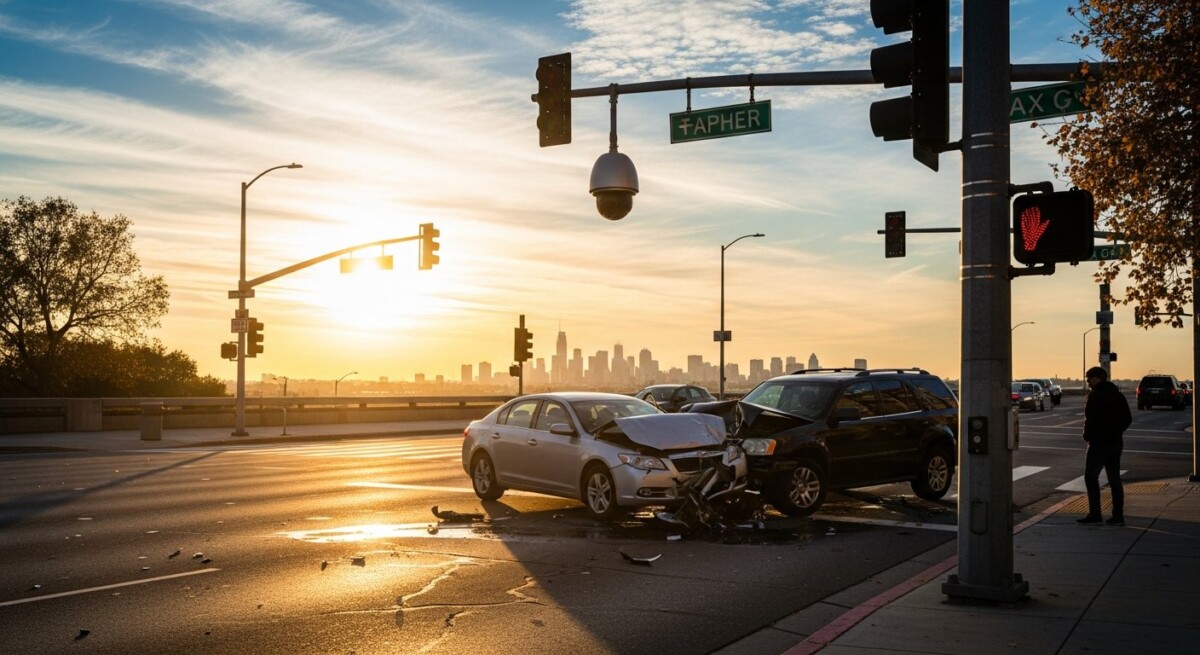
When a car accident happens, the first question everyone asks is, “Who is at fault?” In the past, the answer often came down to one driver’s word against another’s, with police officers writing reports based on witness statements and physical evidence. Today, however, a new form of evidence has changed the landscape: traffic camera footage. These cameras, mounted at intersections, along highways, and inside vehicles, capture the exact moments leading up to, during, and after a collision. For anyone involved in an accident, understanding how traffic camera footage is used in claims can be the difference between a fair settlement and a frustrating denial.
Traffic cameras serve multiple purposes, from monitoring congestion to catching red-light runners. But for insurance adjusters, attorneys, and injured drivers, their real value lies in their objectivity. A camera does not get confused, does not have a biased memory, and does not miss details under stress. It records the positions of vehicles, the timing of traffic signals, and the speed of travel with remarkable accuracy. This evidence can confirm or contradict the narratives presented by each party, and it often becomes the cornerstone of a liability determination.
In this article, we will break down the different types of traffic camera footage, how insurers and legal teams gather it, and the practical steps you can take to secure this evidence for your own claim. Whether you are dealing with a minor fender bender or a serious injury, knowing how to leverage this footage can protect your rights and maximize your recovery.
The Types of Traffic Camera Footage
Not all traffic camera footage is the same. The term covers a range of recording devices, each with its own capabilities and limitations. Recognizing the differences is essential because the source of the footage can affect its admissibility and weight in your claim.
Red-Light and Intersection Cameras
These are the most common public traffic cameras. They are typically installed at busy intersections and are triggered by vehicles entering the intersection after the light turns red. They capture a sequence of images or a short video clip showing the vehicle’s approach, the signal phase, and the collision itself. This footage is often used by law enforcement to issue citations, but it can also be subpoenaed in civil claims to prove which driver violated the signal.
Department of Transportation (DOT) Cameras
Many cities and states operate networks of cameras on highways and major arterial roads. These are primarily used for traffic monitoring and incident detection, but they often record continuously. Because they are not event-triggered, they may capture a crash that occurs near the camera’s field of view. However, these cameras typically have low resolution and may not focus on a single intersection, so the footage can be grainy or partially obstructed.
Dashcams and Private Cameras
Increasingly, individual drivers install dashcams in their own vehicles. These devices record the road ahead (and sometimes the cabin) continuously while the car is running. In an accident, a dashcam can provide a clear, first-person view of the collision, including the seconds before impact. Similarly, businesses and homeowners may have security cameras that point toward the street. These private sources are often the most valuable because they offer high-definition footage from a unique angle that public cameras may miss.
Each type of footage has its strengths and weaknesses. Public cameras cover wide areas but may be low-quality. Private dashcams offer high clarity but only capture one perspective. For your claim, you may need to gather footage from multiple sources to build a complete picture of the accident.
How Insurers Use Traffic Camera Footage
Insurance companies are in the business of minimizing payouts, and traffic camera footage is one of their most powerful tools. When a claim is filed, the adjuster begins an investigation. Their goal is to determine liability, which directly affects how much they are willing to pay. If the footage clearly shows the other driver ran a red light, the insurer of the at-fault party will likely move quickly to settle. Conversely, if the footage shows you made an unsafe lane change, the insurer may deny your claim or offer a fraction of your damages.
Insurers also use footage to identify fraud or exaggeration. For example, if a claimant says they were rear-ended at high speed, but the footage shows a low-impact bump, the insurer may challenge the severity of the alleged injuries. This is why obtaining and preserving footage early is critical. If you wait too long, the footage may be overwritten or deleted, and you lose the ability to present the most objective evidence in your favor.
One key point to remember: insurance adjusters are not neutral arbiters. They work for the company that pays claims, and their primary loyalty is to their employer’s bottom line. They will interpret footage in the way that best supports their position. That is why you need an attorney who can independently review the footage and challenge the adjuster’s interpretation. As our guide on how surveillance footage affects settlement outcomes explains, the way evidence is presented can significantly alter the final offer.
The Process of Obtaining Traffic Camera Footage
Getting your hands on traffic camera footage is not always simple. Public agencies are not required to hand over recordings just because you ask. In most cases, you must submit a public records request or, if the footage is part of an active investigation, your attorney may need to file a subpoena. The process varies by jurisdiction, but there are common steps you can follow.
- Act immediately: Many public cameras loop recordings and overwrite them within days or even hours. As soon as you are able, send a written request to the city or state transportation department asking that they preserve and provide any footage from the location and time of the accident.
- Identify the exact location and time: Be as specific as possible. Include the intersection or mile marker, the date, and the time of the collision. If you are not sure which agency operates the camera, check with the local police department or public works office.
- Request in writing: Use a formal letter or email that references the state’s public records law. Keep a copy for your records. If you have an attorney, they can handle this step and follow up if the request is ignored.
- Ask nearby businesses and residents: Private cameras are not subject to public records laws, but owners may voluntarily share footage if you ask politely and explain that it pertains to an accident investigation. Many businesses will cooperate, especially if you provide a business card or a police report number.
- Secure your own dashcam footage: If you have a dashcam, do not attempt to edit or delete the file. The original, unaltered footage is the most credible. Save a backup to a secure cloud service or external drive.
After you obtain the footage, review it carefully. Look for details like the color of the traffic light, the position of vehicles, and any evasive actions taken. If you notice something that contradicts the police report or the other driver’s account, share it with your attorney immediately. This evidence can be used in settlement negotiations or, if necessary, in court.
Legal Considerations and Admissibility
Even if you have compelling footage, it does not automatically mean it will be allowed in court. Judges apply rules of evidence to determine whether a video is admissible. The key factors are authentication and relevance. Authentication requires a witness, such as the person who installed the camera or a technician who maintains the system, to testify that the footage is a true and accurate representation of what occurred. Relevance means the footage must help prove or disprove a fact that is important to the case.
There is also the issue of spoliation, which is the destruction or alteration of evidence. If an insurance company or a government agency deletes footage after you have requested it, they may face legal sanctions. This is why your initial preservation request is so important. It creates a legal obligation to keep the footage intact.
In some cases, footage may be excluded because it is too grainy, the timing is incomplete, or the camera angle does not clearly show the accident. An experienced attorney will know how to present the footage in the most favorable light and how to argue for its admission. Without legal guidance, you may miss critical objections or fail to lay the proper foundation.
The Impact on Settlement and Liability
When traffic camera footage clearly establishes fault, it can dramatically shorten the claims process. The at-fault driver’s insurer will often concede liability quickly, allowing you to focus on recovering damages for medical bills, lost wages, and pain and suffering. In such cases, the main negotiation point becomes the value of your injuries, not who caused the crash.
Conversely, if the footage is ambiguous or shows you contributing to the accident, it can reduce your recovery. Most states follow a rule of comparative negligence, meaning your compensation is reduced by your percentage of fault. For example, if the footage shows you were speeding but the other driver ran a red light, the jury or insurer might assign you 20% of the blame, reducing your settlement by that amount.
This is why it is vital to have a lawyer who understands how to counter negative footage. They may be able to find additional camera angles, question the accuracy of the recording, or introduce expert testimony to explain the physics of the crash. As highlighted in our article on how dashcam footage changes liability decisions, even a few seconds of video can flip a case from a losing position to a strong one.
Beyond liability, footage also helps quantify damages. If the video shows the force of the impact, it can support claims for serious injury. If it shows you walking around after the crash, the insurer may argue your injuries are minor. This is another reason to consult a lawyer who can frame the footage within the broader context of your medical records and the long-term effects of your injuries.
Steps to Strengthen Your Claim with Footage
To maximize the value of traffic camera footage, you need to act strategically from the moment the accident occurs. Here are the steps I recommend to every client.
- Call the police: A police report creates an official record and increases the likelihood that public agencies will preserve footage. The responding officer may also note in the report that cameras were present.
- Document the scene yourself: Take photos of your vehicle, the other vehicle, the intersection, and any visible cameras. These photos can help your attorney identify which cameras to request.
- Do not post on social media: Insurers monitor social media for evidence that contradicts your injury claims. A video of you at a party could undermine the severity of your pain, even if it is unrelated to your ability to perform daily tasks.
- Consult an attorney early: An attorney can issue subpoenas, file preservation requests, and negotiate with insurers on your behalf. They know the local rules and have relationships with the agencies that control the footage.
- Keep a timeline: Write down every detail you remember, including the exact time, the sequence of events, and any witnesses. This helps your lawyer cross-reference the footage with your account.
Following these steps can mean the difference between a quick, fair settlement and a protracted legal battle. Remember, the goal is not just to win a claim, but to secure the compensation you need to cover your losses and move forward.
Frequently Asked Questions
Q: How long do traffic cameras keep footage?
Most public traffic cameras overwrite footage within 72 hours, though some systems store data for up to 30 days. Private dashcams and business security cameras may retain footage for longer, but it is best to request it immediately.
Q: Can I request traffic camera footage without a lawyer?
Yes, you can submit a public records request yourself. However, the process can be slow and may require legal language to be effective. An attorney can expedite the process and ensure the footage is preserved.
Q: What if the footage shows me partially at fault?
Do not panic. Comparative negligence rules may still allow you to recover damages, just at a reduced rate. Your attorney can argue for a lower percentage of fault based on the full context of the accident.
Q: Is dashcam footage admissible in court?
Yes, provided it is authentic and relevant. You must be able to prove the footage has not been altered and that it accurately depicts the event. A lawyer can help you meet these requirements.
Final Thoughts
Traffic camera footage is one of the most powerful forms of evidence in a personal injury claim. It provides an unbiased record of the accident, cutting through the fog of memory and the biases of witnesses. Whether the footage comes from a public intersection camera, a DOT highway monitor, or a private dashcam, it can clarify liability, strengthen your negotiating position, and ultimately lead to a better settlement.
But footage is only useful if you can obtain it and present it effectively. That is why you need an advocate on your side. At LawyerOffer, we connect you with experienced attorneys who understand the intricacies of evidence gathering and insurance law. They will fight to secure the footage, interpret it in your favor, and maximize your recovery. If you have been injured in a car accident, do not wait until the footage is gone. Reach out to a qualified lawyer today and take the first step toward justice.

About Rafael Tolland
Recent Posts
How Speed Is Proven After a Crash: Key Evidence
Learn how speeding is proven after an accident using EDR data, skid marks, and video. Call (833) 227-7919 for a free attorney referral.
How Texting Evidence Is Used in Accident Cases
Discover how texting evidence is used in accident cases to prove fault and win claims. Call (833) 227-7919 for a free case review.

How Texting Evidence Is Used in Accident Cases
Learn how texting evidence is used in accident cases and how it can prove fault or challenge claims. Call (833) 227-7919 for a free attorney referral.