
What Makes an Insurance Claim Suspicious: Key Red Flags

Insurance fraud costs the industry billions every year, and carriers have teams dedicated to rooting out questionable claims. If you have ever filed a claim after an accident, you may wonder what makes an insurance claim suspicious in the eyes of an adjuster. Understanding these red flags can help you avoid unintentional missteps and ensure your legitimate claim moves forward without delay. Carriers look for patterns, inconsistencies, and timing issues that suggest exaggeration or fabrication. Knowing what triggers a fraud investigation gives you the power to prepare your documentation carefully and respond appropriately if your claim is flagged.
Common Behavioral Indicators of Suspicious Claims
Adjusters are trained to notice behavioral cues that deviate from normal claimant patterns. One of the first things they evaluate is how quickly you report the incident. A claim filed weeks or months after an accident can raise immediate questions, especially if there is no clear explanation for the delay. Similarly, if you provide inconsistent statements about the event, the adjuster may suspect that you are not telling the full truth.
Another behavioral red flag involves your knowledge of insurance terminology. While it is not unusual to learn a few terms after an accident, claimants who use highly technical language or describe policy details with unusual precision may appear coached or rehearsed. Adjusters also watch for claimants who seem overly eager to settle quickly or who resist providing medical records or other supporting documents. These behaviors, when combined with other factors, can contribute to a fraud referral.
Exaggerated or Vague Descriptions
Claimants who describe their injuries in dramatic, sweeping terms without specific medical documentation often draw scrutiny. For example, saying “I cannot move my neck at all” when medical imaging shows only minor strain can signal exaggeration. On the flip side, being extremely vague about how the accident happened or what injuries you sustained can also look suspicious. Honest claimants typically provide clear, consistent details because they are recounting a real event.
If you find yourself in a situation where your claim is questioned, it helps to understand hidden reasons insurance claims get delayed and how to address them proactively. Knowing the system’s pitfalls allows you to stay ahead of potential objections.
Documentation and Evidence Red Flags
The quality and timing of your documentation can either strengthen your claim or make it look suspicious. Carriers expect to see medical records, police reports, repair estimates, and proof of lost wages. If any of these documents appear altered, forged, or backdated, the claim will almost certainly be flagged. Adjusters compare the dates on medical bills with the date of the accident to check for gaps or inconsistencies.
Another common red flag is a paper trail that seems too perfect. For instance, if every single document is submitted on the same day with no gaps, it may suggest that the claimant assembled evidence after the fact rather than gathering it naturally over time. Legitimate claims often have minor delays or missing pieces that the claimant later supplies. A seamless, instant submission can actually hurt credibility.
Here are key documentation issues that raise suspicion:
- Medical treatment that started weeks after the accident with no explanation for the gap.
- Repair estimates that are significantly higher than the vehicle’s market value.
- Witness statements that are identical in wording, suggesting collusion.
- Lost wage verification that conflicts with employment records or tax returns.
Each of these issues can be overcome with honest explanations and supporting evidence. However, when multiple red flags appear in a single claim file, the carrier is likely to escalate the case to a special investigations unit. If you are unsure how to present your evidence effectively, consulting a legal professional can make a significant difference.
Financial and Circumstantial Triggers
Insurance companies analyze the financial context of a claim to assess motive. Claimants who recently increased their policy limits, added comprehensive coverage, or purchased new insurance just before an accident are viewed with heightened suspicion. The timing of these changes matters greatly. A policyholder who upgrades coverage and then files a claim within days or weeks faces an uphill battle proving the loss was not intentional.
Similarly, claimants who are experiencing financial hardship, such as pending foreclosure, bankruptcy, or large debts, may be seen as having a stronger motive to inflate a claim. While financial stress alone does not prove fraud, it can push a claim into a higher risk category. Adjusters also look at the claimant’s claims history. Multiple claims over a short period, especially for similar types of loss, can indicate a pattern of abuse.
If you are navigating a claim that involves complex valuation issues, you may benefit from learning how to challenge insurance claim valuation successfully. This knowledge helps you push back against lowball offers and ensure you receive fair treatment.
Inconsistencies in Accident Details
The story of how the accident occurred is the backbone of any claim. When the details shift between your initial statement, the police report, and your testimony during a recorded interview, the adjuster will note every discrepancy. Even small contradictions, such as which lane you were in or what time the accident happened, can erode trust. Carriers use these inconsistencies to build a case that the claimant is being dishonest.
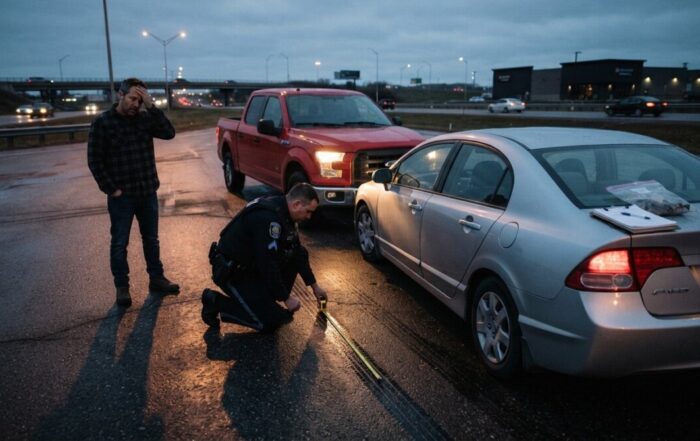
Another issue arises when the physical evidence contradicts the claimant’s description. For example, if you say you were rear-ended at high speed but your vehicle shows only minor bumper damage, the adjuster will question how the stated impact could produce that result. Similarly, claiming severe injuries from a low-speed parking lot bump can look suspicious. Accident reconstruction experts are sometimes brought in to evaluate whether the damage patterns match the reported story.
Understanding Florida auto insurance claims: new changes explained can be particularly helpful if you live in a state with unique no-fault laws. State-specific regulations often affect how claims are investigated and what documentation is required.
Medical Treatment Patterns That Raise Flags
Medical evidence is often the most scrutinized part of a personal injury claim. Carriers look for treatment patterns that suggest exaggeration or fraud. One common red flag is a claimant who visits multiple doctors for the same injury without a clear referral chain. This can appear as doctor shopping to find a provider who will support a more serious diagnosis.
Another pattern involves treatment that continues long after medical improvement has plateaued. If your doctor recommends discharge but you keep seeking treatment from other providers, the carrier may argue that the ongoing care is not medically necessary. Similarly, claims that involve only subjective injuries, such as pain, headaches, or emotional distress, without objective findings like X-rays or MRI results, are more likely to be questioned. Carriers prefer claims that have hard evidence supporting the injury and treatment plan.
If your claim involves a no-fault insurance system, you may want to review guidance on navigating no-fault insurance claims with an accident lawyer. Legal representation can help you avoid pitfalls that lead to claim denials or fraud accusations.
Technology and Data Analytics in Fraud Detection
Insurance companies now use advanced analytics and artificial intelligence to flag suspicious claims before a human adjuster even reviews them. These systems analyze thousands of data points, including the claimant’s credit score, social media activity, geographic location, and claim history. If you post photos on social media showing you engaging in physical activities while claiming a disabling injury, the carrier will capture that evidence and use it against you.
Predictive models also identify claim networks, such as groups of claimants, witnesses, and medical providers who appear repeatedly in claims together. These networks can indicate organized fraud rings. Even if your claim is legitimate, being associated with a suspicious network through a shared attorney or medical provider can trigger additional scrutiny. The best defense is to maintain clean, consistent documentation and avoid any appearance of collusion.
Frequently Asked Questions
What is the most common reason an insurance claim is flagged as suspicious?
The most common reason is inconsistency between the claimant’s story and the physical evidence. When damage patterns, medical records, or witness statements do not align with the reported incident, the carrier will investigate further.
Can a legitimate claim be denied because it looks suspicious?
Yes. Carriers can deny claims based on suspicion of fraud, even without conclusive proof. However, you have the right to appeal the denial and provide additional evidence to support your claim. Working with an attorney can strengthen your appeal.
How long does an insurance fraud investigation take?
Investigations can take anywhere from a few weeks to several months, depending on the complexity of the case. During this time, the carrier may request additional documents, conduct interviews, and consult experts. Your claim payment will be delayed until the investigation concludes.
Should I hire a lawyer if my claim is under investigation?
It is highly advisable. An attorney can help you respond to carrier requests without making statements that could be used against you. They also understand how to present evidence in a way that reduces suspicion. LawyerOffer can connect you with experienced attorneys who handle these situations.
Will my insurance rates increase if my claim is investigated?
Not necessarily. An investigation alone does not automatically raise your rates. However, if the carrier determines that you were at fault or if fraud is suspected, your premiums may increase. In some cases, the carrier may non-renew your policy.
Closing Thoughts
Knowing what makes an insurance claim suspicious helps you prepare a stronger, more credible submission. Focus on providing consistent, timely, and well-documented evidence. Avoid exaggerating injuries or rushing the process. If your claim is flagged, remain calm and work with a qualified attorney to navigate the investigation. The goal is not to avoid scrutiny entirely, but to demonstrate that your claim is honest and deserving of full compensation. For personalized guidance, contact LawyerOffer at (833) 227-7919 to speak with a legal professional who understands how to protect your rights.

About Soraya Whitcombe
Recent Posts

How No Fault Insurance Systems Work: Key Facts
Learn how no fault insurance systems work and get help with your claim. Call (833) 227-7919 for a free case review.
How Comparative Negligence Laws Differ by State
Understand how comparative negligence laws differ by state and protect your settlement. Call (833) 227-7919 for a free case review.

Why State Laws Differ in Accident Cases and What That Means for You
Understand how state laws differ in accident cases and protect your claim. Call (833) 227-7919 for a free attorney referral.