
Common Mistakes That Ruin a Car Accident Claim
Avoid common mistakes that ruin a car accident claim, from recorded statements to quick settlements. Call (833)-632-1198 for a free case review.

A car accident is jarring enough without the added pressure of protecting your legal rights. Yet in the hours and days after a crash, small decisions can quietly undermine an otherwise strong claim. Insurance adjusters are trained to spot inconsistencies, gaps in treatment, and offhand comments that reduce payouts. The good news is that most of these pitfalls are entirely avoidable once you know what they are. Below are the most common mistakes that ruin a car accident claim, along with practical steps to sidestep them and preserve the compensation you deserve.
Giving Recorded Statements or Admitting Fault at the Scene
One of the fastest ways to damage a claim is to speak too freely after a crash. Insurance companies often waste no time in contacting you, sometimes within hours, to request a recorded statement. It sounds routine, but anything you say can be used to dispute liability or minimize your injuries later. Adjusters may ask leading questions designed to coax out an apology or a guess about speed and distance. Even a polite "I'm sorry" can be twisted into an admission of fault in a state that follows modified comparative negligence rules.
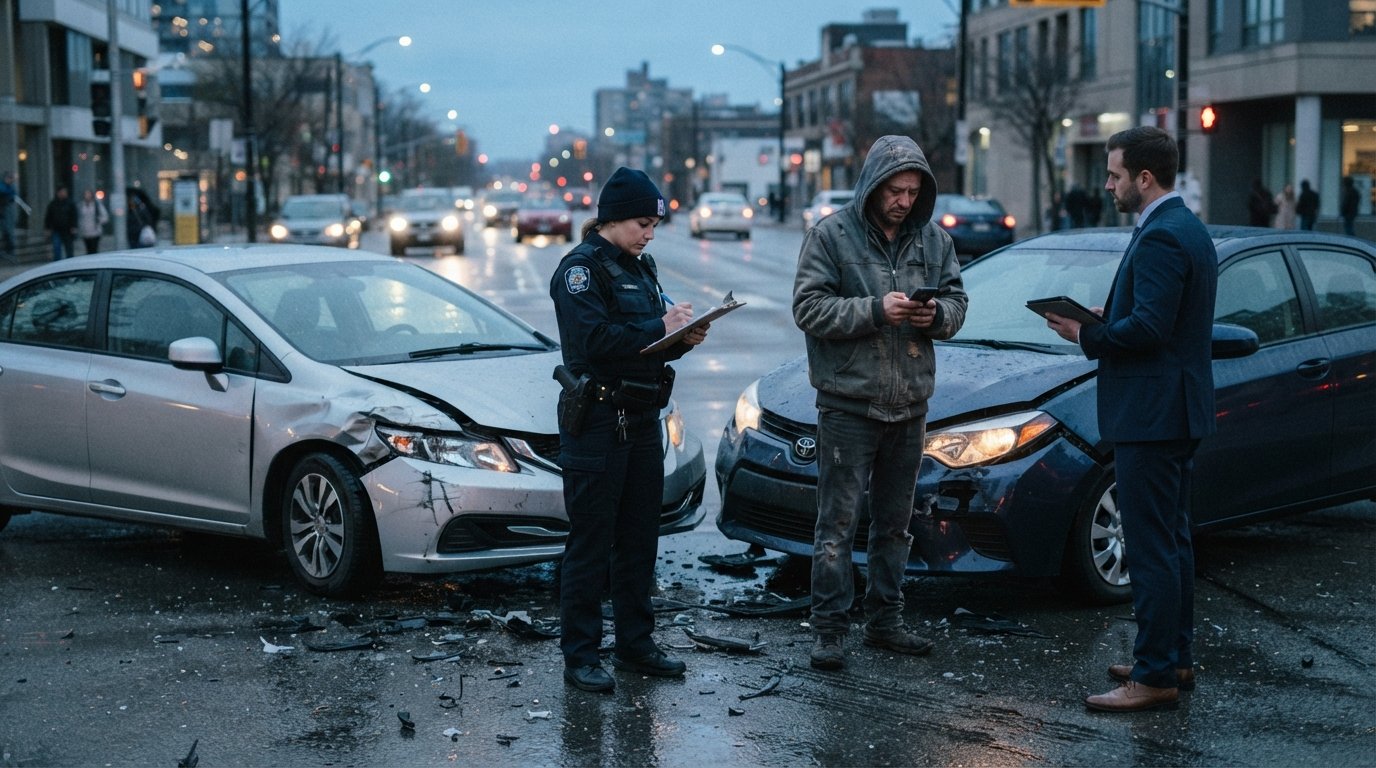
At the scene, emotions run high and shock can cloud judgment. You may feel compelled to apologize or to assure the other driver that you are fine. Resist that urge. Stick to exchanging insurance and contact information, and let the police document the facts. When an insurer calls, you are not obligated to give a recorded statement. You can politely decline and ask that all communication be in writing, or route the call to your attorney. Remember that the insurance company represents the other party's interests, not yours.
Fault rules vary significantly by state, and a single careless phrase can shift the percentage of blame assigned to you. In pure comparative fault states, even 10 percent fault reduces your recovery by 10 percent. In modified comparative fault states, crossing a 50 or 51 percent threshold can bar recovery entirely. This is why it pays to understand what makes a strong car accident claim before you speak with any adjuster. A free case review can clarify your state's rules and protect you from early missteps.
Delaying Medical Treatment and Creating Gaps in Care
Another frequent mistake is waiting to see a doctor. Some injuries, like whiplash, concussions, or soft tissue damage, do not always produce immediate symptoms. You might feel fine at the scene and wake up the next morning with stiffness or a headache. Insurance adjusters view any delay in treatment as evidence that you were not seriously hurt, or worse, that your injuries came from something else entirely. A gap of even a few days can become a bargaining chip used to lower your settlement.
Gaps in ongoing care are equally damaging. If you start physical therapy and then stop for a month, the defense will argue that you must have recovered. If you miss appointments or fail to follow your doctor's recommendations, the insurer may claim you are not mitigating your damages. Consistency in medical records tells a clear story: you were injured, you sought help promptly, and you followed through. Keep a simple log of appointments, prescriptions, and symptoms. This record can be invaluable if your claim is disputed.
There is also a practical deadline to consider. Most states impose a statute of limitations on personal injury claims, typically two to three years, but some are shorter. Waiting to treat can cause you to miss that window entirely. If you are unsure about your state's deadline or fault rules, a confidential case evaluation can provide clarity. Platforms like AutoInjuryAccident connect injured people with participating attorneys nationwide, and the review is free and confidential. The key is to act early, both for your health and for your claim.
Posting About the Accident on Social Media
Social media is a gift to insurance defense teams. A photo of you at a barbecue, a check-in at the gym, or a casual comment that you are "feeling better" can be taken out of context and used to argue that your injuries are exaggerated. Even privacy settings are not a guarantee, because friends and followers can share screenshots. Adjusters routinely review public profiles, and some may request access to private content during litigation.
The safest approach is to stay off social media entirely while your claim is pending. Do not post about the accident, your recovery, or your legal case. Ask friends and family not to tag you in photos or mention the crash online. If you must use social media for work or family reasons, keep posts generic and avoid any discussion of your physical condition. Assume that anything you post could one day be shown to a jury or an adjuster.
This advice extends to messaging apps and text threads as well. Casual texts to friends about the accident can be subpoenaed in some cases. Keep communications about the crash limited to your attorney, your doctor, and your insurer. If you have already posted something, do not delete it hastily, as that can be viewed as spoliation of evidence. Instead, consult your attorney about the best way to handle existing content.
Accepting a Quick Settlement Before Treatment Ends
Insurance companies sometimes offer a fast settlement shortly after a crash. The offer may seem generous, especially when medical bills are piling up and you are missing work. But a quick settlement often comes with a catch: it may not account for future medical needs, lost earning capacity, or pain and suffering. Once you sign a release, you generally cannot reopen the claim, even if your condition worsens.
Before accepting any offer, you should have a clear picture of your total damages. That means finishing active treatment, obtaining a prognosis from your doctor, and calculating lost wages and other out-of-pocket costs. An experienced attorney can help you evaluate whether an offer is fair by comparing it to similar cases and by negotiating with the insurer. Without that context, you may leave money on the table without realizing it.
Consider this checklist before signing anything:
- Have you reached maximum medical improvement, or do you have a clear treatment plan?
- Are all current and future medical costs documented?
- Have you accounted for lost wages, reduced earning capacity, and property damage?
- Has an attorney reviewed the release for hidden clauses or waivers?
If you cannot answer yes to these questions, the offer is likely premature. A free case review can help you understand the full value of your claim and avoid a settlement that falls short of your needs.
Why Skipping a Case Review Can Cost You Money
Many injury victims try to handle the claims process alone, believing that hiring an attorney will eat into their recovery. In reality, studies and industry data consistently show that represented claimants recover more on average than those who go it alone, even after attorney fees. The reason is simple: insurers know that unrepresented claimants may not understand the nuances of fault rules, damage calculations, or negotiation tactics. They also know that an unrepresented person is less likely to file a lawsuit if the offer is unfair.
A free case review is exactly what it sounds like: a no-obligation conversation with a legal professional who can evaluate your situation. You do not have to hire anyone. You simply get information about your rights, your state's deadlines, and the potential value of your claim. This step alone can prevent many of the common mistakes that ruin a car accident claim, because you learn what to do and what to avoid before it is too late.
LawyerOffer.com is a consumer matching platform, not a law firm. It connects people injured in car crashes, truck wrecks, and related accidents, as well as those facing DUI or DWI charges, with participating attorneys who advertise on the site. The service is nationwide, and the case review is free and confidential. If you are unsure whether you need an attorney, a quick conversation can give you peace of mind and a clearer path forward.
In short, the mistakes that damage claims are rarely dramatic. They are ordinary decisions made under stress: saying too much, waiting too long, posting too freely, or settling too soon. By staying mindful of these pitfalls and seeking guidance early, you can protect your rights and give yourself the best chance at a fair recovery. Whether you choose to hire an attorney or not, an initial case review is a low-risk step that can save you significant time and money down the road.