
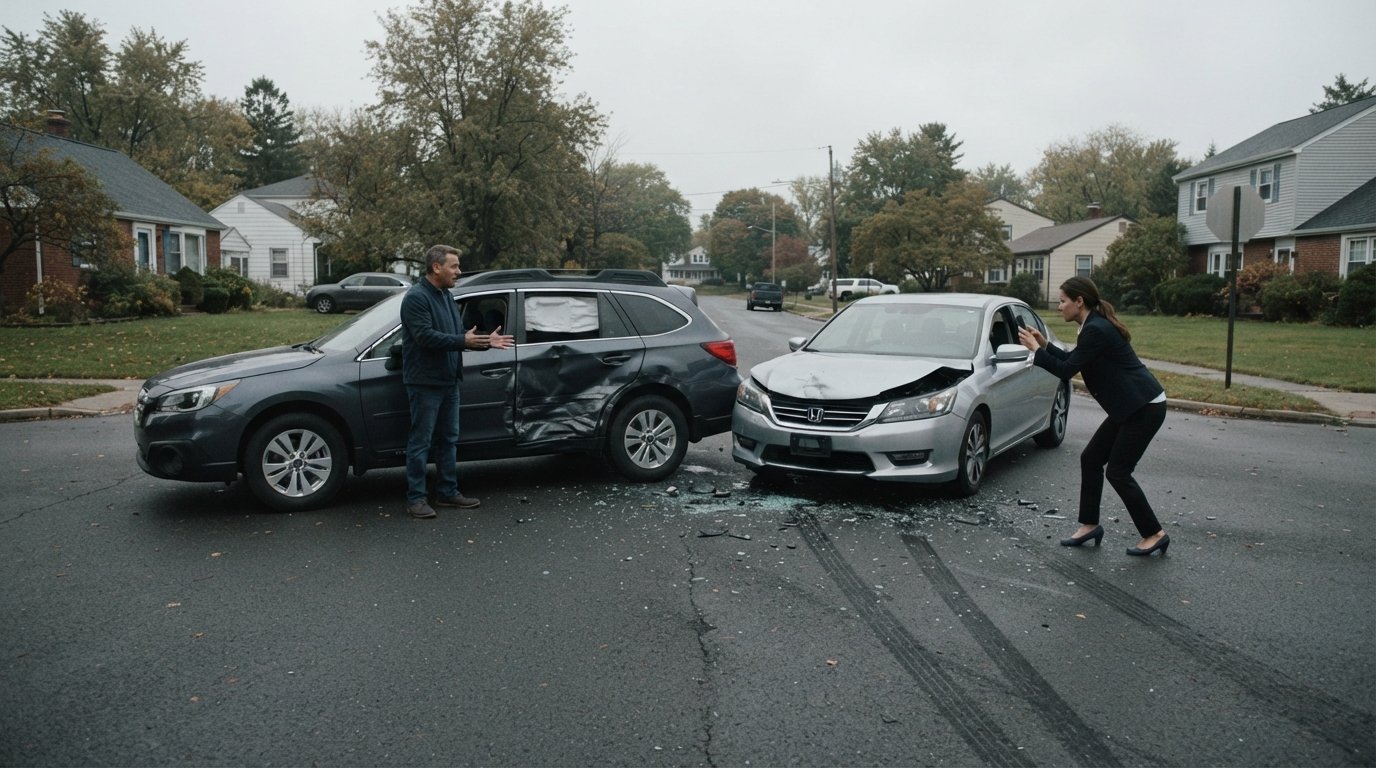
How to Prove Negligence When There Are No Witnesses
Proving negligence without witnesses is possible with the right evidence. Call (833)-632-1198 for a free case review and protect your claim.

You are driving home on a quiet road when another car runs a stop sign and slams into your passenger side. The other driver jumps out and immediately claims you were speeding. There is no one else around. No bystanders, no traffic camera, no police officer who saw the crash. Your heart sinks as you realize it is your word against theirs. This scenario plays out every day, and it leaves injured people wondering how they can possibly prove negligence when there are no witnesses to back them up. The good news is that the law does not require an eyewitness to establish fault. Courts rely on a wide range of evidence, legal doctrines, and investigative techniques to determine what happened and who is responsible. Understanding these tools can mean the difference between a fair settlement and walking away with nothing.
This guide explains how to prove negligence when there are no witnesses, covering the legal standards you need to meet, the types of circumstantial evidence that carry weight, and the steps you should take immediately after an accident to preserve your claim. Whether you are dealing with a car crash, a slip and fall, or a product liability incident, the principles are similar: gather what you can, document everything, and let the evidence tell the story your eyes cannot.
The Legal Framework: What You Must Prove Without Eyewitnesses
Negligence is not about whether someone was rude or careless in a general sense. It is a specific legal claim that requires you to prove four elements: duty, breach, causation, and damages. Duty means the other party owed you a reasonable standard of care (for example, drivers must follow traffic laws). Breach means they failed to meet that standard. Causation means their failure directly caused your injuries. Damages means you suffered actual harm, such as medical bills, lost wages, or pain and suffering. When there are no witnesses, you do not skip any of these elements; you simply prove them through other means.
Direct evidence, like an eyewitness saying "I saw the defendant run the red light," is powerful but not required. Circumstantial evidence, which is indirect proof that allows a jury to infer what happened, is equally admissible. In fact, many negligence cases are built entirely on circumstantial evidence. For example, skid marks leading directly to the point of impact, combined with the position of the vehicles after the crash, can strongly suggest who was at fault. The key is to gather enough circumstantial pieces so that the only reasonable conclusion is that the other party was negligent.
One important doctrine that helps in unwitnessed cases is res ipsa loquitur, Latin for "the thing speaks for itself." This doctrine allows a judge or jury to infer negligence without direct proof when three conditions are met: the injury would not ordinarily occur without negligence, the instrument that caused the injury was under the defendant's exclusive control, and the plaintiff did not contribute to the injury. A classic example is a surgical instrument left inside a patient after surgery. No one saw the surgeon leave it there, but the facts speak for themselves. In car accident cases, res ipsa loquitur is less common because multiple parties may share control of the situation, but it can apply in certain scenarios, such as a wheel flying off another vehicle and striking your car.
Understanding these legal principles is the first step. The second step is knowing what evidence to look for and how to use it. Even without a witness, you can build a compelling case by focusing on physical evidence, electronic records, expert analysis, and the legal rules that govern fault allocation.
Circumstantial Evidence and Res Ipsa Loquitur: Proving Fault Indirectly
Circumstantial evidence is often the backbone of unwitnessed negligence claims. It includes anything from the location of debris after a crash to the time of day and weather conditions. Each piece on its own may seem minor, but together they create a mosaic that points to a single conclusion. For example, if you were rear-ended at a stoplight, the damage to your rear bumper and the other driver's front bumper strongly suggests they were following too closely or failed to stop. Even without a bystander, the physical evidence tells the story.
To use circumstantial evidence effectively, you need to document it thoroughly and quickly. Memory fades, and evidence disappears. Here are some key types of circumstantial evidence to collect after an accident:
- Vehicle damage patterns: Photograph all damage from multiple angles, including close-ups and wide shots. The location and severity of damage can indicate speed, angle of impact, and who struck whom.
- Debris and skid marks: Note where glass, plastic, and other debris landed. Skid marks can show braking patterns and the direction of travel.
- Road and weather conditions: Document the road surface, lighting, and visibility. These factors can affect fault, especially in claims involving speeding or failure to yield.
- Injuries and immediate symptoms: Seek medical attention right away and keep all records. The type and location of injuries can corroborate your version of events.
Once you have this evidence, an attorney can use it to reconstruct the accident and demonstrate negligence. Circumstantial evidence is not weaker than direct evidence in the eyes of the law; it is simply a different way of proving the same facts. Courts routinely rely on it, especially in civil cases where the standard of proof is a preponderance of the evidence (more likely than not).
Res ipsa loquitur can be a powerful fallback when direct evidence is scarce. If you can show that the accident was the kind that does not happen absent negligence, and that the defendant had exclusive control over the cause, the burden may shift to the defendant to explain what happened. This doctrine is not available in every case, but it is worth discussing with a lawyer who can evaluate whether it applies to your situation.
Surveillance, Telematics, and Phone Records: The Digital Trail
In the modern era, digital evidence often serves as the silent witness you need. Surveillance cameras are everywhere: traffic cams, business security systems, doorbell cameras, and even dash cams in other vehicles. Even if no person saw the accident, a camera might have. The key is to act fast, because many systems overwrite footage after a short period, sometimes as little as 24 to 72 hours.
Start by identifying potential sources of video. Nearby businesses, homeowners, and municipal traffic systems are common sources. If you can, ask them to preserve the footage before it is erased. If they refuse, an attorney can send a preservation letter, which creates a legal obligation to retain the evidence. Do not wait for the insurance company to do this for you; they may not act quickly enough.
Telematics data from your vehicle or the other driver's vehicle can also provide crucial evidence. Many modern cars have event data recorders (EDRs), often called "black boxes," that record speed, braking, steering, and seatbelt usage in the seconds before a crash. This data can be downloaded by an expert and used to show that the other driver was speeding or failed to brake. Similarly, fleet vehicles and commercial trucks often have telematics systems that track location, speed, and driver behavior. If a commercial vehicle is involved, that data may be discoverable.
Phone records are another powerful tool. If the other driver was distracted by a phone call or text message at the time of the accident, cell phone records can prove it. However, obtaining these records typically requires a subpoena or court order, so you will need an attorney to pursue this avenue. In some cases, the mere threat of subpoenaing phone records can encourage a fair settlement.
When gathering digital evidence, keep a detailed log of what you requested, from whom, and when. This documentation can be important if the other side later claims evidence was lost or destroyed. An experienced attorney can help you navigate the legal process of obtaining and preserving digital evidence, ensuring that it is admissible in court.
Expert Accident Reconstruction: Filling the Gaps
When physical evidence and digital data are incomplete, expert accident reconstruction can fill in the blanks. Accident reconstructionists are specialists who use physics, engineering, and forensic analysis to determine how a crash occurred. They examine skid marks, vehicle damage, debris patterns, and EDR data to calculate speeds, angles, and reaction times. Their reports can be compelling evidence in an unwitnessed case.
An expert might, for example, use the crush depth of your vehicle's bumper to estimate the speed of the other car at impact. Or they might analyze the trajectory of debris to determine the point of impact and the direction of travel. In pedestrian accidents, reconstructionists can use pedestrian throw distance to estimate vehicle speed. These calculations are based on established scientific principles and are generally admissible in court if the expert is qualified and the methodology is reliable.
Expert reconstruction is not cheap, but it can be the difference between a strong claim and a weak one. Many personal injury attorneys work on a contingency fee basis, meaning they advance the costs of experts and only get paid if you win. This arrangement makes it possible for ordinary people to access high-level expertise without upfront costs. If you are wondering how to prove negligence when there are no witnesses, an accident reconstructionist is one of your most valuable allies.
In addition to reconstruction, other experts may be needed. A medical expert can testify about the cause and extent of your injuries. A human factors expert can explain how distraction or fatigue affects driving performance. A biomechanics expert can analyze how forces were transmitted through your body during the crash. The right combination of experts depends on the specifics of your case, and an attorney can help you decide which experts to retain.
Preserving Physical Evidence Before It Disappears
Physical evidence is perishable. Vehicles get repaired or sold, skid marks fade, and debris gets swept away. If you are serious about proving negligence without witnesses, you must take steps to preserve evidence immediately. The first and most important step is to photograph and document everything at the scene, but preservation goes beyond that.
Here is a checklist of preservation steps to take as soon as possible after an accident:
- Photograph and video the scene: Capture wide shots, close-ups, and different angles. Include landmarks, traffic signals, and road markings.
- Obtain the police report: Even if no one was cited, the report may contain valuable observations and contact information for other parties.
- Preserve your vehicle: Do not repair your car until an expert has had a chance to inspect it. Store it in a secure location and document its condition.
- Send preservation letters: Ask businesses, municipalities, and individuals to preserve surveillance footage and other evidence. An attorney can draft these letters for you.
- Keep a personal journal: Write down everything you remember about the accident, your injuries, and your recovery. Note dates, times, and details that might become fuzzy later.
Once evidence is preserved, it can be analyzed and used to build your case. Do not assume that the insurance company will preserve evidence on your behalf; their interests may not align with yours. Taking proactive steps early can prevent the other side from later claiming that evidence is unavailable or unreliable.
If you are unsure where to start, consider reaching out to a legal professional who can guide you through the process. For example, GoFreeLegal offers a free legal help and attorney-matching service that connects people with attorneys in personal injury and other civil matters. A short, confidential request can help you understand your options and preserve your rights.
How Comparative Fault Rules Interact with Weak Witness Proof
In many states, the other driver may try to blame you for the accident, arguing that you were partially at fault. This is where comparative fault rules come into play. Under a pure comparative fault system, your recovery is reduced by your percentage of fault. For example, if you are found 20 percent at fault, your damages are reduced by 20 percent. Under a modified comparative fault system, you may be barred from recovery entirely if you are found more than 50 percent (or 51 percent, depending on the state) at fault.
When there are no witnesses, the other side may try to exploit the ambiguity by pointing fingers at you. They might claim you were speeding, distracted, or failed to yield. Your job is to counter those claims with evidence. Circumstantial evidence, expert analysis, and digital records can all help establish that the other party was primarily or entirely at fault. For example, if the other driver claims you were speeding, an EDR download from your car can show your exact speed at the time of impact. If they claim you ran a red light, traffic camera footage or signal timing records can rebut that assertion.
It is important to understand that comparative fault does not doom your case. Even if you are partially at fault, you may still recover damages. The key is to build a strong evidentiary record that minimizes your assigned fault and maximizes the other party's. An attorney can help you navigate the specific comparative fault rules in your state and present evidence in the most favorable light.
In some cases, the mere presence of strong evidence on your side can discourage the other party from making unfounded allegations of fault. Insurance adjusters are less likely to lowball an offer when they know you have expert reconstruction, clear photographs, and digital data to back up your version of events. This is why preservation and documentation are so critical: they give you leverage in negotiations and at trial.
Practical Steps to Take Immediately After an Unwitnessed Accident
The actions you take in the hours and days after an accident can make or break your negligence claim. Even if no one saw what happened, you can create a record that speaks for you. Here is a step-by-step guide to follow:
- Ensure safety and call for help: Move to a safe location if possible, call 911, and request an ambulance if anyone is injured. The police report will be an important piece of evidence.
- Document the scene: Take photos and videos of everything: vehicle damage, debris, skid marks, traffic signals, road conditions, and your injuries. Exchange information with the other driver, but do not admit fault or speculate about what happened.
- Seek medical attention: Even if you feel fine, see a doctor. Some injuries, like whiplash or concussions, may not appear immediately. Medical records also link your injuries to the accident.
- Collect contact information: Get names, phone numbers, and insurance information from the other driver and any passengers. Also note contact information for any potential witnesses, even if they did not see the crash itself (for example, someone who arrived shortly after).
- Notify your insurance company: Report the accident to your insurer, but do not give a recorded statement to the other driver's insurer without consulting an attorney first.
- Consult a personal injury attorney: Many attorneys offer free consultations and can advise you on how to proceed. They can also help you preserve evidence and deal with insurance companies.
Following these steps not only helps you prove negligence but also protects your rights and strengthens your claim. Remember that insurance companies are not on your side; their goal is to minimize payouts. Having a clear, well-documented record can level the playing field.
If you are unsure whether you need an attorney, consider this: negligence claims can be complex, and the stakes are high. An experienced lawyer can evaluate your case, identify evidence you might have missed, and negotiate with insurers on your behalf. Many work on a contingency fee basis, so you do not pay unless you recover. A free case review can give you clarity without any obligation.
Proving negligence without witnesses is challenging, but it is far from impossible. By understanding the legal standards, gathering circumstantial and digital evidence, working with experts, preserving physical evidence, and navigating comparative fault rules, you can build a strong case. The key is to act quickly, document thoroughly, and seek professional guidance when needed. With the right approach, you can hold the responsible party accountable and pursue the compensation you deserve.